

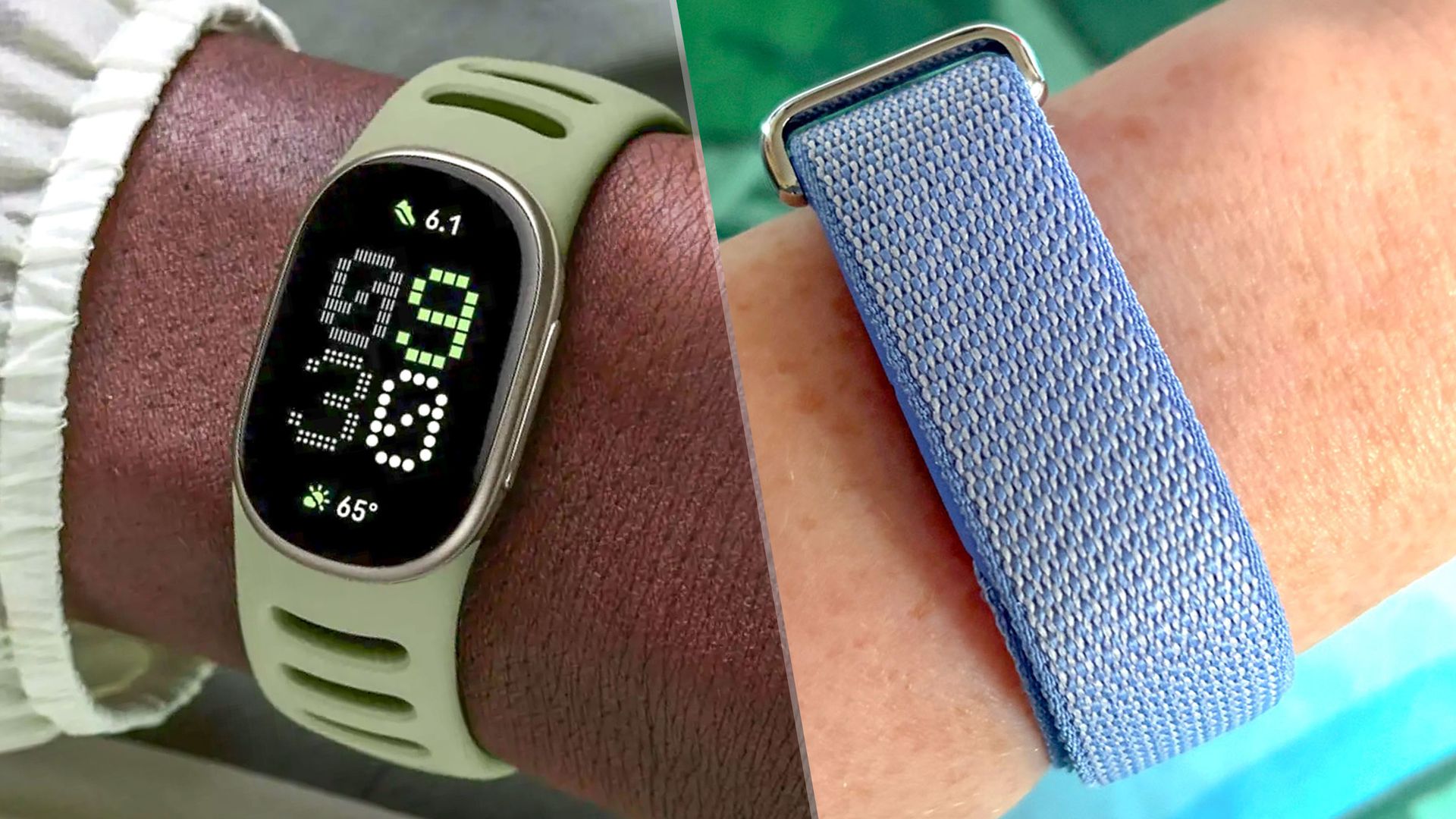
Type:Smartwatch
Best for:Fitness tracking
Subscription:$9.99/month (optional)
Warranty:1-year
Price:From $179.99 at Google (pre-order)
Type:Screenless smart band
Best for:Comfort
Subscription:$9.99/month (optional)
Warranty:1-year
Price:From $99.99 at Google
The new Fitbit Edge is making a push to be the best sleep tracker of 2026. Available for pre-order from $179.99 at Google, the Edge is sleek, affordable and has high-powered sensors to track every wake up and sleep stage.
But I test sleep tech for a living and the Google Fitbit Edge has left me feeling underwhelmed. I’ve been testing the cheaper Fitbit Air, from $99.99 at Google, and I think it’s the stronger pick when it comes to sleep tracking.
In the battle of Fitbit Edge versus Fitbit Air for sleep tracking, it’s all about the comfort (and price, let’s be honest). So before you hit pre-order on the FitbitEdge, here’s what you need to know.
Fitbit Edge vs Fitbit Air: Price
The Fitbit Edge is the latest Fitbit release and is currently available for pre-order from $179.99 at Google or Amazon. The Fitbit Air, released earlier this year, is available from $99.99 at Google or Amazon.
These are highly competitive prices for a sleep and wellness tracker — the Oura Ring will set you back $399.99, while the Garmin CIRQA Smart Band comes in at $199.99.
All Fitbits use the Google Health app to track and store your data. Basic tracking is available for free, with no subscription required. Or you can upgrade to Google Health Premium, which offers additional support and coaching from $9.99 per month.
The Fitbit Edge is a competitvely priced smartwatch with a starting price of $179.99. Pre-orders are currently available with devices set to start shipping on October 27th.View Deal
The Fitbit Air is one of Google’s most affordable trackers, with a starting price of just $99.99. Different and additional straps are available to accessorize the Air to suit your needs, with the new mesh band an attractive choice for everyday wear.View Deal
Fitbit Edge vs Fitbit Air: Sleep tracking
For the past few weeks I’ve been testing the Fitbit Air and it’s impressed me with its accurate sleep tracking and detailed reports.
Fitbit uses dedicated sensors to gather essential sleep health metrics, including temperature and HRV. These are then fed to a powerful algorithm which uses the data to draw a picture of your sleep.
As well as your daily sleep score and nightly sleep stages, Google Health lets you know how your sleep will impact your energy levels that day — this is a nice heads-up in the morning when I’ve forgotten to open the app.
My colleague Nicola Appleton saw the same performance when testing the Fitbit Inspire 3. And I expect to see the same again from the Fitbit Edge. If you do opt for this tracker, you should find (nearly) everything you need to know about your sleep in the Google Health app.
Fitbit Edge vs Fitbit Air: Design and comfort
The Fitbit Edge is a sleek take on a smartwatch. The slim screen gives you access to your important stats on the go, without the bulk of a watch face.
But the Air ditches the screen altogether. Placing a small tracker on the inside of a lightweight band, the screenfree design is all about simplicity. It’s comfortable, even when you’re tossing and turning.
And that’s much, much better for sleep, from my experience. Because when it comes to a good night’s rest, you don’t want anything encroaching on your comfort.
A screen does have its advantages (no looking at your phone in the morning to see your sleep score). But I’d take a quick glance at an app over waking up at 3 a.m. because I’ve rolled over and now my watch is pressing painfully into my wrist.
Fitbit Air vs Fitbit Edge: Which should you buy for sleep tracking?
The Fitbit Edge is an exciting new release if you’re focused on fitness tracking. But if you want to learn more about your sleep, save your money and stick with the Fitbit Air.
Both options come with powerful sleep tracking features. And both also offer detailed analysis and coaching, should you pay for a subscription.
But the Fitbit Air has the edge (pun intended) when it comes to comfort. Smaller, sleeker and without a screen to leave red welts on your wrist, it’s one of the best sleep trackers released this year. I doubt Google will top it any time soon.
