

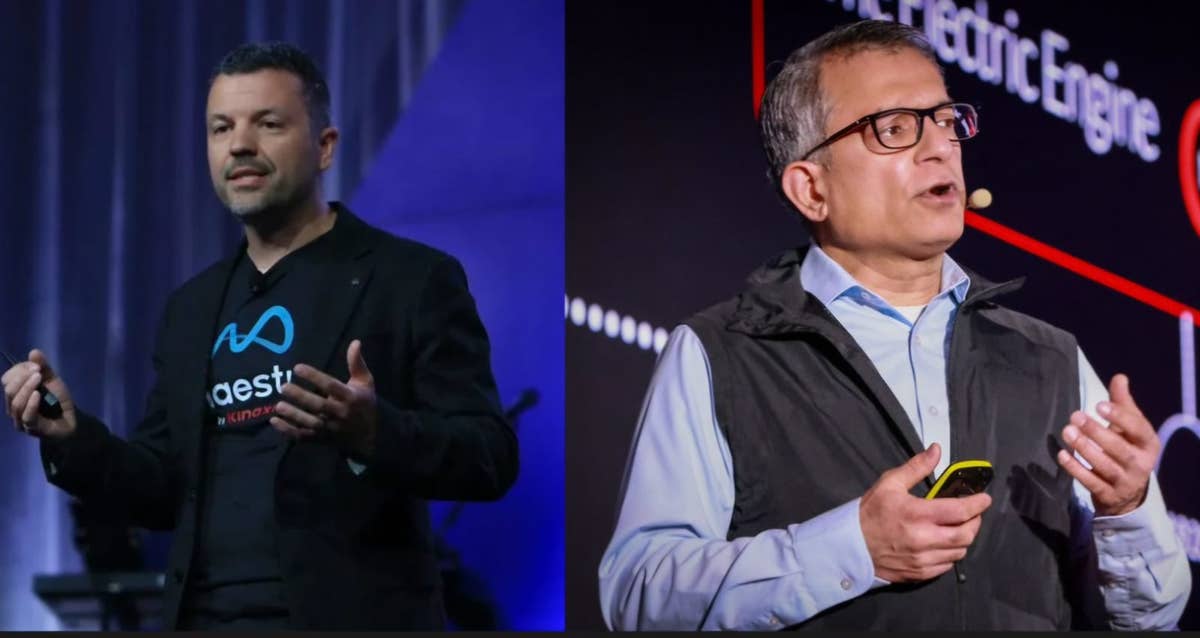
Manik Sharma says the goal is to move beyond automation and fundamentally change how businesses operate, with partners bringing industry expertise, integration capabilities and customer understanding to the process.
Kinaxis wants its partners to play a deeper role in helping enterprises adopt agentic AI, moving beyond technology implementation to understanding industry-specific supply-chain challenges and changing how customers make and execute decisions.
Kinaxis chief product officer, Andrew Bell, says the [biggest challenge] in realising the potential of agentic AI may not be data readiness or proving return on investment (ROI), but getting organisations to rethink established processes and the way work gets done.
“To truly harness the power of the platform and its agentic capabilities, these companies need to change the way they’ve traditionally operated and how work gets done,” Bell told CRN India.
He believes partners will have an important role in driving this change. While data readiness remains a challenge, Kinaxis has tools and capabilities to address it, and Bell says demonstrating ROI is relatively straightforward.
The harder task is helping organisations move beyond replacing existing tools with new technology and rethink the process from an event occurring to a decision being made and translated into action.
For Kinaxis, this puts the partner ecosystem at the centre of agentic AI adoption. The company wants partners to bring capabilities that complement its technology, particularly their understanding of specific industries and the supply-chain problems enterprises are trying to solve.
Manik Sharma, chief of agentic solutions, Kinaxis, says the company’s approach is not about building agents for the sake of it.
“We want to fundamentally change the way things are done so that people can get the true value here. Otherwise, it’s automation, minimal value,” Sharma said.
He says Kinaxis works with partners because it does not have a dedicated change-management workforce to drive this transformation across customer organisations.
The company can support the process, but partners are important to making the change happen.
Industry expertise becomes central to partner opportunity
Bell says the “partner ecosystem needs to deepen its industry expertise” as customers move beyond generic supply-chain challenges and look to address more specialised requirements.
He cites pharmaceuticals as an example. Companies in the sector need to account for product expiry attributes and determine where a particular pharmaceutical product can be sold based on the ingredients used. Addressing such requirements calls for an understanding of the industry’s specific supply-chain processes.
“We are bringing forth all of the depth of technology, but we need our partners to bring that supply-chain verticalised or industry-specific supply-chain depth,” Bell said.
He identifies pharmaceuticals, consumer packaged goods (CPG) and automotive as the three major industry opportunities Kinaxis sees in India.
Aerospace and defence could emerge as another area, although the immediate focus remains on the first three sectors.
Sharma says “Kinaxis evaluates partners based on their strengths” rather than pushing them towards a particular industry. Large consulting firms may have established vertical practices, while smaller specialist companies may bring deeper capabilities in selected sectors.
Kinaxis looks to support partners according to where their expertise lies.
The company also sees opportunities for partners with horizontal technical capabilities. These include systems integration and expertise in enterprise platforms such as SAP.
“We know SAP, but we don’t know everything about SAP,” Sharma said, explaining why partners with specialised technical knowledge are important to the ecosystem.
The third dimension is the partner’s understanding of the customer and its specific business problems.
Sharma says Kinaxis considers industry expertise, technical capabilities and customer understanding together when deciding which partner is best suited to an engagement.
He adds that the “company does not want to force an exclusive partner relationship” into a customer engagement. Its priority is to identify the partner that can deliver the best value for the customer.
Partners to help compose customer-specific solutions
Kinaxis’ approach also involves partners working alongside its forward deployment engineers (FDEs) to develop solutions around individual customer requirements.
Bell says the platform brings together algorithms, core capabilities and agentic skills as composable components. Partners and FDEs first need to understand the customer’s business requirements and the problem it wants to solve. They can then use these components to compose a solution on the platform.
The level of human intervention can also be tailored to each customer, depending on the decisions involved and the degree of autonomy the organisation is prepared to allow.
Sharma says Kinaxis wants partners to “understand this approach through hands-on boot camps”, rather than treating agentic AI as an opportunity to build another automation engine.
The company wants partners to experience the platform’s capabilities and understand how intelligence and context can be applied to customer problems.
The expectation, he says, is that partners will be better equipped to explain the technology and its value to customers after working through these experiences.
The opportunity for Indian partners extends beyond implementing an agentic AI platform. Kinaxis is looking for an ecosystem that can combine sector-specific supply-chain knowledge, technical integration skills and an understanding of customer operations to help enterprises change how they work.
