

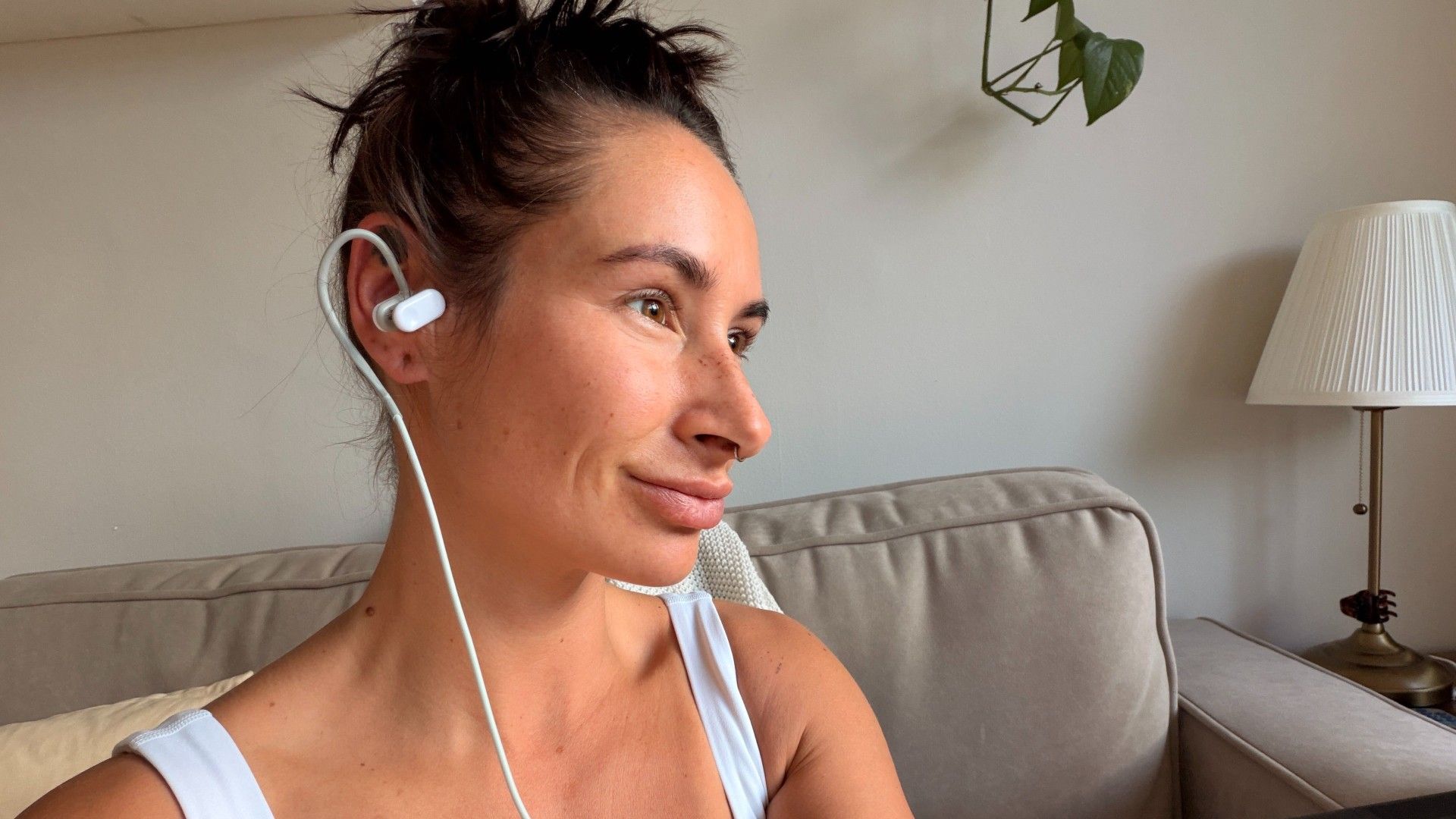
Vagus nerve stimulators are designed to calm your nervous system by (as the name suggests) stimulating your vagus nerve, which is also known as the gut-brain axis. I’ve tried vagus nerve stimulators before, using a device that you hold to the pulse point at your neck for several minutes, but this is the first device I’ve worn on my tragus.
Given NuroPod is the “world’s most studied wearable vagus nerve stimulator” with 60+ clinicalstudiesbehind it, I was keen to give it a try. NuroPod supports nervous system regulationss response and recovery
I committed to the device for 30 days, and this is what I learned.
What is NuroPod?
NuroPod vagus nerve stimulator:$900/£599 atNuroPod.
NuroPod retails for $900 in the U.S., and the Nurosym retails for £599 in the UK. Worn in the ear, the device stimulates the vagus nerve for bolstered relaxation and sleep. View Deal
NuroPod VNS is a non-invasive medical device. You wear it on your ear, specifically clipping it to the tragus, and it sends targeted electrical signals to the brainmoving it to the parasympathetic system or “rest and digest.”
One of the clinical studies conducted on the device revealed it can improve sleep by 19% and reduce fatigue by 48%. My colleague tested the NuroPod device and spoke with neuroscience expert Dr. Elisabetta Burchi, and who works for Nurosym, to explain how it works.
The vagus nerve acts as an “information highway” between the brain and organs. Dr. Burchi said that it carries “parasympathetic fibers in the body” and maintains “balance” between the fight-or-flight response and the rest-and-digest response.
Activating it using a device is thought to help lower blood pressure, improve relaxation, reduce stress and even help you sleep better. You can wear the device while you go about your day and simply unclip it once you’re done. That said, the advice is to wet the ear with a little cold water to improve conductivity, so you’ll need access to that.
What happened when I tried vagus nerve stimulation for 30 days
Note that the device is called NuroSym in the U.K.
All you have to do is charge the device, then clip it over the tragus of your left ear and set the timer and intensitye cold water dabbed to the ear, but I found that doing this made the device slip off, though without it, I didn’t feel much
https://www.instagram.com/p/Dca2T89IeLn/
I was really looking forward to testing a device backed by science that indicated it could help reduce stress. I’m quite a high-anxiety person despite my best efforts to bolster stress resiliencethrough my lifestyle. A little help with a pocket-sized device? Perfect.
My colleague, Eve, had been recommended a 30-minute stint (suitable for first-timers) and an intensity level of 18 by Dr. Burchi. Ideally, though, you’d continue dialing up the intensity until you actually feel something, and this depends on your sensitivity threshold.
I didn’t feel much until I cleaned my ear with cold water. But when I did, the tingles were far from subtle. Eventually, I found a level I could manage for 30 minutes, but I found it impossible to go about my day as normal without it slipping off my ear, so I had to lie down on my side. For that reason, I started using the NuroPod at night before bed.
Lots of factors impact my sleep hygiene, including social plans, late meals when I’m coaching, or too much blue light if I’m working late or chatting to friends and family on my phone. For that reason, I didn’t really think it would be fair to use the NuroPod from a sleep perspective.
My interest was less in tracking device data and more in how I actually felt in my body and from my own perspective. Old school, I know. That said, I knew my Oura Ring 5was tracking everything in the background, so I could refer to the data at any time.
Firstly, the act of doing something mindful offers relaxation as a standard. Because I took 30 minutes to sit without distracting myself with chores or work, it gave me the opportunity to wind down. Naturally, I felt a little more relaxed when the device had finished.
However, I didn’t notice a huge difference in my sleep at night, and when I did eventually look into my sleep and stress scores on my Oura Ring, the biggest differentiators were whether I had drunk alcohol or eaten a late meal and tagged them in the app before sleep.
I tried increasing by a level or two every few days and continued this way for 30 days total. And if I am being really honest? I’m not sure I could justify a whopping $900 for what was a very minor boost in mindfulness.
The biggest difference I noticed in my sleep and stress scores came whenI quit alcohol for 30 days, whereas any changes in how I felt by my own assessment or when looking at device data during this experiment were subtle at best.
Would I recommend the device? Unless you’re studying the data in a strictly controlled lab setting, it’s very difficult to tell what is causing upticks or downticks in your sleep, stress and general wellbeing.
It’s worth noting that the device isn’t advised for pregnant women, people with sleep apnea, or people with implanted electrical devices like pacemakers. And if you have an ear piercing you can’t remove, you can use your other ear. If you’re unsure whether Nurosym is suitable for you, consult your healthcare provider.
Would I recommend the device? Unless you’re studying the data in a strictly controlled lab setting, it’s very difficult to tell what is causing upticks or downticks in your sleep, stress and general wellbeing. A particularly good night of sleep could be the vagus nerve stimulator, or it could be that you did lots of exercise that day and limited blue screen time. It’s hard to know.
Do I think $900 is justified for NuroPod? I don’t believe it is, and I didn’t notice a noticeable shift in my wellbeing, data aside, during the experiment. If you can afford to splash out and take the risk, this might be the device for you. But otherwise, I’d save your money and look at $0 stress relief hacks instead.
Finally, I found the ear piece didn’t really fit my ears properly. If you have small traguses, you may well agree. So if portability is important to you, this is something to consider.
- Anxiety and depression affect sleep differently — expert explains why and how to cope
- I’ve been taking creatine for almost 3 months, and here’s exactly what’s happened to my body
- Forget 10,000 steps — study reveals the real number of minimum daily steps you should take, according to your age
