

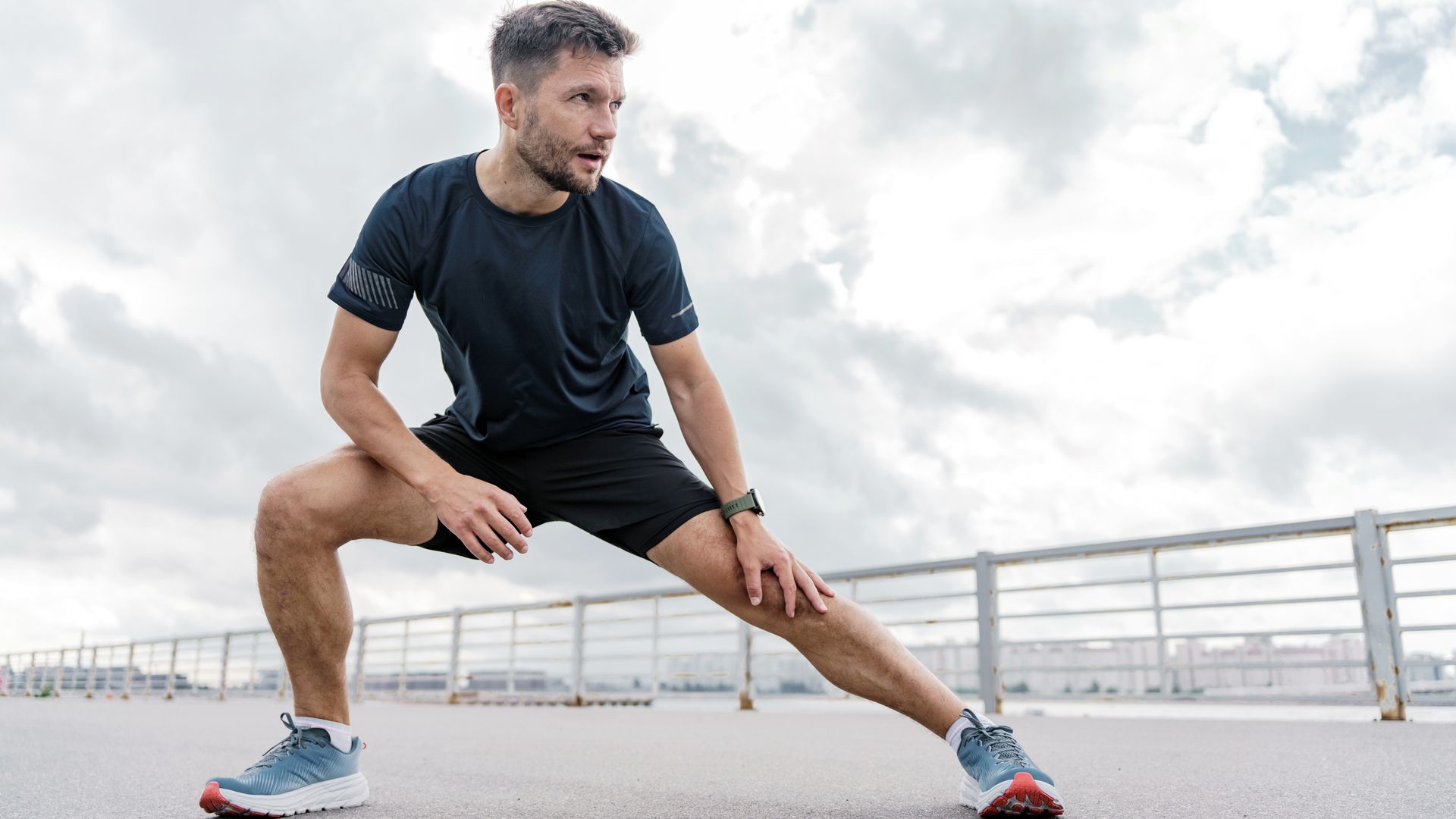
The best hip mobility exercise doesn’t exist. You ideally need a combination of exercises that move your pelvis through different planes of motion, including internal and external rotation.
It can be confusing to know what does and doesn’t help, which is why I regularly test hip mobility exercises and share the ones I swear by as a trainer.
While I encourage strength training to maintain as much strength and muscle as possible, surprisingly, I’m more passionate about encouraging regular mobility training, and I encourage it even more strongly after 50.
For many of my clients, I recommend the same exercises at any age, but how we approach them might differ from person to person. For me, this move always stands out.
If you experience pain at any time, stop and rest. If you’re working with an injury or health condition, I recommend seeking advice before starting these exercises.
https://www.instagram.com/p/DdmVrMdsjuq/
When you think of warming up, you might think of hip rolls that externally rotate and open the hips, or leg swings that stretch the hip flexors, using a forward-back motion. How often do you think about internal hip rotation?
In this instance, I mean drawing the knee toward your midline, rotating the hip inward. Strong, healthy hips should be able to move in all directions, so picking exercises that strengthen your hips in multiple ways is a great place to start.
I’d pick this move, as you can do it anywhere using your bodyweight, gradually increasing your range of motion as you improve.
I recommend 8-12 reps per side and 3 sets. Focus on the quality of your reps rather than speed.
What are the benefits?
Internal rotation helps build mobility, control and strength around the pelvis
Internal rotation helps build mobility, control and strength around the pelvis, offering a deep stretch at the same time. Increasing hip internal rotation translates to better movement and range of motion, too.
You’ll feel the stretch primarily in your glutes, hips and groin, but more generally, improving your internal rotation abilities will target the gluteus minimus, medius, adductors, hip flexors and tensor fascia latae, to name a few muscle groups.
- FollowTom’s Guide fitnesson Instagram for more workouts, routines, tips, and tricks.
To modify this exercise, move slowly and don’t reach as far into the stretch; pause for a moment, then release. You might choose fewer sets or reps, or play around with the equipment you use.
If you find this exercise hurts your knees, stop immediately. Try to keep a soft bend in your standing leg, square your hips and lean your weight slightly forward while keeping your back straight; this will improve balance and glute activation.
Remember, while you are trying to draw your raised knee toward you, you’re not twisting over to the side, as this will take away from the range you can achieve during the exercise. Instead, consider placing a hand on your hip as you rotate so that you can feel your pelvis doing the work.
- I teach people how to be more mobile: 3 low-impact back and shoulder moves that build stability and strength after 40
- I’m a personal trainer who works with clients aged 65+ daily. Here are the 2 exercises I always recommend when it comes to building mobility and balance
- I swapped bone conduction headphones for open buds on my runs, and I’m not going back — here’s why
