

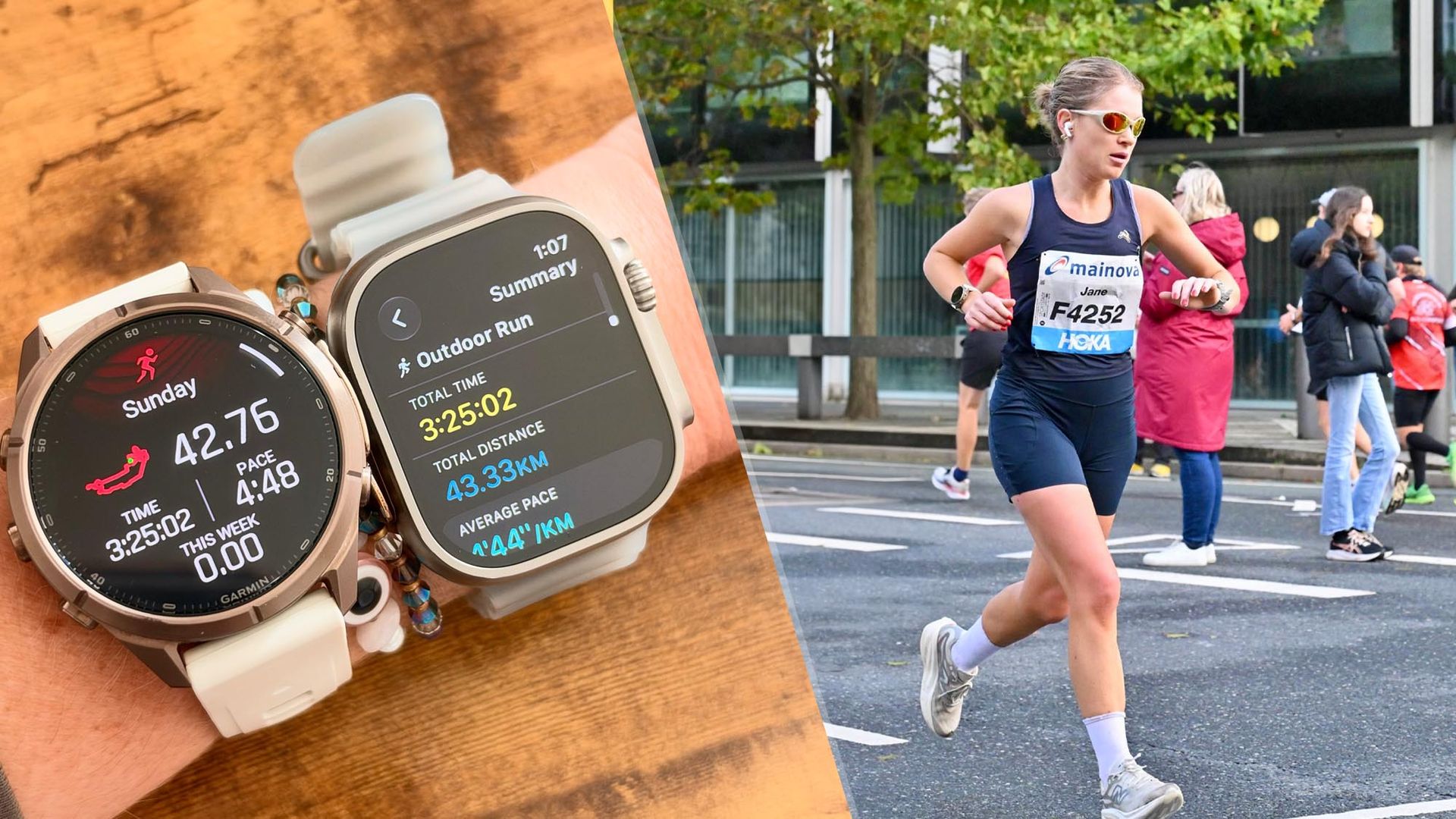
Experts think it typically takes three to four weeks for the body to recover after running a marathon, but what does the tech say? To find out more, I looked at my readiness scores on three different wearables the morning after the marathon and for the next few days — read on to find out more.
Before we dive into the data, a reminder that you can read my Apple Watch Ultra 4 review, Garmin Fenix 9 Pro review, and Oura Ring 5 review here on Tom’s Guide.
I ran 26.2 miles and burned 2,473 calories: Here’s what my readiness score was the next morning
For the race, I wore my Apple Watch Ultra 4 on one wrist and my Garmin Fenix 9 Pro on the other: you can read which was more accurate here. I also had my Oura Ring 5 on my index finger for both the race and the post-race celebrations.
Despite sleeping well the night before the race, with the clocks changing giving me an extra hour of sleep before I took on my seventh marathon in the wind and rain, the night of the marathon was a different story.
Sure, my legs were tired, and I’d spent a few hours in the pub celebrating, but at 2 am I was wide awake and struggled to get back to sleep. My legs were twitching, and I could tell wine and chips probably wasn’t the best recovery move.
The next morning, it wasn’t a pretty picture when I downloaded my data. My Oura Ring 5 gave me a readiness score of 35/100. “Your resting heart rate trend indicates that your body might be strained at the moment,” it told me. My sleep score was 45/100, with only 4 hours and 52 minutes of sleep. It also said I needed to pay attention to the amount of activity I’d had the previous day.
Apple also flagged that things were slightly off, giving me a readiness score of 3/10 (why Apple decided on a Readiness score out of 10, not 100, will always confuse me). The overnight vitals showed that while my wrist temperature was typical, my heart rate and respiratory rate were elevated. My recovery HRVthe next day also showed there was stress on my body.
Garmin told a similar story: the night before I went to bed, my Fenix 9 Pro told me my overall stress level was 60 and that my body battery was at -64, which felt about right as I lay down on my paper-thin pillow in possibly the worst hotel I’ve ever stayed in. The next morning, my Training Readiness score was 25/100 — in the Poor bracket. I’ve always found Garmin the most brutal when it comes to evaluating my performance, and it was the same here.
So what do I do with all of this data? I was in no fit state to run the next morning or for the following week, but I found it interesting to look at the different scores and how each wearable understood what was happening.
My Garmin seemed to grasp that my recovery was down to the previous day’s efforts, my Oura focused on a bad night’s sleep being “normal for parents and at this stage in my cycle,” and Apple, as always, didn’t go much further other than flagging that I should “pace myself.”
It’s also worth noting that, looking at my Oura Ring and Apple Watch data for the entire week following the race, my readiness scores hovered around 60/100, 6/10 mark. My resting heart rate remained elevated as my body recovered and I fought off the cold my toddler gave me the second I walked in the door, and it took me a few days to catch up on the sleep I’d missed.
While I still believe in listening to your body more than any wearable device, it’s interesting to see the toll a major workout has on your sleep, heart rate, and recovery.
- Apple Watch Ultra 4 first impressions: 5 reasons to buy and 2 reasons to skip Apple’s new rugged model
- Apple Watch Ultra 4 vs Garmin Fenix 9 Pro: price, specs and features compared
- Here’s my favorite watchOS 27 upgrade — and it’s one nobody is really talking about
