

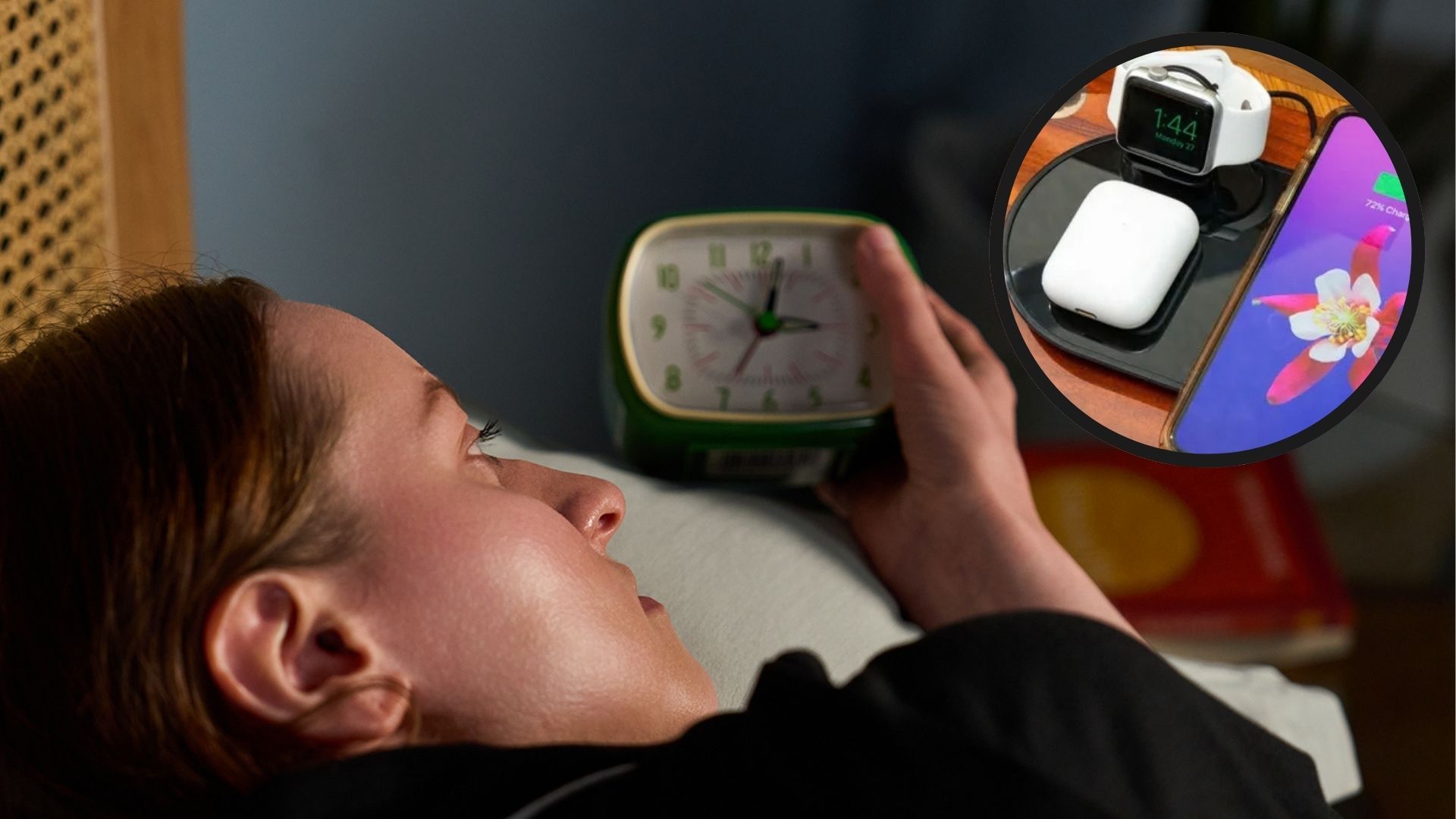
We’ve all experienced that bleary-eyed panic of suddenly waking up and thinking you’ve missed your alarm — only to discover that it’s 5 a.m. and you don’t need to get up until another two hours.
But for the past few weeks I’ve waking up hours before mysunrise alarm most mornings, usually between 4 a.m. and 5 a.m., leaving me crawling through each day in an exhausted fog.
I was at a loss as to why this kept happening, until a new study revealed the culprit. Here’s the surprisingly small thing that kept waking me up way too early, plus the cheap, easy fix that helps me stay asleep all night.
Key takeaways from the new study:
- Researchersat Tulane University have found that light exposure (over 3 lux) from electronic products such as chargers and stand-by lights can cause shorter, disrupted sleep and body clock changes.
- People with the brightest bedrooms at night slept about 48 minutes less each night (6.9 hours) compared to people who slept in total darkness (7.7 hours).
- This shorter sleep duration can change the way the heart functions, leading to cardiovascular damage over time.
- To limit nighttime light exposure, experts recommend covering lights from electronics with LED light-blocking stickers, using blackout curtains, and wearing eye masks.
Why I kept waking up hours before my alarm
According to a new study conducted by researchers at Tulane University, exposure to light at night can shorten our overall sleep duration.
This reduced sleep duration over a long period of time can lead to impaired heart health, say scientists — and 50% of that cardiovascular damage is caused by light exposure cutting sleep prematurely short.
The study also found that people with the brightest bedrooms at night slept about 48 minutes less each night (6.9 hours) compared to people who slept in total darkness (7.7 hours).
When I first read the results of this study, I found them fascinating — but couldn’t see how they were applicable to me. After all, I keep my blinds closed, I don’t use a night light, and I put my phone on Sleep Mode so my phone doesn’t light up with notifications throughout the night.
However, when I found myself waking up at 5 a.m. again, I looked around the room and spotted the culprit: the light from my laptop charger, making my room look as if it were bathed in blue light.
I must not have spotted the charger’s glow when I first turned off the bedroom light, but I could now see the charger light’s full disruptive impact once my eyes adjusted to the dark.
How does bedroom light affect sleep and health?
The same study also found that the cardiovascular damage caused by nocturnal light exposure also stems directly from the artificial light disrupting the body’s circadian rhythm.
However, the main ramification of light exposure remains shorter sleep, with exposure to light at night (>3 lux) suppresses melatonin, resulting in shorter sleep duration which in turn leads to “cardiac remodelling”.
“This is the first study of its kind, and it shows that exposure to higher levels of light at nighttime is linked to cardiac remodelling,” says Professor Lu Qi, who led the groundbreaking study.
“Cardiac remodelling” is where the structure and function of the heart changes in response to stress.
“It’s our body’s way of adapting to that stress, but ultimately it weakens the heart and can lead to heart failure.,” explains Professor Li.
Of course, this isn’t the first piece of research to examine how light exposure during sleep can cause nighttime awakenings.
One 2020 study discovered that those living with heavy light pollution tend to get much less sleep, while a 2021 study found that sleeping in a room with even a small amount of light elevates heart rate throughout the night and lead to disrupted sleep.
How I fixed my nighttime light exposure with this genius $5 product
Fortunately, the study’s accompanying editorial provides some guidance on combating nighttime light exposure, and it’s pretty simple.
“The advice is simple and inexpensive: blackout curtains, warm-coloured bedside lighting, and covering the small standby LEDs on household electronics,” writes Professor Thomas Münzel in the commentary.
So, the first thing I did was order something that would block the charging light on electronics. I stumbled upon theseLight Blocking Stickers, now $4.98 (were $8.99) at Amazon, which promise to dim up to 100% of electronic light.
I was sceptical, but to my surprise, this $5 product effectively blocks light from my computer monitor, laptop charger, and extension lead switch. I simply choose a sticker (they come in various shapes and sizes) that can effectively cover the light
Now, my early morning awakenings have come to a halt — just in time to try out the best sunrise alarm clocks.
3 top-rated products to help block out sleep-disrupting light
LED Light Blocking Stickers: was $8.99 now $4.98
I recently tried these LED light-blocking stickers, after the study’s commentary recommended them as an easy, affordable solution. The stickers com in different shapes and sizes to cater to all types of a LED and electronic lights. This 2-sheet sticker pack is now 45% off, taking them $8.99 down to $4.99.View Deal
Mulberry Silk Sleep Eye Mask: $7.89
If you can’t seem to get your bedroom as dark as your sleep needs it to be, the good news is that eye masks have been proven to promote deep sleepand improve next-day alertness. Now down to as low as $7.89, this 100% mulberry silk mask is available in seven colors and comes with free shipping and 30-day returns.View Deal
Light exposure comes can come from outside your bedroom as well as in it, but these blackout curtains made to block out 95% of sleep-disrupting light pollution. Now down to under $10, the MIULEE Black Blackout Curtains come with free shipping and free 30-day returns. View Deal
