

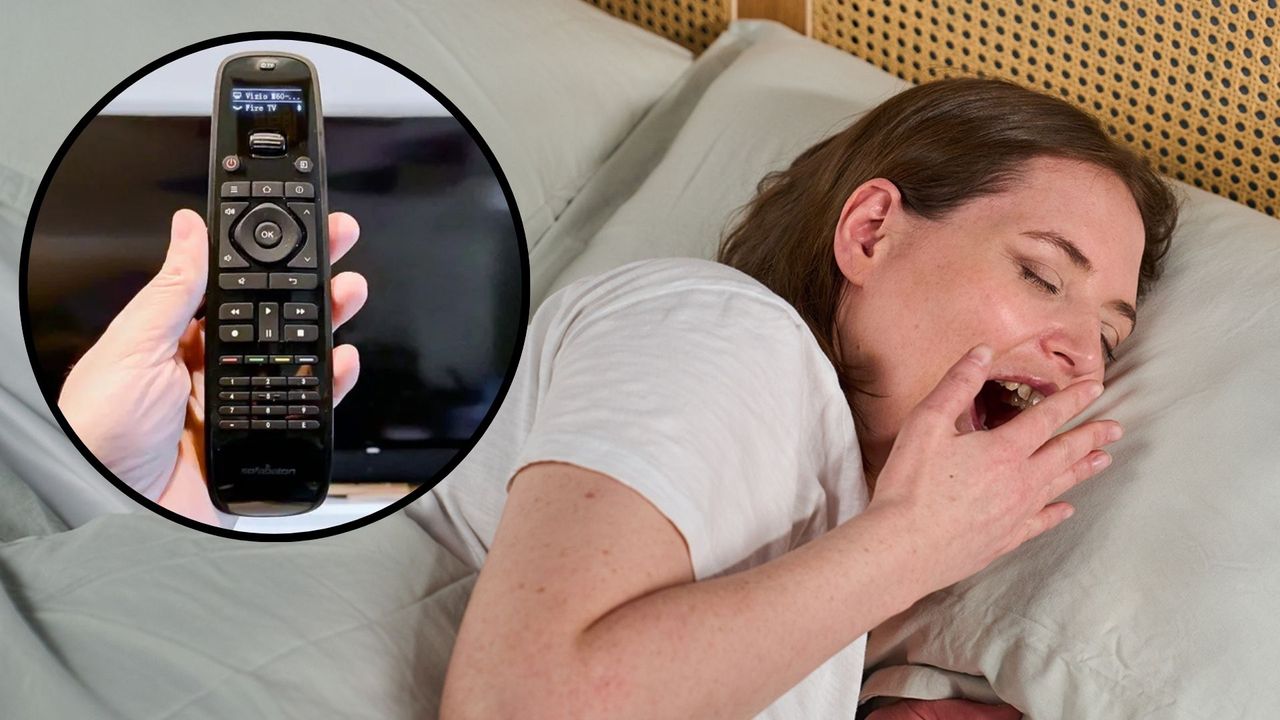
If you’re anything like me, you need complete darkness and silence to sleep, blocking light and noise with eye masks and ear plugs. I couldn’t think of anything worse than falling asleep in front of a TV emitting sounds and bright moving pictures.
So, imagine my surprise when I checked the results of our recent Tom’s Guide poll that asked the question: “Do you fall asleep in front of the TV?”. 59% of over 700 respondents admitted to dozing off with the TV on, with a third sharing that they do it most nights.
I asked two psychologists to explain the reasons behind this common TV habit. And I also called on a board-certified medical doctor to share how sleeping with the TV on can affect your sleep quality — and the simple methods to try instead if you need background noise to fall asleep (or sleep through the night).
Falling in front of the TV: Why do so many of us do it?
Before I delve into the psychology behind sleeping with the TV on, I decided to get some first-person perspectives from those who habitually fall asleep in front of the TV.
So, is it a habit that occurs by accident when they’re trying to watch a TV show, or is bedtime TV an intentional sleep aid?
Turns out, it’s both.
“I have actually made this habit that I need to hear something to get sleepy,” says travel bloggerJatin Chhabra, who says it took him hours to fall asleep after recently switching to an earlier bedtime.
“So, for 2 hours, I watch TV, or sometimes just hear it,” he explains. “Some content is helpful, but interesting and funny stuff never makes me sleepy.”
Similarly, publicist Alice Wu likes to use “long” and “monotone” TV to drift off, a habit that began when she used to have a baseball game playing in the background to fall asleep.
“These days, having the TV tuned into a nature show is a way for me to calm down and relax at the end of the day,” Wu says. “I enjoy the descriptive commentary in nature shows, and eventually I turn the volume down and kind of just drift off to sleep.”
On the other hand, we have Sleep Editor Nicola Appleton, who tells me that her nocturnal TV habit isn’t actually intentional.
“Falling asleep in front of the TV was always something of a guilty pleasure for me, particularly on the weekend when I’d ‘treat’ myself to a later night,” she explains. “I’d settle down to re-watch one of my favorite shows or films, but I’d end up practically sleeping through the whole thing.”
1. Stops overthinking and quiets racing thoughts
“I don’t necessarily need to have the TV on to fall asleep, but I do find that if I’m feeling particularly wired, it helps me for some reason,” Wu tells me. “I haven’t been able to pinpoint why, it just does.”
If you intentionally have the TV playing in the background to fall asleep, you may likely relate to that experience.
In fact board-certified clinical psychologist with Better Sleep, watching TV to fall asleep when you’re feeling “wired” isn’t at all unusual
“The steady background noise can quiet racing thoughts and ease the transition from wakefulness to sleep,” says Dr Harris.
It gives us something else to focus on so that we don’t start replaying that awkward conversation with our boss or worrying about the busy day we’re going to have tomorrow
Dr Nicola Cann, Sleep Psychologist
Dr Nicola Cann, a sleep psychologist, says that TV can serve as a distraction from anticipatory anxiety or overthinking about something you’ve already done.
“TV can also serve as a useful distraction for those of us who are prone to rumination before bed,” Dr. Cann says. “It gives us something else to focus on so that we don’t start replaying that awkward conversation with our boss, or worrying about the busy day we’re going to have tomorrow.”
2. Some shows are relaxing or just plain boring
If you find that you can power through a brand new show, but end up drifting off when your rewatching a new one, then it’s likely that you only fall asleep in front of the TV when the content is soothing or uninteresting.
“Watching TV can help us wind down by reducing cognitive arousal,” says Dr. Cann. “Shows that are familiar or predictable are especially good for this because they can be relaxing without being too engaging.”
“Familiar shows offer a sense of comfort, predictability, and companionship at the end of the day — a soft landing after hours of demands and decisions,” Dr. Harris adds.
3. TV becomes a sleep cue over time
Dr. Cann says that sleeping with the TV on, while calming, can also turn into an unhelpful sleep cue if it happens frequently enough over time.
“If we repeatedly watch TV when we’re becoming sleepy our brains learn to associate the sofa and TV time with sleepiness,” the psychologist explains. “Then it can be harder to fall asleep without the TV.”
4. You’re not going to bed when you’re sleepy
However, needing to have the TV on to fall asleep differs from accidently falling asleep while watching TV. If you find yourself in the latter camp, the answer to why you’re falling asleep in front of the TV may be simple: you’re tired.
“Of course, people falling asleep in front of the TV might simply be sleepy,” says Dr Cann. “If you’re regularly falling asleep in front of the TV then it’s worth asking yourself: are you getting enough sleep, and are you going to bed when your body is ready for sleep?”
Falling asleep in front of the TV: Why should we stop?
So, why is falling asleep in front of the TV so bad anyway? I asked Danielle Wall, MD, a board-certified internal medicine physician and Sit ‘n Sleep‘s resident medical reviewer.
Here she explains how TV may be ruining your sleep despite helping you to fall asleep.
1. Lowers sleep quality
Let’s face it: TV’s are noisy, light boxes designed to stimulate the senses, and that spells trouble for our sleep.
“Falling asleep with the TV on can make it harder to create the dark, quiet environment that generally supports consistent sleep,” says Dr. Wall.
“Light from the screen, changes in volume, and shifts in programming can continue providing stimulation after you begin drifting off and may contribute to disrupted or lower-quality sleep,” the medical doctor adds.
Indeed, a 2021 study found that sleeping in a room with even a trace amount of light can lead to nighttime awakenings, while research hasshown that nocturnal noise fragments sleep.
2. Causes daytime fatigue and poor health
If the light and noise from the TV ends up waking you up at 3 a.m., that means you’ll be waking up with a lot less energy.
“When sleep is shortened or interrupted, people may notice the effects the next day through lower energy, difficulty concentrating, irritability, or changes in mood,” says Dr Wall.
Research also shows that lower quality sleep can affect health in general, with one studyfinding that gettingless than seven hours of sleep can reduce our life expectancy even more than poor diet or lack of exercise.
“If poor-quality sleep becomes a regular pattern, it can also affect overall well-being over time,” the M.D. explains.
3. Makes it harder to fall asleep in bed
Dr. Cann also explains that sleeping in front of the TV can affect something called sleep pressure (or sleep drive), which is the biological urge to go to sleep.
“While we’re awake, sleep pressure gradually builds, increasing feelings of sleepiness,” the psychologist explains. “If we’ve built it up throughout the day, we’re more likely to fall asleep easily and stay asleep when we go to bed.”
According to Dr Cann, falling asleep in front of the TV can eat into that sleep drive that you’ve been building, potentially making it harder to fall asleep when you eventually go to bed.
“The longer or later that accidental sleep is, the more likely it is to interfere with your subsequent sleep,” she warns.
Falling asleep in front of the TV: How to stop
It’s all well and good to point out the consequences of sleeping with the TV on, but a habit can be hard to beat when it’s (a) accidental or (b) needed.
1. Disable autoplay, set a timer, and switch off the TV
If you’re someone who drops off while watching the tube, it’s best to start setting yourself limits rather than cutting out nighttime TV altogether..
“If someone is used to sleeping with the TV on, they do not necessarily have to change the habit overnight,” says Dr Wall. “A sleep timer is a good first step so the television turns off shortly after they fall asleep.”
Dr. Harris advises using a sleep timer so the TV shuts off after 20 to 30 minutes.
“Keep the screen dim, and avoid particularly stimulating contentsuch as news, crime shows, or anything emotionally intense,” the board-certified psychologist advises.
If you’re gripped by a new show and have a weakness for binge watching, Dr Cann recommends having “stopping points” to minimize the risk.
“Don’t start a movie when you know it’ll end too late for you,” the psychologist suggests. “Disable autoplay features so you’re not tempted by ‘one more episode.”
Once you’ve reached a stopping point the best thing to do is “turn off the TV” and “keep the lights dim”
“Avoid picking up your phone or doing another activity that wakes you back up,” says the doctor. “The goal is to take advantage of that natural sleepiness rather than resetting your brain into wake mode.”
2. Find a new way to relax
Creating a relaxing nighttime routine is important if you want to improve your sleep — but what if your wind-down routine consists of a late-night binge-watch?
“For some people, having the TV on becomes part of their usual wind-down routine,” says Dr Wall. “Over time, the brain can begin to associate that background sound and familiar content with relaxation and sleep.”
To break this association, Dr Wall suggests building healthier sleep cues.
“Creating a consistent wind-down routine with dimmer lighting, reading, or another relaxing activity can also help teach the brain to associate different cues with sleep,” she suggests.
3. Switch to audio only
Sometimes, the sound of the TV can be sleep inducing, rather than the TV screen itself.
“If the sound itself is comforting, try replacing the TV with white noise, calming audio, or another option that does not include a bright, changing screen,” suggest Dr Wall.
Dr Harris agrees: “Try a familiar podcast, audiobook, sleep story, calming music, white or brown noise, or another audio-only option with a timer.”
She suggests that, over time, you can gradually shorten the amount of time the audio plays as your brain becomes more comfortable falling asleep without it.
“The goal is to preserve the sense of familiarity and background sound while minimizing light and unexpected stimulation,” Dr Harris explains.
I tried out the audio method — here’s what happened
I decided to follow the three sleep doctors’ advice and try out a sleep podcast to fall asleep. Using the Jabees PEACE Duo Pillow, I chose theSleep With Me series.
The Sleep With Me podcast has the tagline, “Bedtime stories to help grown ups fall asleep in the deep, dark night.
It features bedtime stories for adults that are designed to be so rambling and monotone that they take your mind off racing thoughts and bore you to sleep.
The mental health podcast features a library of insipid stories, so I selected one at random: The Orlando Convention Center. If you would like to know what the story is about, then look it up yourself because I have no clue.
Once I put it on, and my pillow speaker muffled the narrator’s voice, it slowly turned into (metaphorical) white noise to me.
According to my Oura Ring 5, I fell asleep in under 10 minutes (9, to be exact) mention. The voice was so single-toned and tedious that I didn’t take much notice to what the story was about. Basically, it was so boring that I fell asleep.
However, I forgot to heed Dr Harris’s advice that I use a timer. Spotify autoplayed fortwo and a half episodes until I suddenly woke up at 2 a.m., with the podcast still droning on.
I don’t usually wake up at 2 a.m., so I am going to have to blame the podcast (for waking me up) and myself (for not setting a timer).
However, if you need sound in the background to fall asleep, then I definitely think this sleep podcast is a great alternative to a TV screen. Just remember to set a timer first so you don’t wake up to the sounds of someone talking about a craft fair.
3 top-rated products to stop you from using TV for sleep
If you want to try listening to a sleep story instead of the TV, then try listening to it through one of the best sleep headphones. The Soundcore A30 Sleep Earbuds has an audio library with curated Calm sleep stories, AI Brainwave Audio (binaural beats), and customizable white noise.View Deal
PEACE Duo Pillow Speaker: was $59.99 now $49.99
If wearing earbuds isn’t your thing, you can try this under-the-pillow speaker from Jabees. When connected to your phone, the speaker duo can play sounds that only someone resting against the pillow can hear. It also makes voices muffled, perfect if you want background noise without disturbing your partner. View Deal
If you like watching Netflix on your phone instead of your TV, you can use theBrick Phone Access Blocker to switch off any distracting apps (from Disney+ to Instagram) at a set bedtime. Simply select the apps and the cut-off time, and it’s locked until you physically touch your phone to the Brick magnet. View Deal
