

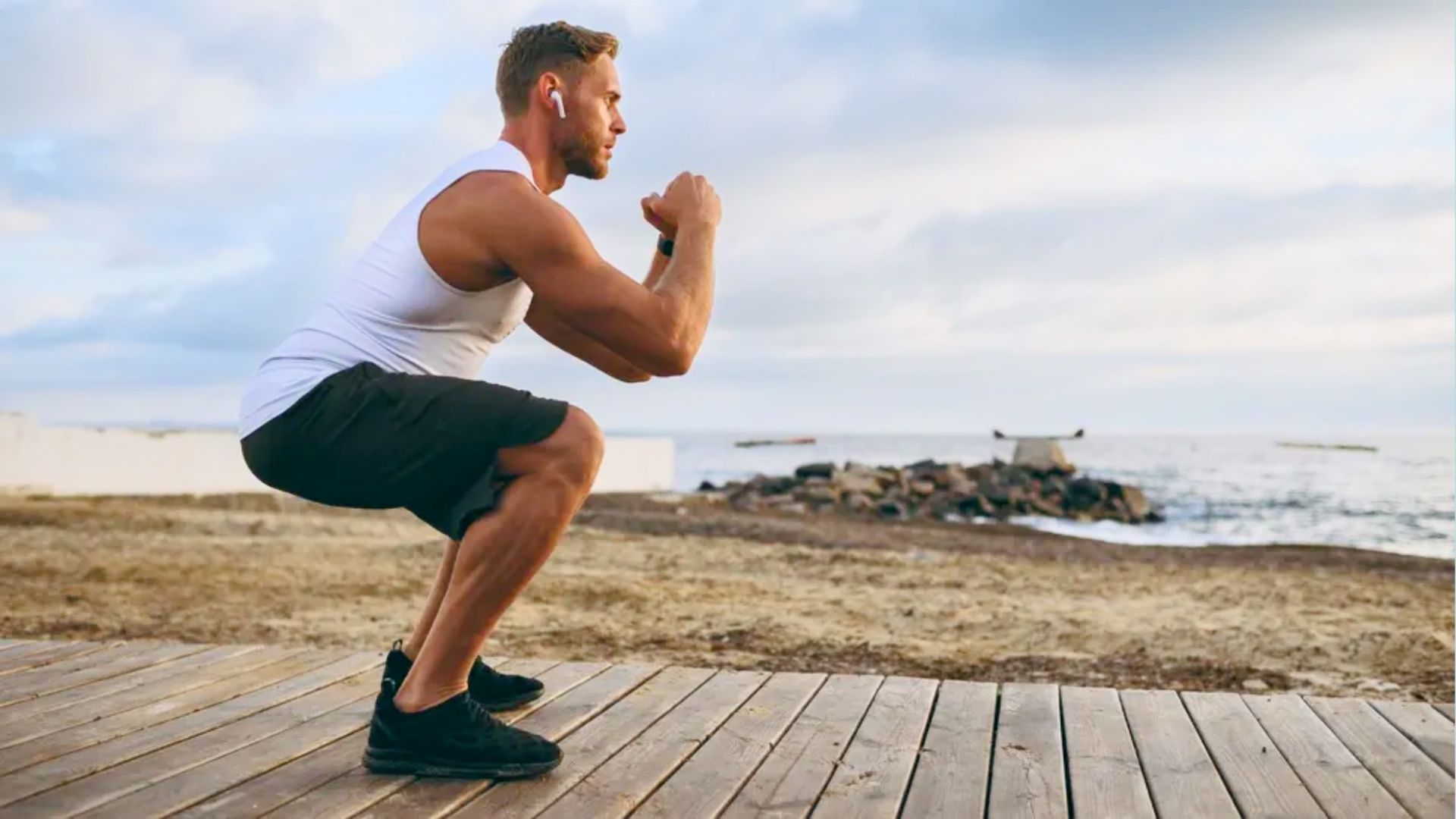
I love a yoga block; it can make an exercise more challenging (try putting a block between your thighs during chair pose) or easier, depending on what you need it for. This yoga block hack has improved squat depth for many, many clients, and it’s helpful if you have tight ankles or limited mobility.
While, yes, ideally, you’d work on fixing tight ankles using regular mobility routines, not everyone can achieve ideal squat depth (parallel or lower), and so this trick comes in handy if you want to work your quads hard without compromising your form.
Ready? Let’s take a look at the exercise and some benefits.
I have extremely tight ankles, and despite working on them for a while, I still struggle to squat well without the famous butt wink(when your pelvis slightly tucks under at the bottom of a squat). For that reason, I use a yoga block or weight plates under my heels to elevate them; it helps front-load the squat so you feel it in your quads, but also helps you sit your hips back deeper into the squat.
If you experience pain at any time, stop and rest. If you’re working with an injury or health condition, especially knee pain, we recommend seeking advice before starting any new exercise.
- Stand with your feet hip-width apart or slightly wider. You can use one or two blocks depending on how wide you stand
- Engage your core and look ahead
- Step your heels onto the block(s) behind you, elevating your heels while pressing through the balls of your feet
- Sit your hips back and lower into a squat. Keep your chest proud and back straight
- Pause at the bottom, then drive upward to stand. Add weight if you prefer.
Why does elevating your heels help with squats?
Get ready to sit deeper without compromising your form.
As you sit back into a squat, there are multiple issues that can arise. A common one is tight ankles, which are commonly mistaken for a hip, back, or knee issue; when your ankles are tight, this acts as a catalyst for a chain of events that travel up to the knees and pelvis, impacting squat mechanics, creating potential imbalances, or even overfiring other muscle groups to compensate.
Here are somebenefits to elevating your heels:
- Upright torso: You can maintain a more upright torso, which allows most people to achieve a deeper range of motion. As you raise your heels, your weight shifts forward. If you’ve ever seen weightlifting shoes, you’ll notice the heel stack; others use plates or wedges.
- Ankle Mobility:If you struggle with dorsiflexion, squats might feel harder, so raising the heels can combat this issue and improve mechanics.
- Less strain: If you can sit more upright in your squats, you will place less stress on your knees and spine, helping you keep your spine straight and chest proud.
- More quad action: The raised position allows your knees to track over your toes, working your quads harder. You’ll also sit deeper into the squat with better form, working the leg muscles properly and with correct posture. It’s not just about working the muscles hard, but well.
Squats are one of the “big five” compound exercises. They’re functional and one of the best leg exercises for building power, strength and muscle in your lower body. While developing ankle mobility should be a focus, alongside a more comprehensive mobility routine, there’s no reason to suffer with your feet flat if you don’t need to.
Adding plates or a yoga block will help reduce issues with balance and posture, though it’s not a cure-all. Focus on an upright torso, gaze straight ahead and keep your core engaged. Only when you feel comfortable with your form should you add load.
If you’re unsure, get someone to spot you, film yourself, or use a mirror. This will allow you to check if your tailbone is tucking under (the butt wink) or if there’s any overcompensation elsewhere.
FollowTom’s Guide fitnesson Instagram for more workouts, routines, tips, and tricks.
- I teach people how to be more mobile: 3 low-impact back and shoulder moves that build stability and strength after 40
- According to a personal trainer, this exercise is 100 times more effective than crunches. I tried it and was humbled
- I teach people over 50 to be mobile: 3 low-impact moves that build more stability than a 30-minute walk
