

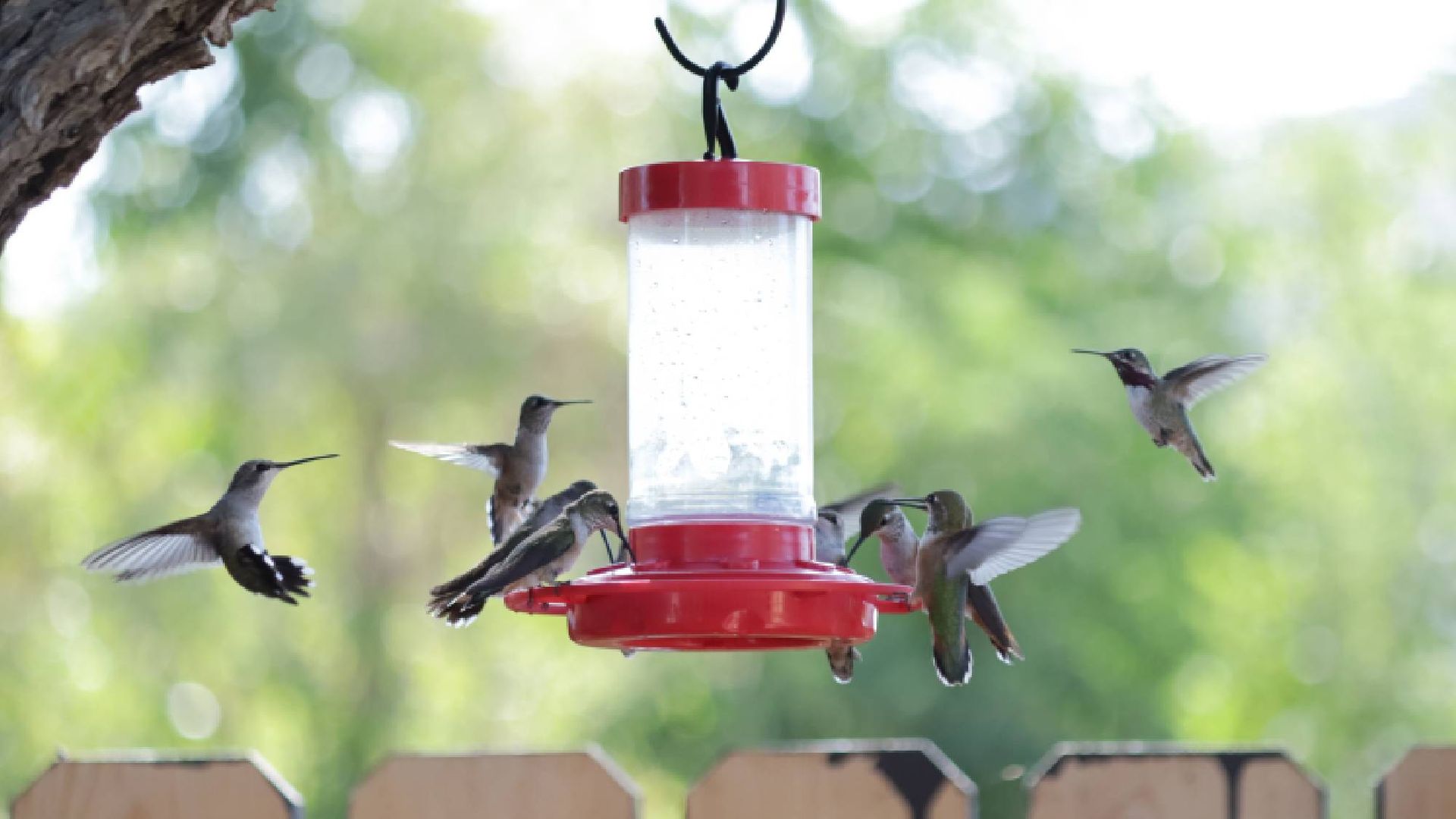
One second, a tiny ruby-throated hummingbird is peacefully sipping nectar at your window. The next, a flash of iridescent feathers dives out of nowhere, chasing the innocent visitor out of the yard like an angry jet fighter.
If your backyard hummingbird station feels more like a miniature aerial battleground than a tranquil garden retreat, you aren’t alone. Watching these tiny creatures bully each other can feel alarming, but understanding why they fight is the key to creating a calm, welcoming space for every bird in your neighborhood.
Here is the territorial instinct driving hummingbird feuds — and the smart feeder setup that restores peace to your backyard.
Why hummingbirds fight over sugar water
Despite weighing less than a coin, hummingbirds are among the most intensely aggressive creatures in the avian world. Their territorial hostility isn’t personal, it is a survival instinct driven by three core factors:
1. Burn-it-all metabolisms
(Image: © Shutterstock)
A hummingbird’s heart beats up to 1,200 times per minute, requiring them to consume vast amounts of nectar daily just to survive. Because energy is a constant life-or-death priority, securing a reliable foodviews that area as a high-value asset worth defending at all costs
2. The “single flower” delusion
(Image: © Shutterstock)
In nature, wild nectar sources are scattered across fields and patches of tubular flowers. A garden feeder, however, represents a massive, concentrated bounty of food sitting in one exact spot.
Male hummingbirds naturally treat a single feeder the way they would treat a prized patch of wild blossoms: a clear territory boundary that must be aggressively guarded from rivals.
Hummingbird nectar feeders:from $9 @ Amazon
Amazon has a wide selection of hanging bird feeders that are easy to hang/reposition and durable. Prices start as low as $7 for feeders with five feeding ports and more.View Deal
3. Species temperament
(Image: © Shutterstock)
While all species exhibit territorial traits, certain birds (like Rufous and Allen’s hummingbirds) are notoriously combative. Individual temperaments vary, but a single dominant bully will often park on a high perch nearby, spending all day watching a feeder just to attack any bird brave enough to take a drink.
How to stop feeder feuds (without chasing away the birds)
Trying to shoo away a dominant bully or moving your feeder around every time a fight breaks out will only stress out the birds. Instead, the real solution comes down to visual obstruction and strategic layout.
Break line of sight between feeders
(Image: © Shutterstock)
The biggest mistake homeowners make is hanging two or three feeders on the same porch or shepherd’s hook. A bully bird can easily guard every port at once if they are grouped together.
Instead,spread multiple feeders across your property in spots where they cannot see each other.
If a territorial bird is perching on a branch watching Feeder A, place Feeder B around the corner of your house, behind a shed, or on the opposite side of a dense bush. A bully cannot defend what it cannot see.
Plant native tubular flowers
(Image: © Shutterstock)
The most effective way to take pressure off your artificial feeders is to offer natural alternatives throughout your yard. Planting native nectar-rich flowers spreads out feeding opportunities. This disperses the birds across the garden, making it impossible for one dominant bully to hoard all the food.
Tuck feeders into shady, dense foliage
(Image: © Shutterstock)
Hanging a feeder out in the open middle of a flat lawn makes it an easy target for aerial patrols.
Tucking feeders near or inside native shrubs, leafy trees, or dense garden beds gives submissive birds natural cover to sneak in for a quick drink undetected. Shade also prevents sugar water from heating up and spoiling rapidly.
While territorial chasing is largely harmless, improper feeder setup and maintenance pose severe threats to hummingbirds.
Prevent fatal window collisions by placing feeders within 3 feet or beyond 30 feet of glass, avoiding clear visual “tunnels” through the home. Protect against fatal infections by feeding only a simple1:4 white sugar to water ratio — never red dyes or honey.
And prevent toxic mold by cleaning feeders every 1 to 3 days, replacing extra feeders with low-maintenance native perennials if upkeep becomes overwhelming.
- How to help hummingbirds prepare for fall migration — 3 essential yard tweaks to do right now
- Never use bleach in your birdbath — this cheap pantry staple is safer and more effective
- Want more hummingbirds? 7 tips for attracting them to your yard
