
Close Menu
MyAppsPlus

    Subscribe to Updates

    Get the latest creative news from FooBar about art, design and business.

    What's Hot

    SpaceX Spectrum Deal Puts Starlink in Carrier Territory

    October 12, 2026

    Apple’s iPhone 18 Pro Demand Is Likely Slipping — But Gene Munster Says That’s Not The Real Story

    October 12, 2026

    Best Buy open at midnight for Zelda Ocarina of Time pre-order pickup, more

    October 12, 2026
    Facebook X (Twitter) Instagram
    Facebook X (Twitter) Instagram
    MyAppsPlusMyAppsPlus
    Monday, October 12
    • Home
    • Breaking Tech
    • Apps & Software
    • AI & Automation
    • Android
    • iPhone & iOS
    • More
      • Reviews
      • How-To Guides
      • Deals & Discounts
      • Shop
    MyAppsPlus
    Home»Breaking Tech»OpenAI Dot vs. Meta Muse: How do these AI agents compare?
    Breaking Tech

    OpenAI Dot vs. Meta Muse: How do these AI agents compare?

    myappsplusBy myappsplusOctober 12, 2026004 Mins Read
    Share Facebook Twitter Pinterest Copy Link LinkedIn Tumblr Email Telegram WhatsApp
    Follow Us
    Google News Flipboard
    OpenAI Dot vs. Meta Muse: How do these AI agents compare?
    Share
    Facebook Twitter LinkedIn Pinterest Email Copy Link

    Both agents can keep working after you leave, but they differ considerably on price, permissions and where they can work.

    Meta and OpenAI now have AI agents that are meant to do more than just wait for the next prompt. Meta released Muse on September 8, followed by OpenAI’s new always-on agents in ChatGPT three weeks later. Both can continue to work after you leave, run their own cloud computers and connect to outside services.

    The promise is enticing: Provide an AI with a task and then stop checking on it every five minutes. Muse can go shopping, complete forms, make travel plans, send emails and monitor things such as prices. Dots can manage ongoing research, work across connected applications and perform recurring tasks, and OpenAI is closely integrating them with ChatGPT, Work and Codex.

    Dots and Muse can do similar jobs, but the experience is different
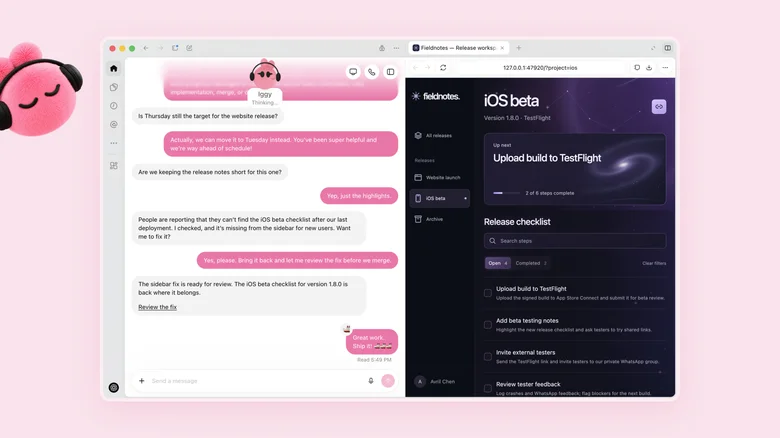
    OpenAI's Iggy Dot discussing an iOS beta beside a release checklist.

    Muse runs on a dedicated Secure VM with its own browser and is designed to feel a lot like messaging another person. It can be usedces like email and your calendar when you’re ready to make it more powerful. In Engadget’s hands-on, Muse turned saved Instagram and Facebook posts into organized recipe and restaurant collections

    Dot lives within ChatGPT and is powered by GPT-6 Astra. Each one has its own cloud computer, can utilize connected plugins, remembers relevant context and can keep working on scheduled or recurring jobs. Users can also grant a Dot access to their local computer to retrieve files or browse the internet, and OpenAI plans to enable users to manage multiple Dots simultaneously. 

    That’s where the sci-fi sheen fades a bit, since these agents still need supervision. Meta states that Muse asks for permission before taking sensitive actions like sending an email or making a purchase, and OpenAI employs permissions, Custom Rules and Auto-review to manage what Dots can do, with both companies cautioning that their agents can make mistakes. Even browser access has limits: Amazon has already blocked Muse from shopping on its site.

    Muse is much cheaper to try, but privacy controls matter on both
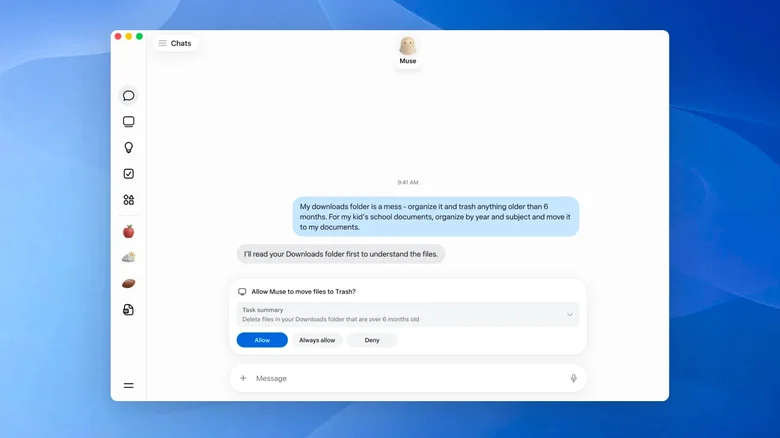
    Meta Muse asking for permission to move old files from a Downloads folder to Trash.

    The most obvious difference is price. The free tier of Muse has a usage cap, and the Power and Maximum tiers are $20 and $100 per month, respectively. At present, individual users must pay a much higher subscription fee to use Dots, with the lowest available option being Pro 100 for $100 per month. A Business Premium seat costs $100 per user per month (billed annually) or $125 per user per month (billed monthly). 

    The subscription isn’t the only thing, of course. The more accounts you link, the more capable the agent becomes, but that can mean access to your email, calendar, files and browser sessions (which is not something most people would give away lightly). Meta states that conversations and data within its VM aren’t shared with its advertising systems, and that users can choose not to have the interactions used to enhance Meta’s AI models. Engadget found the model-improvement setting enabled by default, along with a default permission option that prompts for only some actions.

    OpenAI states that activity from personal-plan Dots may be used to improve its models, depending on the user’s ChatGPT setting, while Business and Enterprise data is not used for training by default. Proactive Dot research is read-only until a subsequent action passes its normal permission checks. 

    Availability is another complication. Dots are rolling out to eligible Pro users outside the European Economic Area (EEA), Switzerland and the UK, while Dots are available to Business Premium users across supported ChatGPT regions, and Enterprise access is still in beta. OpenAI states that Dot usage won’t count toward your usage limits unless the Dot is working within ChatGPT Work or Codex. Muse is currently available in the US and Canada. 

    AI Meta Muse OpenAI these
    Follow on Google News Follow on Flipboard
    Share. Facebook Twitter Pinterest LinkedIn Tumblr Email Copy Link
    myappsplus
    • Website

    Related Posts

    OpenAI Dot vs. Meta Muse: How do these AI agents compare?

    October 12, 2026

    The reason the Xbox Series S is so much cheaper than the Series X

    October 11, 2026

    Why Japan said goodbye to traditional flip phones

    October 11, 2026
    Add A Comment
    Leave A Reply Cancel Reply

    Top Posts

    What was the PSX? The souped-up PS2 rarely sold outside of Japan

    September 14, 202610 Views

    Can reviews settle disputes that marked first two seasons?

    September 21, 20268 Views

    Experts call for leveraging AI, breaking key tech bottlenecks to propel advanced manufacturing

    September 19, 20268 Views
    Latest Reviews

    Android 17 boosts network security by hiding domain names, lets carriers disable 2G

    myappsplusAugust 28, 2026

    Google Messages officially announces custom ‘Chat themes’ & backgrounds

    myappsplusAugust 28, 2026

    Barret Zoph, the Thinking Machines co-founder ousted before joining OpenAI, is now at Google

    myappsplusAugust 28, 2026
    Stay In Touch
    • Facebook
    • YouTube
    • TikTok
    • WhatsApp
    • Twitter
    • Instagram

    Subscribe to Updates

    Get the latest tech news from FooBar about tech, design and biz.

    Most Popular

    As electric two-wheelers gain a foothold, Belgian startup Any bets on cargo space

    August 28, 20260 Views

    Best Buy launches Friday 24-hour Flash Sale: iPad, iPhone, $800 off mini-LED TV, more

    August 28, 20260 Views

    Guns, cars and chihuahuas: Breaking down the GTA 6 extended look

    August 28, 20260 Views
    Our Picks

    SpaceX Spectrum Deal Puts Starlink in Carrier Territory

    October 12, 2026

    Apple’s iPhone 18 Pro Demand Is Likely Slipping — But Gene Munster Says That’s Not The Real Story

    October 12, 2026

    Best Buy open at midnight for Zelda Ocarina of Time pre-order pickup, more

    October 12, 2026

    Subscribe to Updates

    Subscribe to our newsletter and get the latest tech news, app updates, AI trends, smartphone reviews, and exclusive deals delivered straight to your inbox.

    Facebook X (Twitter) Instagram Pinterest
    • About Us
    • Get In Touch
    • Disclaimer
    • Privacy Policy
    • Terms & Conditions
    © 2026 MyAppsPlus. All Rights Reserved.

    Type above and press Enter to search. Press Esc to cancel.