

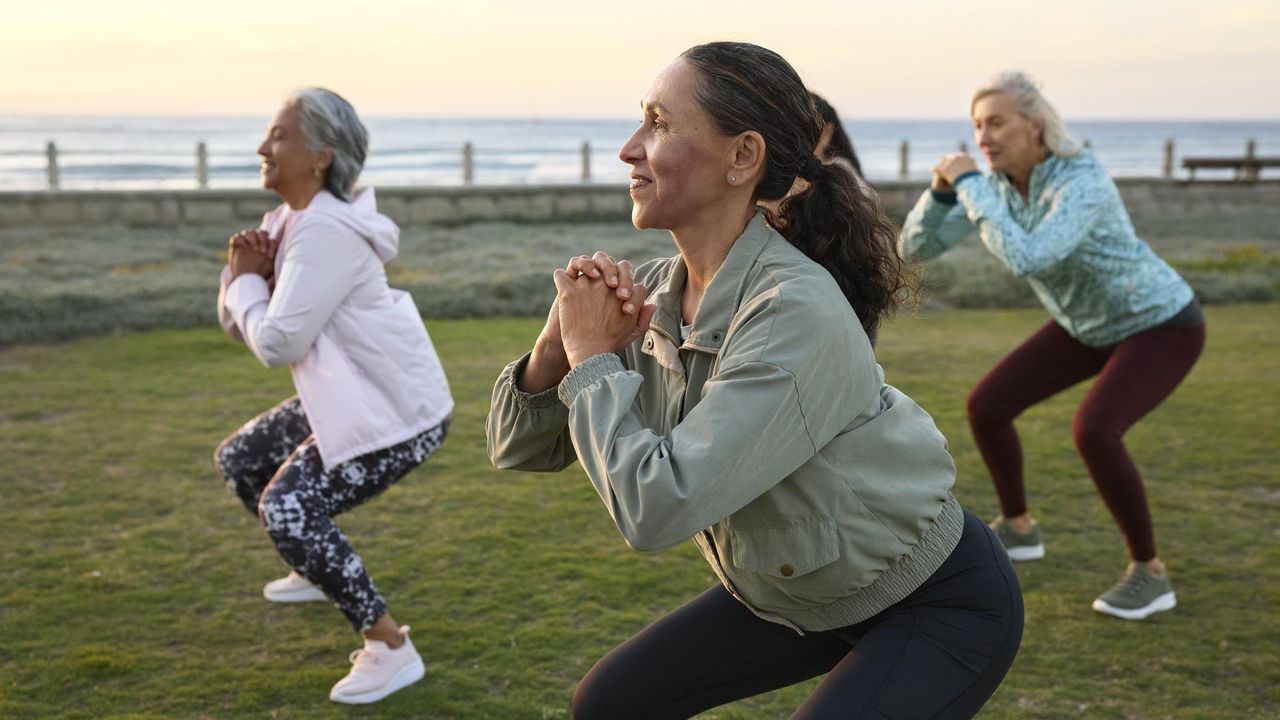
As we get older, strength training is the best way to slow down and reverse the physical effects of aging. Starting around age 30, adults start to lose between 3-8% of their muscle mass per decade — this is a process called sarcopenia, and it accelerates dramatically after age 60.
Resistance training, even if you’re just using your bodyweight, can help build and maintain muscle, build bone density, and improve your overall stability and balance to prevent falls.
Yet if you’re new to exercise, or you’re returning to exercise following an extended break, it can be difficult to know where to start. Luckily, you’ve landed in the right place. I asked certified personal trainer and strength coach Amy Kiser Schemper, who has experience working with seniors, for a simple workout she gives her clients over 50. Read on to find out more.
As a reminder, if you’re currently recovering from an injury, it’s always a good idea to seek personalized advice from a qualified professional before trying something new. If at any time you feel sharp pain, stop.
What is the workout?
“As we age, all movement is important, but strength training is key,” says Schemper. “I recommend focusing on compound exercises in our functional movement patterns: squat, hinge, lunge, upper body push, upper body pull, and rotation. Here’s a quick strength circuit using dumbbells or bodyweight for beginners.” You can check out the best adjustable dumbbells for working out at home here.
There are three circuits with three exercises in each circuit. Schemper recommends doing each exercise for 40 seconds, then rest for 20 seconds. Repeat for a longer workout.
Circuit 1
- Squat: Stand with feet hip-distance apart and toes turned out slightly. Engage your core and sit your hips back and down as if sitting in a chair, keeping your chest lifted. Drive through your feet to return to standing, squeezing your glutes at the top. This can be done with just bodyweight, or holding dumbbells by your side.
- Bent-over row: Stand with feet hip-width apart and hinge forward at the hips while keeping your back flat and core engaged. Let your arms hang naturally, then pull the weights towards your hips and your elbows back toward your rib cage, squeezing your shoulder blades together. Slowly lower the weight or arms and repeat.
- Dead bug: Lie on your back with arms reaching toward the ceiling and knees bent in “tabletop” (90-degree angle). Keep your core tight, and slowly extend the opposite arm and leg toward the floor. Return to the starting position and alternate sides.
Circuit 2
- Deadlift: Stand with feet about hip distance apart. Engage your core, push your hips back, and slightly bend your knees as you hinge forward, keeping the weights close to the front of your legs as you lower. Keep your back flat and shoulders pulled gently back. Drive through your feet and squeeze your glutes to stand tall.
- Chest press:Lie on your back on the mat or a bench with feet planted. Position your arms out to the sides with elbows bent and slightly angled in towards your torso. Press the dumbbells toward the ceiling and in towards each other until your arms are extended. Slowly lower your arms with control and repeat.
- Plank: Start on the mat on your forearms and toes, but modify by staying on your knees. Engage your core and create a straight line from your shoulders through your hips. Tighten through the core, but also through the legs, glutes and back, while being sure not to hold your breath. Hold the position while keeping your hips level and avoiding sagging or excessive lifting. Breathe steadily and maintain tension throughout your body.
Circuit 3
- Lunge: Stand tall with your feet hip-distance apart. Step one foot behind and lower your body toward the floor, bending both knees while keeping your torso upright. Push through the front foot to return to standing, then switch sides. Use a shorter range of motion or more of a “tap back” if needed. This move can be done with just bodyweight, or holding dumbbells by your sides.
- Bicep curl to press: Stand tall with your arms by your sides holding dumbbells and core engaged. Bend your elbows to curl the weights toward your shoulders, then rotate your palms outward and press your hands overhead. Lower the arms back down with control, reversing the movement. Keep your ribs down and avoid leaning backward as you press. Alternate if needed.
- Side plank: Begin on your side with your elbow directly beneath your shoulder and legs extended, or modify by keeping your knees bent. Engage your core and lift your hips away from the floor, creating a straight line from your shoulders to your feet or knees. Hold while keeping your hips stacked, then lower with control. Repeat on both sides.
- I’m a personal trainer who works with clients over 50 — these are the 3 mobility exercises I never skip
- After 60, this is the 10-minute routine I use with my clients to stay strong, mobile and independent
- ‘I’m a Pilates instructor, and I recommend these 5 core exercises to help older clients build strength and improve posture’
