
Close Menu
MyAppsPlus

    Subscribe to Updates

    Get the latest creative news from FooBar about art, design and business.

    What's Hot

    PlayStation officially reveals 2026 Black Friday deals: Physical PS5 games, DualSense, more

    November 15, 2026

    How much electricity does your home sound system typically use?

    November 15, 2026

    Italy fines Meta $887 million over access to Android users’ photos and videos

    November 15, 2026
    Facebook X (Twitter) Instagram
    Facebook X (Twitter) Instagram
    MyAppsPlusMyAppsPlus
    Sunday, November 15
    • Home
    • Breaking Tech
    • Apps & Software
    • AI & Automation
    • Android
    • iPhone & iOS
    • More
      • Reviews
      • How-To Guides
      • Deals & Discounts
      • Shop
    MyAppsPlus
    Home»Breaking Tech»How much electricity does your home sound system typically use?
    Breaking Tech

    How much electricity does your home sound system typically use?

    myappsplusBy myappsplusNovember 15, 2026003 Mins Read
    Share Facebook Twitter Pinterest Copy Link LinkedIn Tumblr Email Telegram WhatsApp
    Follow Us
    Google News Flipboard
    How much electricity does your home sound system typically use?
    Share
    Facebook Twitter LinkedIn Pinterest Email Copy Link

    How to think about and measure the energy use of your home sound system.

    As energy costs continue to spiral, cost-conscious consumers need to manage their energy consumption. While electricity requirements vary, a typical home sound system will use 20 to 50 watts in standby mode, increasing to 200 watts at maximum volume. But many setups aren’t typical, so how do you assess your own?

    Basic audio components such as turntables and CD players draw minimal power, but there’s a direct connection between playback volume and energy consumption; the louder you go, the more energy it requires. Audiophiles using esoteric combinations of state-of-the-art equipment and vintage analog tech (particularly amplifiers) may find their system costs more to run. Similarly, independently powered speakers inherently use more energy than those drawing power directly from the amp, and large home theatre systems tend to consume even more energy.

    It’s also true that leaving any battery-powered components of your system plugged in can degrade the power cells over time, though most modern streaming speakers are designed for this. USB chargers also draw power when plugged in even in standby mode, which adds up across your home.

    Measuring your energy consumption
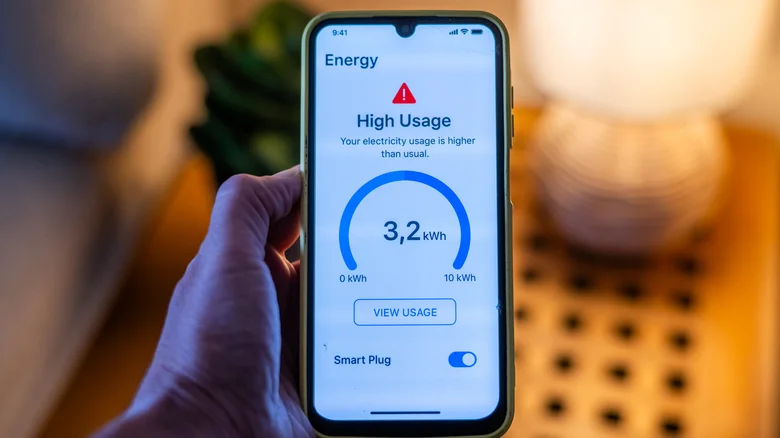
    A smartphone showing a high energy consumption warning generated by a smart plug.

    To measure your own setup, first list its components and identify the wattage and average daily use for each item. You may need to consult product manuals and manufacturer websites for this information but you can also measure actual power draw using an inexpensive watt meter. These plug into your wall socket to act as an intermediary between your kit and the energy supply to measure actual energy consumption. To achieve a realistic range, take readings at both high and low volumes since energy requirements are higher at high volume.

    You should also measure standby energy consumption — energy used when the device is not being used but is also not switched off. Most modern devices typically have a low-power standby mode, but older equipment doesn’t and may draw significant power even if idle, though it does vary.

    Smart plugs are possibly the best investment you can make to manage power consumption from your home sound system or any other electronic system in your home. They provide accurate energy data and allow you to switch devices off remotely to eliminate any standby power draw.

    Calculating energy costs

    Once you have the wattage for each item in your system, you can use an online power calculator to figure out likely cost, or use the following formula:

    Daily energy (kWh):Wattage x Time (hours), divided by 1,000.

    Monthly cost: [Daily kWh x Days per month] x Cost per kWh.

    For example, a 100-watt amplifier used for five hours a day across 30 days consumes 15 kWh per month, following the above formula:

    1. Daily energy: Power 100 watts x 5 hours = 500 watt hours.
    2. kWh, achieved by dividing above by 1,000 = 0.5 kWh per day.
    3. Multiplied by 30 days = 15 kWh per month.

    According to Federal Reserve data, that’s $2.94 per month at current U.S. cost ($0.196 per kWh). It means a 100-watt amplifier is costing you nearly $36 each year to run, so about the price of a couple of lattes, a nice lunch, or four months of a Netflix subscription. Your personal setup will vary, but this formula works anywhere; not only will it empower you to assess the energy cost for your home sound system, but it will also help you understand the energy consumption of any other electrical devices you use in your home, like smart bulbs versus LED bulbs.

    does electricity Entertainment much Your
    Follow on Google News Follow on Flipboard
    Share. Facebook Twitter Pinterest LinkedIn Tumblr Email Copy Link
    myappsplus
    • Website

    Related Posts

    Why your laptop fans spin up even when you’re not doing anything

    November 15, 2026

    Why did Google Pixels stop using Snapdragon chips?

    November 15, 2026

    Anker vs. Belkin: Which company’s power banks and accessories should you get?

    November 15, 2026
    Add A Comment
    Leave A Reply Cancel Reply

    Top Posts

    Save on your groceries, gas, and holiday shopping with this $15 BJ’s membership (Reg. $60) 

    November 4, 202629 Views

    Google’s new AI shopping cart tracks deals across stores

    October 25, 202628 Views

    Apple is making Creator Studio an even better deal with new AI features and creative tools

    October 28, 202623 Views
    Latest Reviews

    Apple faces new UK rules over nude images on children’s iPhones

    myappsplusSeptember 8, 2026

    Everything revealed at Zelda Direct: Ocarina of Time pre-order deal, release date, new Switch 2, more

    myappsplusSeptember 8, 2026

    Google has deployed a fix for YouTube’s blank screen problems

    myappsplusSeptember 8, 2026
    Stay In Touch
    • Facebook
    • YouTube
    • TikTok
    • WhatsApp
    • Twitter
    • Instagram

    Subscribe to Updates

    Get the latest tech news from FooBar about tech, design and biz.

    Most Popular

    Apple faces new UK rules over nude images on children’s iPhones

    September 8, 20260 Views

    GL.iNet Beryl 7 review: This Wi-Fi 7 travel router saved my holiday connecting 5 iPads, a laptop, and a couple of phones

    September 8, 20260 Views

    69% of Americans oppose local AI data centers in 2026 poll — Trump blasts blocking communities on Truth Social for choosing poverty over server farms, throwing off ‘tremendous amounts of money’

    September 8, 20260 Views
    Our Picks

    PlayStation officially reveals 2026 Black Friday deals: Physical PS5 games, DualSense, more

    November 15, 2026

    How much electricity does your home sound system typically use?

    November 15, 2026

    Italy fines Meta $887 million over access to Android users’ photos and videos

    November 15, 2026

    Subscribe to Updates

    Subscribe to our newsletter and get the latest tech news, app updates, AI trends, smartphone reviews, and exclusive deals delivered straight to your inbox.

    Facebook X (Twitter) Instagram Pinterest
    • About Us
    • Get In Touch
    • Disclaimer
    • Privacy Policy
    • Terms & Conditions
    © 2026 MyAppsPlus. All Rights Reserved.

    Type above and press Enter to search. Press Esc to cancel.