

Executive Summary
India’s power distribution sector sits at the center of the country’s economic growth, industrial competitiveness, and energy transition ambitions. Yet it has been the weakest link in the power sector value chain as the distribution companies (DISCOMs) continue to be plagued by persistent financial and operational weaknesses. Artificial intelligence (AI) and advanced analytics offer a significant opportunity to address these challenges by helping to improve planning, reliability, and financial performance. However, successful AI adoption is typically built on three foundations: strong digital infrastructure, integrated enterprise data platforms, and dedicated institutional capacity to manage analytics and operational change. India should focus on building these enabling foundations in order to make AI applications viable.
This white paper assesses the readiness of Indian DISCOMs to adopt AI and advanced analytics by analyzing the results of an original digital maturity survey covering two contrasting utility models: the state-owned Tamil Nadu Power Distribution Corporation Limited (TNPDCL) and the Tata Power–operated distribution utilities in Odisha, which operate under a public-private partnership model. The analysis finds that the effectiveness of AI applications depends far more on the quality of underlying digital infrastructure and organizational capacity than on access to AI tools themselves. Utilities that lack strong foundations are unlikely to realize meaningful benefits from AI investments, regardless of the sophistication of available technology.
The authors developed a 60-question Digital Maturity Survey focused on six domains to evaluate India’s readiness for AI applications: (1) metering and Advanced Metering Infrastructure, (2) Supervisory Control and Data Acquisition (SCADA) deployment and operational data collection, (3) outage management systems, (4) asset registries, (5) interoperability and analytics, and (6) people and capacity. The survey reveals substantial variation in AI readiness between Tamil Nadu and Odisha DISCOMs, illustrating how differences in digital infrastructure and institutional arrangements shape utilities’ ability to adopt advanced analytics.
The survey finds that Odisha DISCOMs have a stronger overall foundation for operational applications of AI. Its utilities report broader digital coverage and greater integration among core systems, creating better conditions for using data across utility functions. On the reverse side, Tamil Nadu DISCOM’s underlying digital systems are less integrated, and the limited reach of smart metering and other operational platforms constrains the range of applications that can be deployed at scale. However, the establishment of a dedicated AI and data analytics wing, coupled with demonstrated success in demand forecasting and renewable energy forecasting, indicates a growing institutional commitment to analytics-driven decisionmaking. Tamil Nadu’s experience demonstrates the value of building internal analytical capability, while also showing that organizational capacity should be supported by stronger digital infrastructure and system integration.
The comparison points to broader constraints facing Indian DISCOMs. Smart-meter deployment remains incomplete, important utility systems often operate separately, and procurement practices can make it difficult to retain specialized technology providers or expand successful pilots. Both states also continue to rely heavily on consultants and external vendors for AI development, underscoring the need for stronger in-house capability and more flexible talent recruitment frameworks.
India’s next phase of power-sector modernization should focus on converting the substantial digital infrastructure investments into a foundation for advanced analytics and AI adoption. National policy should prioritize interoperable data standards, utility-wide governance frameworks, and clear protocols for data quality, security, sharing, and access. Simultaneously, DISCOMs should establish dedicated analytics teams, strengthen workforce capacity, deepen partnerships with research institutions, and participate in sector-wide mechanisms for knowledge sharing and collaborative innovation.
These findings are reinforced by recent Indian government initiatives that increasingly recognize data governance as a prerequisite for power-sector modernization. The Ministry of Power’s National Electricity Data Sharing Framework 2026 proposes standardized metadata, interoperable application programming interfaces (APIs), machine-readable datasets, and common governance mechanisms for electricity sector data sharing. A 2026 Expert Committee on Energy Statistics highlighted the need for harmonized classifications, improved data quality, greater granularity, and stronger interagency coordination across India’s energy databases. Together, these initiatives signal an important policy shift from infrastructure deployment toward data standardization, interoperability, and governance—the very foundations identified in this white paper as critical for AI readiness.
Introduction and Context
India’s DISCOMs have improved several headline performance indicators in recent years, but their underlying financial and operational position remains uneven. High aggregate technical and commercial (AT&C) losses, gaps in billing and revenue collection, accumulated payment obligations, and recurring reliance on government support continue to limit the sector’s ability to invest in reliable service and network modernization (see Figure 1). These structural challenges are becoming more difficult to manage as electricity demand rises, renewable energy shares increase, and distribution networks become more data intensive and operationally complex. New tools and institutional reforms are needed to help DISCOMs manage a more demanding operating environment.
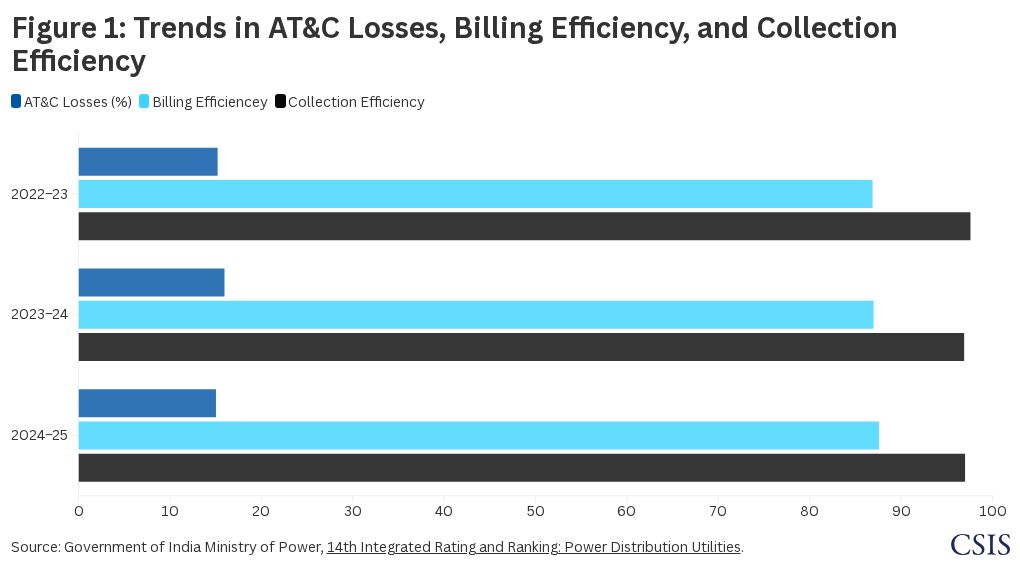
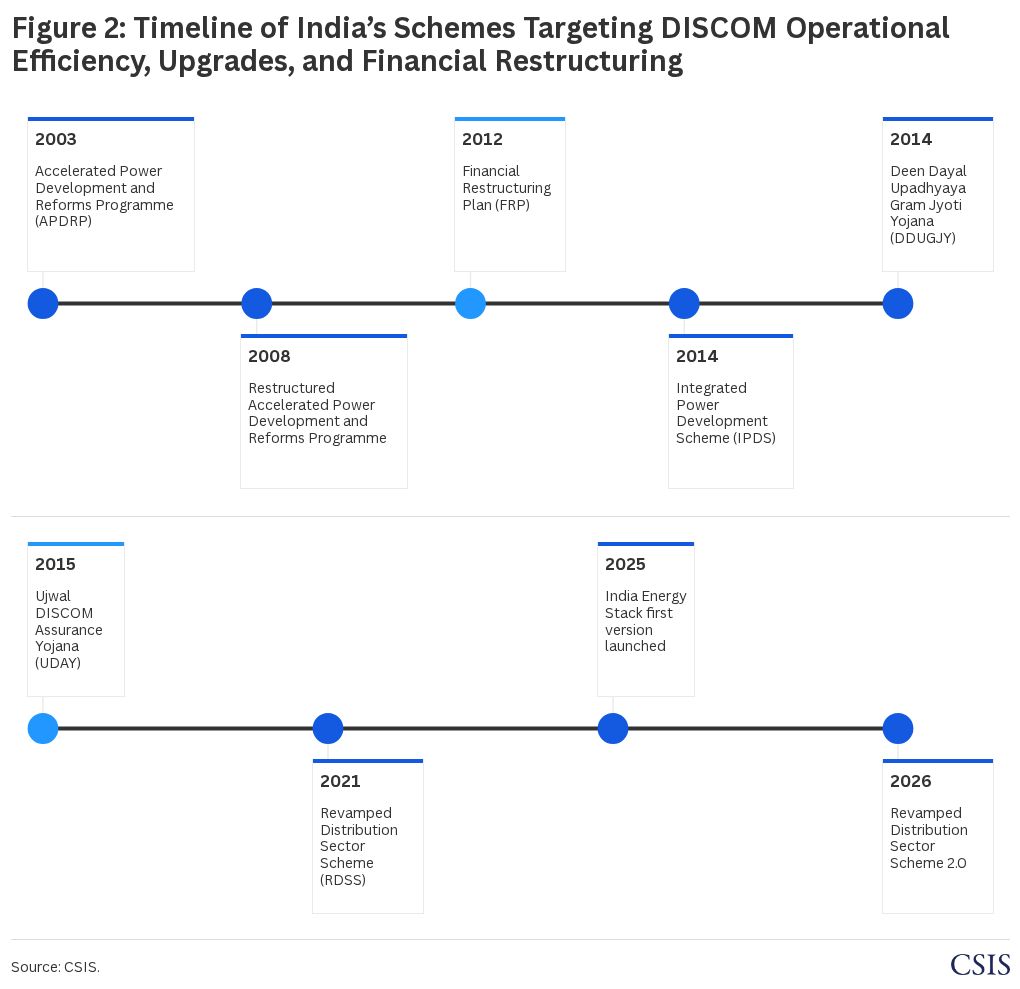
Even though Indian DISCOMs collectively turned profitable at the end of fiscal year 2024–2025, according to the Power Finance Corporation report of 2026, on March 31, 2024, the total accumulated losses of state‑owned DISCOMs stood at an alarming $83 billion (INR 6.92 trillion), about 5 percent higher than FY 2023–2024. The losses in FY 2022–2023 were equivalent to roughly 2.4 percent of India’s GDP, underscoring the extent to which distribution sector fragility has become a macro-fiscal concern for both individual states and the Indian government. The reasons are clear: persistent gaps between the average cost of supply and average revenue realized, high AT&C losses, delays in tariff revisions, and rising dependence on short‑term borrowing. Despite repeated financial restructuring schemes and debt takeovers (see Figure 2), many DISCOMs face a reinforcing cycle of financial stress. Weak billing and collection can leave DISCOMs without sufficient revenue to meet payment obligations and invest in network improvements. This increases their dependence on state support and borrowing, while underinvestment can perpetuate operational problems that make it harder to improve billing and revenue collection.
India’s developmental vision demands a very different kind of distribution sector. It envisages universal, affordable, 24/7 supply to households, quality and reliability for industry and services, and the ability to integrate large amounts of renewable energy, electric vehicles, and distributed resources. This cannot be delivered by financially distressed utilities that struggle every month to pay generators and maintain networks. A future‑ready DISCOM must be able to recover its costs, invest in system upgrades, and offer modern digital services to consumers. That requires not only better regulation and governance reform but also the use of better data analytics and smarter technology. This is where AI, machine learning (ML), and other advanced data analytics tools can play a catalytic role.
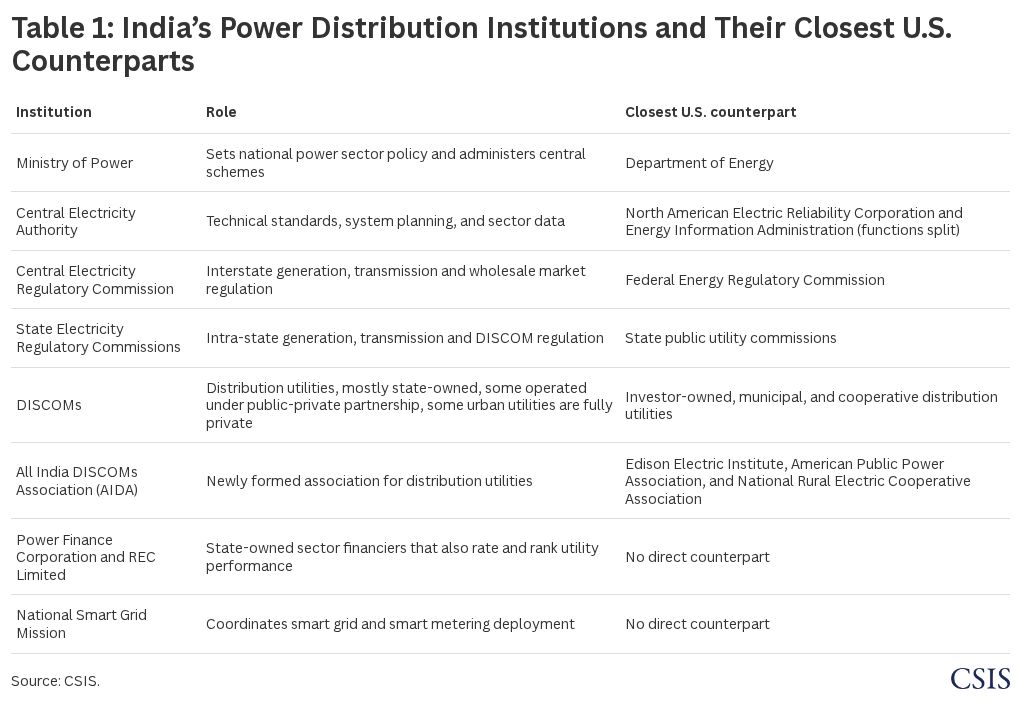
Because responsibility for electricity in India is shared between national and state institutions, several distinct actors shape what any individual utility is able to do. Table 1 sets out the principal institutions referenced throughout this paper alongside their closest functional counterparts in the United States.
India’s History of Distribution Reform
The Indian government has launched many policies, reforms, and schemes to improve the fiscal health of DISCOMs, increase efficiency of operations, and upgrade physical and digital infrastructure.
Successive central schemes have pursued the same objectives over two decades. The Accelerated Power Development and Reforms Programme of 2003 (and its revamped successor in 2008) sought to bring AT&C losses below 15 percent, operationalized the unbundling of state electricity boards under the Electricity Act of 2003, and began building baseline data through IT systems for accounting and consumer services and through geographic information system (GIS) mapping of assets. The Integrated Power Development Scheme and the Deen Dayal Upadhyaya Gram Jyoti Yojana, both launched in 2014, continued strengthening networks, extended metering, and pursued complete rural electrification. Both the Financial Restructuring Plan launched in 2012 and Ujwal DISCOM Assurance Yojana launched in 2015 targeted financial and operational turnaround of DISCOMs. Launched in 2021, the Revamped Distribution Sector Scheme (RDSS) is now the central government’s principal program for improving the operational and financial performance of power distribution utilities. RDSS supports investments in distribution infrastructure and smart metering alongside measures to improve utility performance. Importantly, each of these schemes funded infrastructure and data acquisition, but none established common standards governing how the resulting data would be structured, shared, or used.
Revamped Distribution Sector Scheme
With a financial outlay of $40.9 billion (INR 3.04 trillion), RDSS—the most recently launched scheme—aims to reduce AT&C losses and bring the gap between the average cost of supply and average revenue realized to zero, with a two-pronged approach:
- financial support for distribution infrastructure upgrades, including rollout of prepaid smart meters and system metering infrastructure; and
- training and capacity-building efforts.
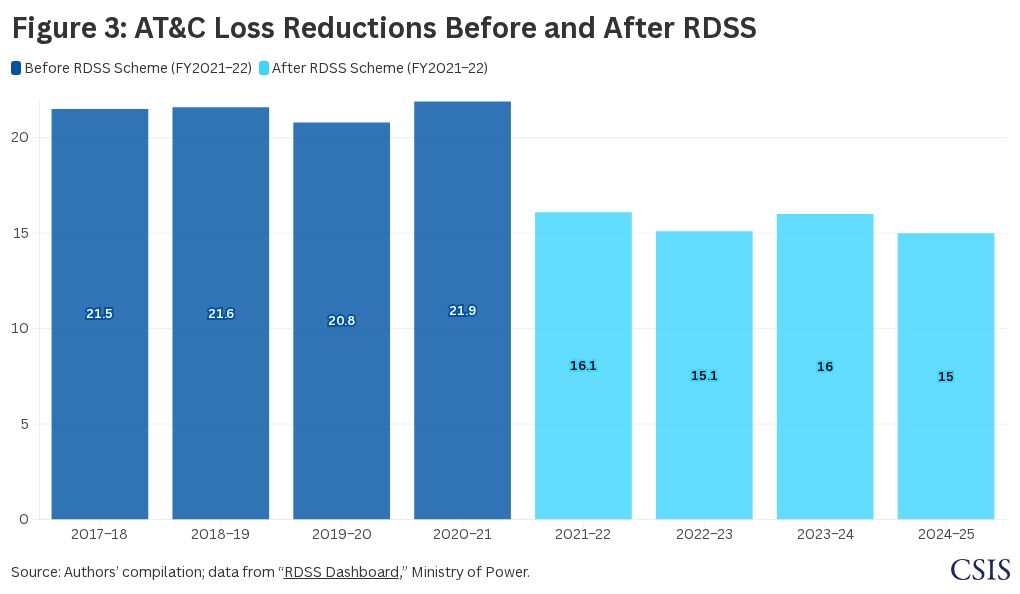
Under the scheme, $17.6 billion (INR 1.31 trillion) has been mobilized for smart metering and $20 billion (INR 1.49 trillion) has been mobilized for distribution infrastructure upgrades. As a result, AT&C losses have dropped from 21.91 percent in FY 2020–2021 to 15.04 percent in FY 2024–2025, the most substantial progress India has made in reducing AT&C losses to date. A key component of the scheme is the adoption of smart meters; the goal of the National Smart Grid Mission was initially to install 250 million smart meters by 2025. As of 2026, India has deployed 59.7 million smart meters. While this is well short of the target, RDSS has now been extended until 2028.
This metering push is directly visible in the survey results. Odisha’s stronger position on metering and system integration reflects sustained deployment under RDSS, while Tamil Nadu’s lower smart-meter penetration alongside a functioning analytics wing indicates that RDSS-funded infrastructure and institutional analytics capacity have advanced independently of one another.
The development of the India Energy Stack (IES) signals a shift in India’s power-sector digitalization agenda toward a more integrated digital infrastructure. A Ministry of Power initiative, IES is being developed as digital public infrastructure for electricity, designed to enable utilities, service providers, consumers, and devices to communicate securely. The initiative seeks to create a more interoperable electricity ecosystem, providing a foundation for improved planning, governance, and new digital energy services.
While India’s many schemes have developed and deployed core infrastructure and data acquisition tools including SCADA and metering, they have also been built in silos. As a result, systems rarely talk to each other within a single DISCOM, let alone between DISCOMs and nationally.
Drawing on lessons from India’s broader experience with digital public infrastructure (i.e., Aadhaar and Unified Payments Interface), IES establishes unique identifiers for consumers and assets, builds open APIs, and practices consent-based data exchange across all stakeholders in the electricity ecosystem. The goal is to allow generation companies, DISCOMs, regulators, consumers, and developers to transact against a common set of standards.
The core use cases that IES aims to unlock include the following:
- Digital Customer Record: Consumers will have a verified singular digital customer record to make new electricity connections faster and more secure.
- Peer-to-Peer Energy Exchange: IES will enable owners of distributed energy resources (e.g., rooftop solar panels or electric vehicles) to list surplus energy on an open exchange. This will allow “prosumers”—who are both producers and consumers—to unlock revenue, and allow DISCOMs to enable more capacity.
- Distributed Energy Resource Visibility: IES proposes linking distributed energy resources, such as rooftop solar and batteries, to the local feeder, the distribution line that carries electricity from a substation to consumers in a particular area. This would improve DISCOM visibility into where distributed resources are connected to the grid.
- Demand Flexibility: Similar to peer-to-peer exchange, IES unlocks the ability to leverage the massive rollout of smart home devices (e.g., smart air conditioners) as demand response tools and dispatchable capacity. DISCOMs thus enable greater flexibility, and consumers are rewarded through bill credits for participation.
- Coding Energy Policy: IES aims to standardize the interpretation and deployment of energy policy by converting energy regulations, subsidy schemes, tariff rules, and compliance conditions into machine-readable, executable formats.
India has made substantial investments in DISCOM modernization through initiatives such as RDSS, the National Smart Grid Mission, and large-scale smart-meter deployment. As these investments generate more granular data, the challenge is increasingly shifting from data availability to ensuring that data is reliable, interoperable, and usable across utility systems. IES could provide a common digital foundation for this transition, but its development will take time. In the near term, DISCOMs will continue to need stronger data infrastructure, governance standards, and institutional capacity to translate growing volumes of data into operational and financial improvements.
Global Applications of AI for the Power Sector
International experience suggests that utilities are adopting AI for functions including grid planning, asset management, and system operations. AI can similarly help Indian DISCOMs address core operational challenges through better demand and renewable generation forecasting, predictive maintenance and outage management, and detection of irregular consumption and billing anomalies. As the use of rooftop solar, batteries, and electric vehicles expands, AI can help identify where changing patterns of demand and generation may require network upgrades or greater flexibility.
Lessons from the United States
The U.S. power sector offers useful examples of how utilities are applying AI as they confront rising electricity demand, aging infrastructure, extreme weather risks, and growing grid complexity. Utilities are investing in digital infrastructure and advanced analytics to improve planning, reliability, and customer operations. These applications provide useful reference points for India, even though the institutional and operational contexts of the two power systems differ.
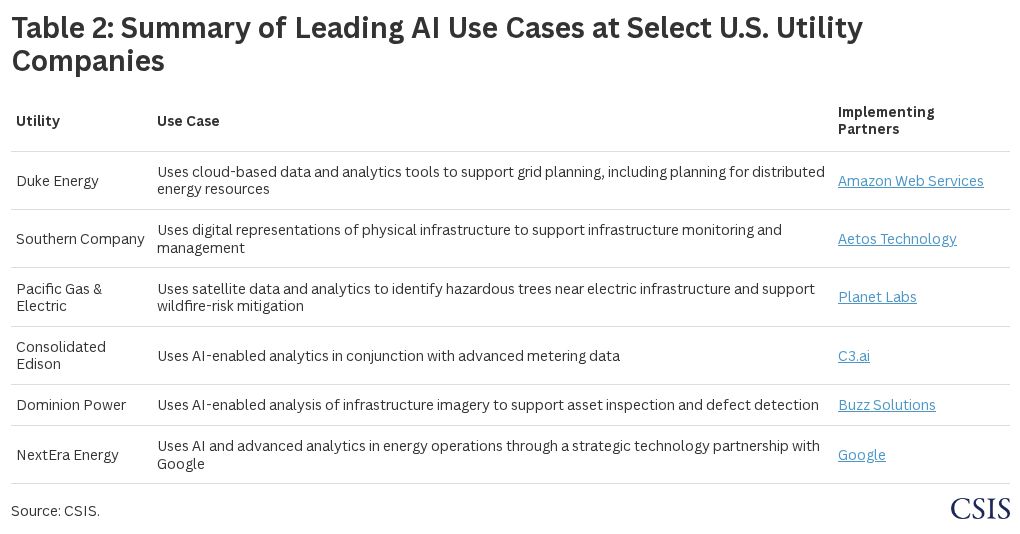
Several U.S. utilities are applying AI to planning and asset management. Duke Energy, for example, has partnered with Amazon Web Services on cloud-based applications to support grid planning and the integration of distributed energy resources. Other utilities are using AI-assisted analysis of infrastructure data and imagery to assess asset conditions and identify potential problems, allowing maintenance resources to be targeted more effectively.
AI is also being applied to reliability and resilience. Southern Company and Pacific Gas & Electric provide examples of utilities using digital tools and advanced analytics to manage infrastructure and environmental risks. Pacific Gas & Electric has also used satellite data to help identify hazardous trees near electric infrastructure. Utilities are also deploying AI in customer and internal operations, extending its use beyond the physical grid.
The key lesson for Indian DISCOMs is the enabling environment behind these applications. U.S. examples show AI being deployed alongside digital infrastructure, utility data systems, and partnerships with specialized technology providers. For Indian DISCOMs, the immediate challenge is therefore to strengthen the data quality, interoperability, governance, and institutional capacity needed to deploy similar applications at scale. These foundations are the focus of the digital maturity assessment that follows.
Digital Maturity of Indian DISCOMs
The value of the use cases outlined above depends on the quality of the underlying data environment. From an Indian perspective, the U.S. experience illustrates this point clearly. Large utilities in the United States are already using AI for grid planning, predictive maintenance, customer analytics, and renewable integration, often through partnerships with cloud providers and technology firms. Their experience shows that AI becomes more effective when it is embedded in broader enterprise systems, supported by strong data governance, and aligned with clearly defined operational goals. For Indian DISCOMs, the goal should be to incorporate the institutional and technical foundations that make them viable. Digital maturity is a precondition for AI adoption; without reliable data infrastructure, even promising use cases remain difficult to operationalize at scale.
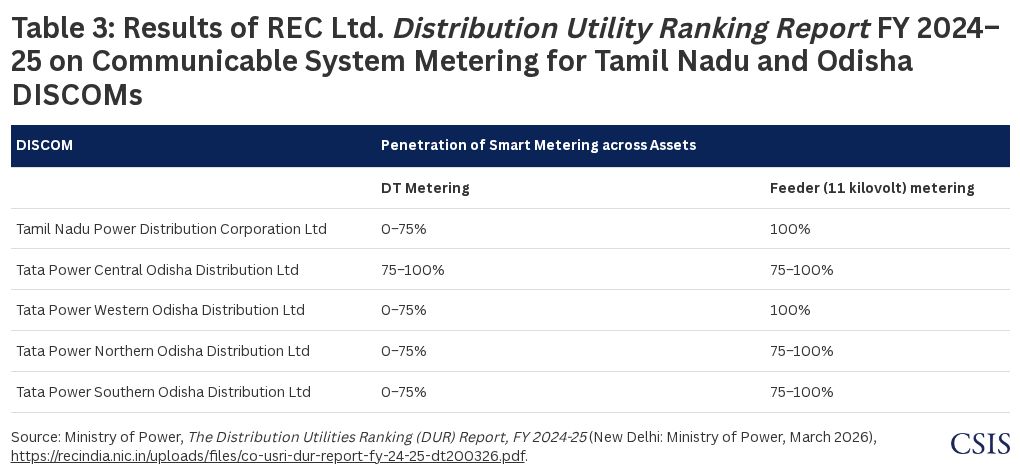
India’s DISCOMs exhibit a wide variation in their digital maturity. Private DISCOMs, which are largely confined to urban areas, have progressed faster on digitalization compared to public DISCOMs. The Distribution Utilities Ranking Report by the Ministry of Power and REC Ltd. for FY 2024–2025 ranked private urban DISCOMs (Adani Electricity Maharashtra Limited, Tata Power Delhi, Tata Power Mumbai, and Noida Power Company Limited) higher on deployment of communicable system metering (a standard 11-kilovolt feeder and distribution transformer) in comparison to public DISCOMs. This variation matters because the feasibility of AI-enabled applications depends less on the technology itself than on whether the underlying utility environment can support reliable data collection, integration, and operational decision making.
Methodology and Scope
This white paper combines desk research, international utility case studies, and an original Digital Maturity Survey developed by the authors to assess the readiness of Indian DISCOMs for AI adoption. The survey consisted of 60 questions across six categories. The framework was applied to two contrasting utility environments: (1) TNPDCL, a large public sector utility, and (2) the Tata Power–operated distribution utilities in Odisha, which operate under a public-private partnership model. The comparison is intended to illustrate how differences in digital infrastructure, data governance, and institutional capacity influence AI readiness. The following analysis should not be interpreted as a comprehensive ranking of Indian DISCOMs, but rather as an illustrative assessment of the foundational conditions required for effective AI deployment in the power distribution sector.
Digital Maturity Survey
The survey was organized around six categories, defined below.
- Asset Logging and Registry: examines the completeness, quality, and geospatial coverage of asset databases across the consumer, feeder, and distribution transformer levels.
- SCADA deployment and operational data collection: assesses the extent of SCADA deployment, the reliability and granularity of data collection, and the operational control functions supported by these systems.
- Metering, Advanced Metering Infrastructure, and Meter Data Management Systems (MDMS): evaluates the scope of metering infrastructure, the degree of automation in data collection, and the processes used to manage, validate, and store metering data.
- Outage Management Systems (OMS): focuses on how DISCOMs detect, record, prioritize, and respond to outages, and the extent to which these functions are supported by digital systems.
- Interoperability and Analytics: assesses the governance arrangements, data standards, and system-level integration required for assets and platforms to communicate effectively across the utility.
- People, Process, and Capacity: examines the institutional and human capital foundations necessary for sustained adoption of data analytics and AI, including the presence of dedicated analytics units, designated staff, and formal training mechanisms.
Together, these six categories provided a structured basis for evaluating DISCOM readiness in terms of digital infrastructure, organizational processes, data governance, and internal capacity to operationalize advanced analytics.
Survey Results
For presentation, the six survey categories are grouped into three infrastructure and data categories: (1) metering, (2) non-metering systems, and (3) data platforms and governance. The last category—people, process, and capacity—is assessed separately because it cuts across the other three.
Metering Infrastructure
Metering coverage and capability are important indicators of digital maturity. Conventional electromechanical and digital meters can provide historical consumption data for applications such as demand forecasting, but typically require manual collection. Smart meters automate data collection at more frequent intervals, giving DISCOMs more timely and granular information for operational and commercial decisionmaking. Evidence also associates smart-meter deployment with improvements in billing efficiency and reductions in AT&C losses. These capabilities can support applications such as detecting theft and irregular consumption, improving performance analytics, and identifying outages more quickly.
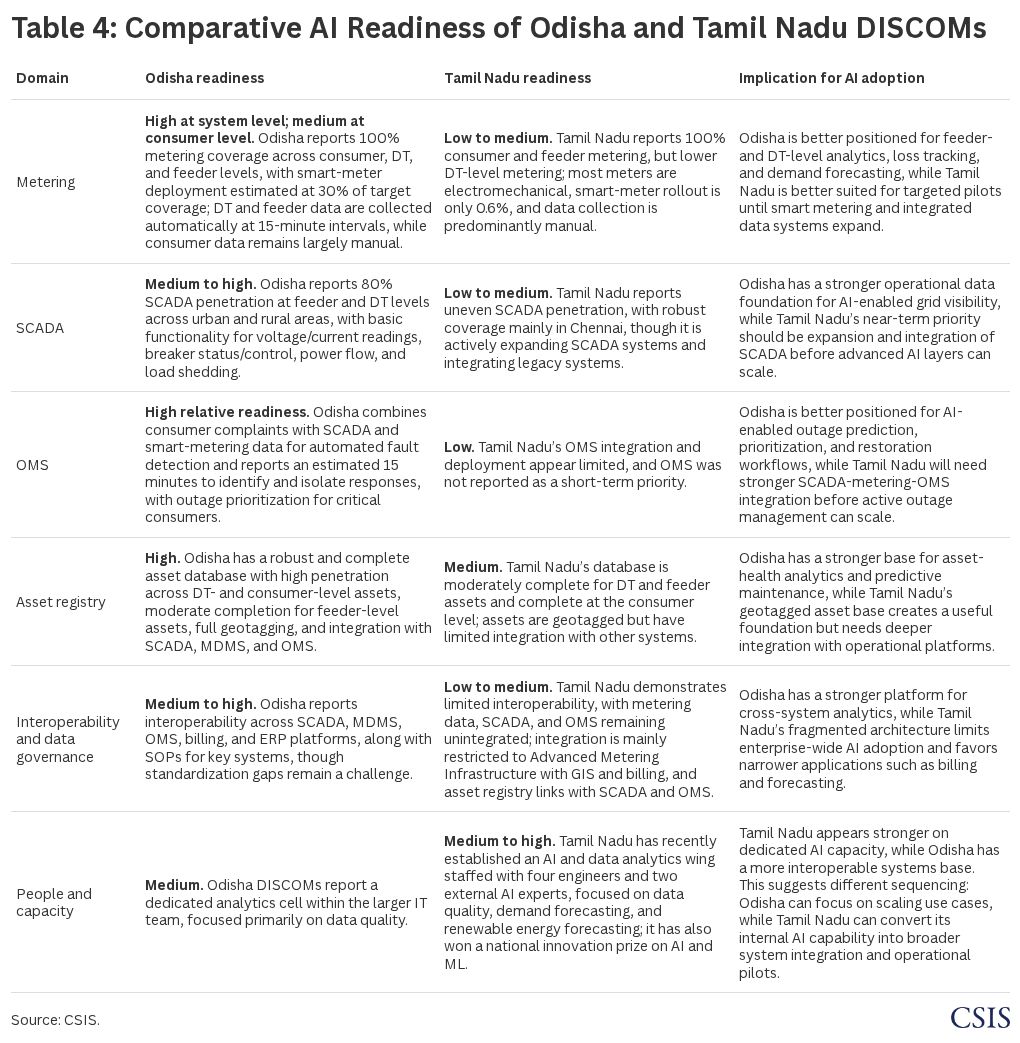
Odisha reports extensive metering infrastructure, with the survey indicating full metering coverage at the consumer, distribution-transformer (DT), and feeder levels across urban and rural areas. Most installed meters are digital rather than smart meters, while smart-meter deployment is estimated at 30 percent of the target. Smart meters offer functions including remote connection and disconnection, tamper detection, outage alerts, and load profiling. Between the DT and feeder levels, the Distribution Utilities Ranking indicates that smart-meter deployment is more concentrated at feeders. Feeder-level data can help utilities monitor electricity flows across sections of the distribution network and identify areas with elevated losses or irregular consumption.
Tamil Nadu reports a vastly different picture. While metering at the consumer level and feeder level are both reported at 100 percent, much less is happening at the DT level. Furthermore, most of these meters are electromechanical, with smart-meter rollout at only 0.6 percent in select urban and rural areas. This is corroborated by the results of the most recent Distribution Utilities Ranking, which shows much higher smart-meter penetration at the feeder level than the DT level. Although overall penetration is low, existing smart meters offer features comparable to those in Odisha.
As such, Odisha’s higher metering coverage provides a stronger foundation for applications that depend on feeder- and transformer-level data. In contrast, Tamil Nadu is only able to deploy small pilots for interventions requiring smart meters, including demand response capability. Despite lower smart-meter penetration, Tamil Nadu reports strong demand-forecasting capability, achieving mean absolute percentage errors of 3–5 percent, on par with some of the better-performing private urban DISCOMs such as BSES Rajdhani Power Ltd.
In Odisha, meter data at the DT and feeder levels are collected automatically through wireless or fiber communication at 15-minute intervals, while most consumer-level data are still collected manually each month. Meter data is consolidated in a central Meter Data Management System (MDMS), supported by standard procedures for validation, estimation, and editing. More frequent network-level data provides a useful foundation for demand forecasting and operational analytics, while limited automated consumer-level data constrains applications that depend on near-real-time information.
Odisha is still facing challenges with meter tampering and theft as well as consumer resistance to smart meters—a challenge common across many DISCOMs that has delayed the deployment of more metering. As such, use cases tailored for India must account for delays in smart-metering penetration. An additional difficulty is communication failures in smart-meter networks. This is especially common in dense areas with signal congestion as well as physical infrastructure (e.g., sewering, piping, and construction) that makes fiber connections difficult.
Tamil Nadu relies predominantly on monthly manual data collection. For the smart meters it does have, data is collected at 15-minute intraday intervals. However, this data is collated in a standalone digital database that is neither integrated nor centralized.
Manual meter reading can introduce errors and delays in data collection, affecting the reliability of consumption and billing records. These limitations can also reduce the quality of historical datasets used for revenue analytics and forecasting. These data quality challenges can constrain model accuracy and the ability to scale solutions tied to revenue management. Tamil Nadu in particular cited issues with communication failures with smart meters making data unreliable and unusable. While TNPDCL does engage in Validation, Estimation, and Editing, like Odisha, more robust processes for data entry and collection can help mitigate those issues.
Non-Metering Infrastructure
SCADA is arguably the most fundamental among non-metering infrastructure systems, and the majority of major DISCOMs have some level of SCADA deployment, without which DISCOMs would be navigating completely blind. Ensuring SCADA infrastructure is reliable and has consistent and frequent polling and robust control functionality greatly determines the types of AI interventions DISCOMs can levy.
Odisha reports quite high penetration of SCADA systems, with 80 percent penetration at feeder and DT levels across all urban and rural areas. While the systems have basic functionality (e.g., voltage and current readings, breaker status and control, power flow, and load shedding functionality), the state is still struggling with comprehensive data acquisition and limited analytics capabilities for the data. Odisha is a leader in SCADA deployment: All of Odisha’s DT-level assets are controlled from the singular processing control center.
Tamil Nadu reports uneven SCADA penetration with robust coverage only in the Chennai region, the state capital. The reported SCADA functionality within the limited rollout is basic, as was the case with Odisha. Tamil Nadu is actively expanding SCADA systems in the hopes of being able to utilize both SCADA and collected data for comprehensive network analysis (e.g., overloading and underloading assessments and outage management) to support grid planning and maintenance. TNPDCL is prioritizing the modernization and integration of existing systems, including SCADA, to create a stronger foundation for future AI applications.
OMS are a critical component of service delivery. Basic OMS rely on fielding consumer complaints and calls to identify issues and prioritize response, but developing automated detection, fault isolation, and directed response requires DISCOMs to develop other key infrastructure, predominantly smart metering and SCADA.
Thus, it stands to reason that Odisha respondents report high capabilities with their OMS. In addition to consumer complaints, they are capable of automated fault detection combining SCADA and smart-metering data, taking an estimated 15 minutes to identify and isolate responses. The OMS are additionally able to prioritize outages based on consumers such as hospitals and water utilities.
Tamil Nadu’s integration and deployment of OMS seems limited, and OMS deployment was not reported to be one of Tamil Nadu’s key priorities in the short term. Additionally, without robust rollout and integration of SCADA and metering, it will be difficult for Tamil Nadu to be able to scale active outage management and response beyond fielding consumer calls and static scheduled maintenance.
DISCOMs require a persistently reliable and up-to-date database of all assets with locational geotags owned by DISCOM (e.g., DTs, substations, switchgear, power lines, and meters). Without this data, DISCOMs are not able to make use of outage or consumption information for performance audits and predictive maintenance, track and reduce theft and losses, or further enable sub-DT-level demand forecasting and demand response mechanisms.
Odisha has a robust and complete database of assets, with high penetration across DT- and consumer-level assets and moderate completion for feeder-level assets. Importantly, all assets are geotagged and integrated with other tools including SCADA, MDMS, and OMS.
Tamil Nadu’s database is moderately complete for DT and feeder assets but fully complete at the consumer level, unlike Odisha. Assets are also completely geotagged but have limited integration with SCADA and OMS.
Data Platform and Governance
All systems in Odisha are reported to be interoperable with each other across SCADA, MDMS, OMS, billing, and Enterprise Resource Planning (ERP) platforms, laying much of the framework needed for cross-system data sourcing and for building layers of analytics and AI tools. This interoperability can enable real-time data sharing between departments, resulting in faster outage response times and improved customer service. Odisha also prioritizes data storage, accessibility, and quality assurance. This is not restricted to metering data and includes SCADA control data as well as outage-related data with OMS. Where possible, GIS tagging is enabled for asset registries or outage mapping. GIS tagging allows for precise location tracking of assets and outages, facilitating efficient field operations and reducing downtime during repairs. This improves operational efficiency and supports better planning and maintenance strategies across Odisha’s power grid.
Odisha DISCOMs have reported some level of established standard operating procedures (SOPs) for all key systems mentioned by the survey: (1) metering data collection and Validation, Estimation, and Editing, (2) data consolidation and validation, (3) systems integration and interoperability, (4) asset logging and GIS mapping, (5) outage response and restoration, (6) SCADA and operational data collection, and (7) cybersecurity and data-access controls. However, implementation or comprehensiveness of SOPs may vary across departments, since survey responses also cite the lack of standardization as one of the key challenges to achieving full data interoperability and analytics-driven decisionmaking.
Tamil Nadu demonstrates limited interoperability, as various systems including metering data, SCADA, and OMS remain unintegrated. Integration is restricted to Advanced Metering Infrastructure with GIS and billing, which meets baseline requirements, along with linking the asset registry to SCADA and OMS. This approach is consistent with Tamil Nadu SOPs, which address all key systems except integration and interoperability. This reflects a broader trend in Tamil Nadu’s digitalization strategy: prioritizing targeted interventions in billing and demand forecasting over establishing foundational infrastructure for extensive AI and data analytics adoption.
People, Process, and Capacity
For a future-ready DISCOM, building a robust talent pool is essential to fully leverage the benefits of advanced AI and analytics. This includes recruiting and training personnel with expertise in data science, AI development, and utility operations, ensuring that DISCOMs possess the internal capability to independently manage and innovate with these technologies.
Odisha DISCOMs report having a dedicated analytics cell, currently integrated within the larger IT team. The analytics cell primarily focuses on ensuring data quality, as reliable and validated data is a prerequisite for any data-driven and AI-based interventions. This approach demonstrates Odisha’s commitment to establishing foundational processes for analytics and technology adoption.
In Tamil Nadu, the establishment of the AI and data analytics wing staffed with four engineers and two external AI experts signals progress toward building sustainable internal capacity. According to the survey, the wing is focused on ensuring data quality and forecasting, for both demand and renewable energy generation. Additionally, skilling programs for digital systems are often available to staff. Tamil Nadu has made efforts to build its internal capacity, which won it a national prize for innovation on AI and machine learning from the Ministry of Power.
Key Insights
Digital infrastructure is necessary but uneven.The survey shows that digital readiness varies substantially across DISCOMs and across systems within the same utility. Odisha reports stronger foundations across metering, SCADA, outage management, and asset registries, while Tamil Nadu combines more limited infrastructure deployment with emerging analytics capability. This unevenness means that the feasible starting point for AI adoption will differ across utilities: Some can begin integrating operational use cases, while others must first strengthen their underlying digital systems.
Interoperability is the binding constraint. Installing digital systems does not automatically make their data usable across utility operations. Odisha reports greater integration across metering, SCADA, outage management, billing, and asset systems, while Tamil Nadu’s platforms remain more fragmented. This distinction is critical for AI applications that depend on combining information from multiple sources. As smart-meter and other digital deployments expand, interoperability and common data standards will increasingly determine whether DISCOMs can convert new data into operational insights.
Institutional capability determines whether pilots scale. Digital infrastructure must be accompanied by the capacity to use it. Tamil Nadu’s dedicated AI and data analytics wing and Odisha’s analytics function illustrate growing institutional attention to data, but both states also rely on external expertise for parts of their analytics work. Moving from pilots to routine deployment will therefore require DISCOMs to strengthen internal analytics teams, operational ownership, procurement practices, and collaboration with technology and research partners.
Structural Constraints
Current public procurement frameworks, particularly the least-cost bidding model, significantly constrain the deployment of AI-based solutions. Specialized vendors offering novel AI-based solutions have higher operating costs due to skilled labor, intensive model development, and lack of scale, making them vulnerable to being undercut by incumbents offering less-capable solutions. Additionally, many AI applications are inherently niche, with only a limited number of qualified vendors, which complicates standard competitive bidding requirements.
As a result, where pilots have demonstrated clear value, DISCOMs struggle to retain vendors or scale successful deployments. This has led to repeated pilot cycles without institutionalization or scale-up, slowing learning and limiting system-wide impact.
Procurement challenges are compounded by a persistent disconnect between vendors and system operators. Tamil Nadu highlighted a clear gap between the vendors, system implementors, and line operations. In practice, this manifests in two ways. Contracts are not designed to sufficiently incentivize vendors to deliver AI and value-added analytics or operational decision support, and vendors do not have an appreciation for the operational requirements for a DISCOM, and as such, offer solutions that do not enhance the analytics layers addressing the critical bottlenecks DISCOMs experience. This is driven by a lack of institutional knowledge in DISCOMs when conducting procurement and the lack of centralized practices and requirements on contracting digital tools.
As a result, DISCOMs have successfully contracted and deployed technologies including SCADA, ERP, and metering that generate large volumes of data, but there is no enhanced analytics layer on top of these systems.
The survey suggests that internal capability remains a constraint even where dedicated analytics teams are emerging. Continued reliance on external expertise can make it difficult for utilities to retain knowledge and scale successful applications internally.
Tamil Nadu explicitly notes that existing recruitment rules constrain the induction of data science and analytics talent, underscoring the need for reforms that allow DISCOMs to hire specialized skills and build durable in-house capability. Without greater flexibility in staffing and career structures, DISCOMs will remain dependent on vendors for core digital functions, limiting long-term institutional learning.
Policy and Institutional Roadmap for India
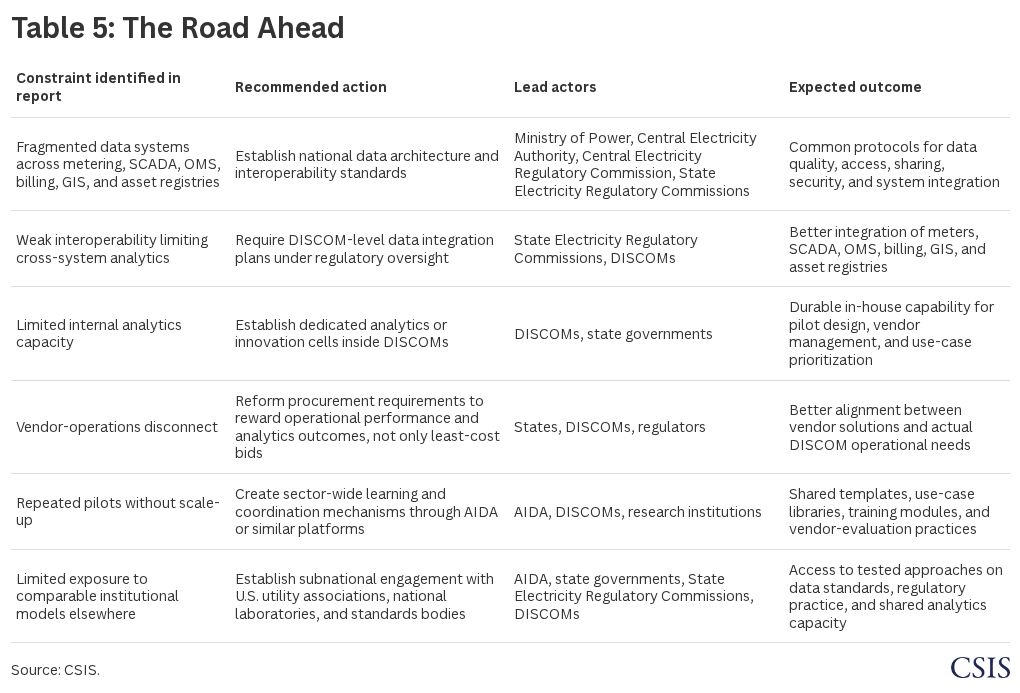
Scaling AI across Indian DISCOMs will require coordinated improvements in data infrastructure, governance, and institutional capacity.
This roadmap should therefore be read alongside India’s emerging digital governance agenda for the power sector. In the submission to the Ministry of Power on the Electricity Amendment Bill of 2025, the lead author of this paper argued for national standards for utility data architecture, interoperability, and third-party access, supported by clear data governance protocols covering data quality, access, sharing, security, retention, and consumer protection. That proposal is directly relevant to the AI readiness agenda, because advanced analytics cannot scale in a fragmented data environment. The broader policy direction under IES further reinforces the need for a layered institutional approach, in which central standards are translated into regulatory protocols and then operationalized by DISCOMs through internal systems and capacity building.
Accordingly, the policy roadmap below focuses on three linked priorities: (1) establishing the minimum data and interoperability foundations for AI use cases, (2) strengthening DISCOM-level institutional capacity to manage and use those systems, and (3) creating a regulatory environment that supports secure, responsible, and scalable digital transformation. This is the basis for moving from isolated pilots toward AI-ready distribution utilities.
Establish National Data Standards and a Layered Governance Framework
DISCOMs must have the minimum viable digital infrastructure required for AI adoption. For many utilities, the binding constraints are not sophisticated analytics tools, but incomplete metering coverage, fragmented asset records, weak interoperability between systems, and inconsistent data quality. Policy should therefore focus on the basic conditions that allow data to be collected, standardized, stored, and used across core operational domains.
At the national level, the Ministry of Power, the Central Electricity Authority, and relevant regulators should create the data and governance foundations required for AI adoption in distribution utilities. A national framework should therefore define core principles for data quality, timeliness, ownership, access, retention, sharing, security, and consumer privacy, while also specifying common formats and protocols for utility systems such as meters, SCADA, OMS, billing, GIS, and asset registries.
This framework should be implemented through a layered governance model. At the national level, the Ministry of Power and the Central Electricity Authority should define the standards and policy principles that guide digital transformation in the sector. At the regulatory level, the Central Electricity Regulatory Commission and the State Electricity Regulatory Commissions should translate those standards into enforceable protocols for utilities. At the utility level, DISCOMs should operationalize them through internal systems, data pipelines, and operational workflows. This approach is especially important in a concurrent sector such as electricity, where effective digitalization depends on coordination across central and state institutions.
Recent policy developments provide a strong foundation for this agenda. The Ministry of Power’s National Electricity Data Sharing Framework proposes a common architecture for electricity sector data sharing built around standardized metadata, machine-readable datasets, interoperable APIs, data governance officers, and a National Electricity Data Portal. Together with the creation of IES, these initiatives represent the first steps toward a national electricity data architecture capable of supporting advanced analytics and AI-enabled utility operations.
Build Internal Capability
DISCOMs should establish dedicated analytics units and provide role-specific training for engineers, planners, control-room staff, and data managers. The ability of DISCOMs to design, implement, and sustain AI tools internally should be strengthened. Many DISCOMs continue to rely on consultants and external expertise when developing AI tools. That dependence is understandable in the short term, but if it persists, it will limit institutional learning and make utilities overly dependent on vendors for core operational capabilities.
To address this challenge, DISCOMs should invest in targeted upskilling programs for engineers, planners, control-room staff, and data managers. These programs should focus not only on the use of digital tools, but also on the operational logic behind them: how data is cleaned, how models are interpreted, how exceptions are handled, and how analytics inform day-to-day decisions. Capacity building should be role-specific rather than generic, so that staff can directly apply what they learn in their work.
DISCOMs should also establish dedicated analytics units or innovation cells, including those mentioned in Odisha and Tamil Nadu. These units can serve as internal anchors for pilot design, data coordination, vendor management, and use case prioritization. Their role should be to help utilities move from fragmented experiments to a structured pipeline of digital initiatives. Where necessary, such teams can be supplemented by short-term external support, but the institutional objective should be to create durable in-house ownership.
Deepen Partnerships with Academia and Research Institutions
DISCOMs will need to cultivate a stronger innovation ecosystem by establishing systematic linkages with universities, research institutions, and applied technology partners. The Indian power sector has a large knowledge base in institutions such as the Indian Institutes of Technology, the National Institutes of Technology, the Indian Institutes of Management, and specialized policy and engineering centers. These institutions can provide research depth, technical expertise, and independent testing environments needed to accelerate utility innovation.
This approach is consistent with international experience. In the United States, utilities often coordinate with research institutions and public programs to accelerate the development of AI-enabled technologies for distribution systems. The California Energy Commission’s Electric Program Investment Charge program has supported large-scale clean energy research and innovation in partnership with major utilities, while other city- and utility-based initiatives have helped commercialize targeted clean-technology solutions and improve grid resilience. India should adopt the core logic of these models: Utility data and operational problems can become the basis for collaborative innovation when public agencies, utilities, and researchers work together.
For India, this suggests a practical agenda. DISCOMs should establish structured partnerships with academic and research institutions for joint problem solving, pilot development, model testing, and staff training. These partnerships can help utilities access analytical expertise while also ensuring that research is grounded in real operational needs. They can also create a pipeline for the next generation of AI-trained engineers and utility professionals.
Create Sector-Wide Coordination Mechanisms
The policy response should also facilitate a stronger unified platform for collective learning and collaboration across DISCOMs. The newly established AIDA has a vital role to play in this regard by pooling resources, sharing use cases, curating good practices, and disseminating implementation lessons across states. Such a platform would be especially useful for public utilities, many of which face similar constraints but lack the internal capacity to design solutions independently.
A sector-wide mechanism can also help standardize training, coordinate pilot efforts, and reduce duplication across utilities. Rather than each DISCOM reinventing the same processes, a common platform could support template-based guidance on data management, use-case design, vendor evaluation, and performance monitoring. It could also serve as a bridge between utilities and the broader ecosystem of academia, startups, and technology firms. In this sense, sector-wide coordination is not a substitute for utility-level reform; it is a force multiplier that can make reform more efficient and more scalable.
Build International Partnerships
Coordination within India addresses only part of the capability gap, and many of the issues are not unique to Indian utilities. The United States is a useful counterpart on data standards enforcement, how regulators assess analytical investments, and how smaller utilities acquire capacity collectively. AIDA can now coordinate engagement between state governments and DISCOMs in India and state governments, public utility commissions, and partners in the United States.
This can be operationalized in several ways, including building relationships between AIDA and its functional counterparts in the United States and pursuing cross-learning opportunities with the public power and rural electric cooperatives whose members more closely mirror DISCOMs. Collaboration between Indian research institutions and American national laboratories has great potential. The U.S.-India Collaborative for Smart Distribution Systems with Storage, or UI-ASSIST, operational from 2017 to 2023, is one of many examples of previous U.S.-India collaboration in the smart grid space, led by Washington State University and IIT Kanpur. With the rapid evolution of technology and research since 2023, there is an even greater need for building formal international data standard frameworks in the energy space. The United States and India can potentially lead those efforts leveraging their strong existing bilateral relationship.
Conclusion
India’s distribution sector is entering a new phase of modernization. The first phase focused on electrification, loss reduction, and infrastructure deployment; the next phase needs to focus on data quality, interoperability, and institutional capability. AI can help DISCOMs improve forecasting, outage response, asset management, loss detection, and integration of distributed energy resources, but only if utilities first build the digital foundations needed to use these tools responsibly and at scale.
Shashwat Kumar is a senior fellow with the Chair on India and Emerging Asia Economics at the Center for Strategic and International Studies (CSIS) in Washington, D.C. Abhinav Subramaniam is a research associate for the Energy Security and Climate Change Program at CSIS.
This report was made possible by a direct grant from an international foundation.
