

Despite being the exercise you might think of first when you hear the words “ab workout,” crunches aren’t actually the best way to target your abdominal muscles. Plus, if you’re like me and you suffer from sciatica or lower back pain, they can actually do more harm than good.
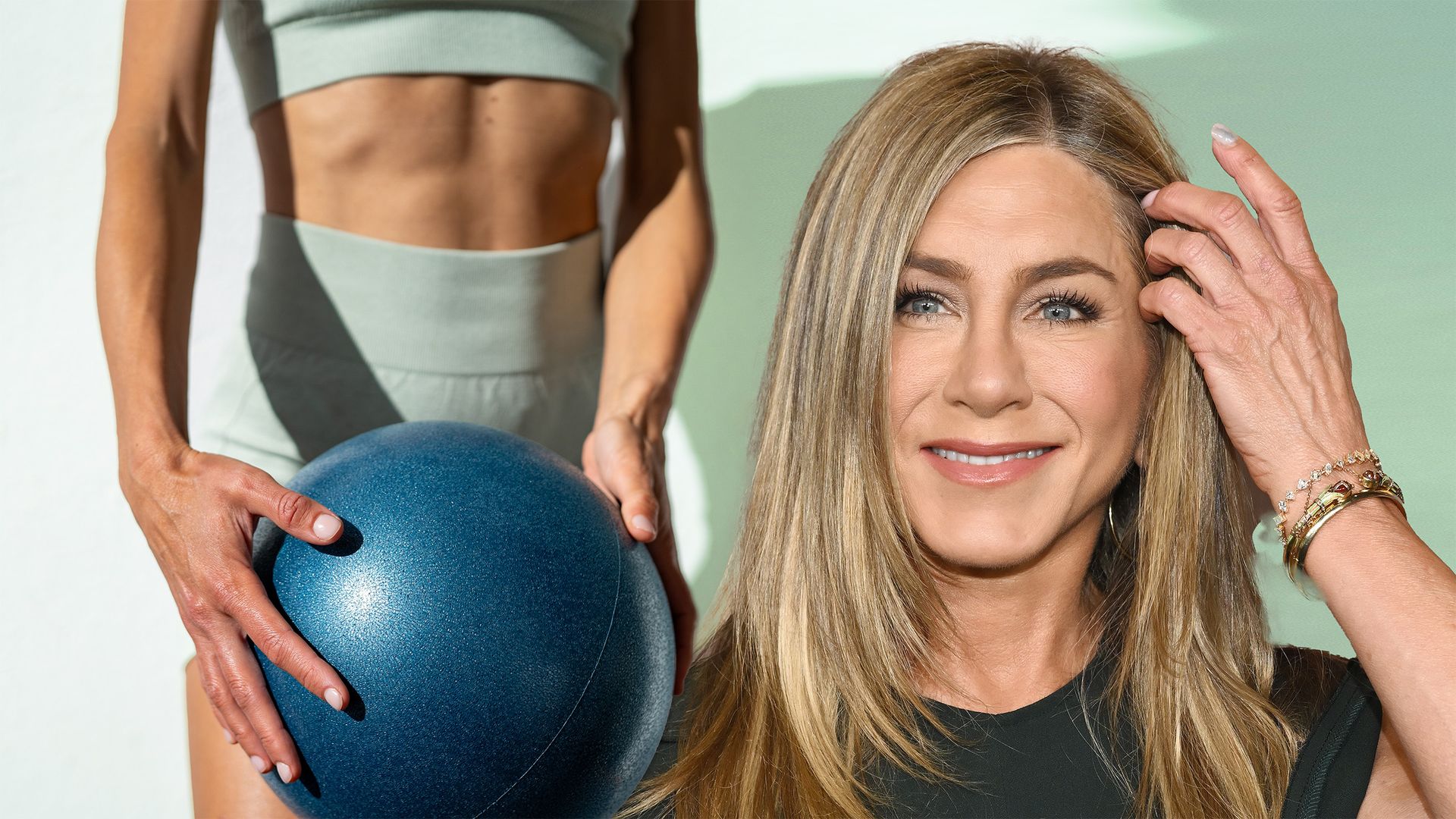
I swear by Pilates for building a strong and stable core, and it turns out Jennifer Aniston’s trainer does too. Dani Coleman, VP of training at Pvolve, frequently shares workouts on her Instagram, and one of her recent 10-minute core blasts featured a dead bug variation that completely torched my core — read on to find out more.
As a reminder, if you’re a complete beginner, pregnant or postpartum, or recovering from an injury, this might not be the best exercise for you and your body. Always seek personalized advice from a qualified professional before trying something new.
What is the exercise?
The elevated dead bug exercise featured in one of Coleman’s “mini-meltdown” workouts on her Instagram. All you need is your bodyweight and a Pilates ball — Coleman uses the Pvolve ball, but you can grab a similar Pilates ball on Amazon for less than $10. Here’s how to do an elevated dead bug with good form:
https://www.instagram.com/p/Dd9EobnoHOR/
- Lie on your exercise mat with your knees bent and your feet flat on the floor.
- Place the Pilates ball under your glutes — the ball doesn’t need to be fully inflated for this exercise.
- Raise both legs into tabletop position, keeping a 90-degree bend in your knees.
- Engage your core, squeezing your belly button into your spine.
- For this variation, Coleman works the same side of the body at one time. Moving slowly and with control, extend your left arm and leg away from your body, pointing your toes and reaching your arm away from your torso. At the same time, place your right hand on the thigh of your bent right leg.
- Bring your left arm and leg back to your starting position, and repeat on the right side. Keep alternating sides until you’ve completed 15 reps on each side.
For the elevated dead bug, the key is to move slowly and with complete control — the slower you move, the harder your core has to work. Another alternative is to extend the opposite arm and leg like a traditional dead bug while balancing on the ball.
What are the benefits?
I swapped this exercise into my core routine for a week and immediately felt the benefits. Here’s why:
In a bodyweight dead bug, it’s easy to rush, which tends to mean your lower back peels off the floor and your deep core muscles aren’t working as hard. By balancing on the ball, you have to keep your core engaged or you’ll wobble off. This balance fires up the transverse abdominis, the deepest layer of your abdominals and your body’s natural corset.
Your non-working side is working harder
Again, compared to a normal dead bug where your static limbs won’t be working, in this variation they are under constant, dynamic tension. To increase this, rather than resting the non-working hand on your leg, keep light pressure by pushing into your thigh. This isometric squeeze keeps your core working.
You’ll be testing your coordination
Especially if you opt for the classic dead bug, the cross-body stabilization needed to extend your opposite arm and leg while remaining balanced on the ball is high. I felt this in my core after a few reps, and I had to keep resetting and focusing on squeezing my core to stay balanced on the ball.
What are you waiting for? I can’t promise this will give you abs like Jen (a girl can only dream), but if you’re looking for a quick ab blast, add this to your next finisher.
- I’m a personal trainer who works with clients over 50 — these are the 3 mobility exercises I never skip
- After 60, this is the 10-minute routine I use with my clients to stay strong, mobile and independent
- ‘I’m a Pilates instructor, and I recommend these 5 core exercises to help older clients build strength and improve posture’
