

Providing access to vetted andtested AI agentscan boost employee productivity, but the need to control what they touch remains real chief automation officer
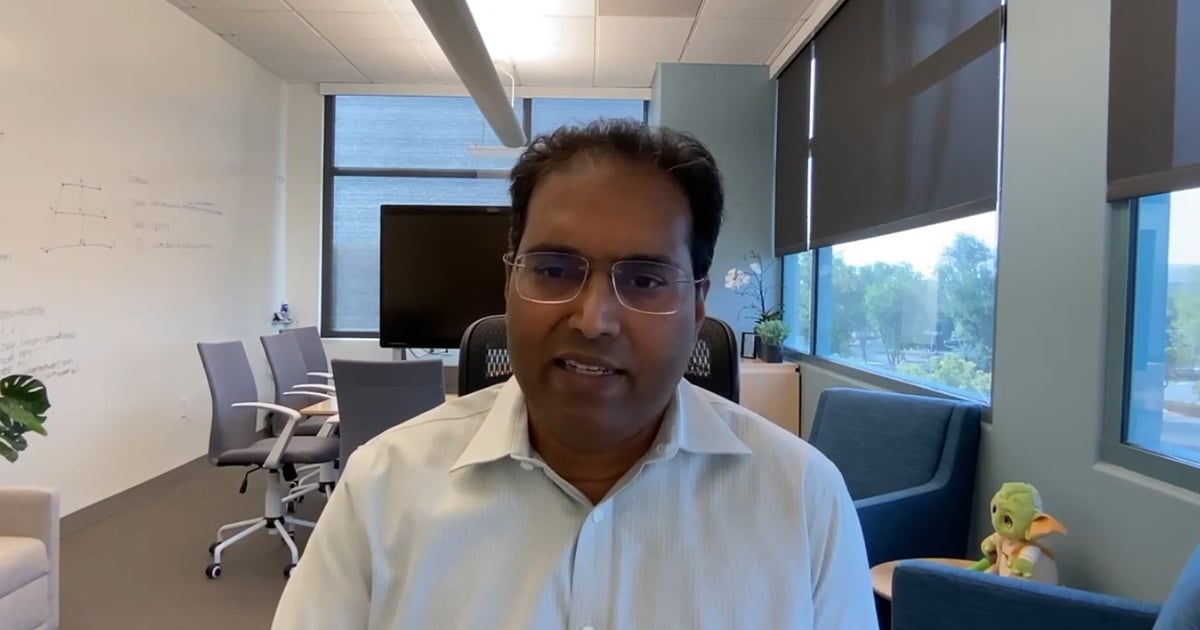
In this edition of CIO Reality Check, Namineni shared insights on his role and how he puts AI to work at the tech giant.
Namineni called the emergence of generative AI a “generational technology,” and made its deployment within Cisco part of the marching orders in his current position.
He has been with Cisco for eight years and became chief automation officer in September 2025, leading IT automation strategy and internal AI. That includes enterprise-wide autonomous agent deployment for the staff at Cisco, which he said informs how the company addresses pain points it sees in other enterprise IT ecosystems.
Keeping up with 100x engineers
Namineni said AI is a way to ramp up productivity to create 10x or even 100x engineers — the expectation that a rockstar developer can produce exponentially more output or value than their average peer. But that begged the question of whether production or the market is prepared for such acceleration.
Companies want to clear the bottlenecks that stifle them, he said, and using AI to that end could open opportunities to enter new markets, develop new products, or sell differently across channels.
“The code piece is getting faster. The testing piece is getting faster. But the thinking of what to design, how to deploy — those are still blockers,” Namineni said.
Businesses will have some catching up to do to update their infrastructure and operations to support accelerated work by AI-backed engineers backed by AI, he added. At the same time, they will need to address tech debt and vulnerabilities more quickly.
“You ask any IT department, nobody says, ‘I don’t have backlog.’ They have years of backlog,” Namineni said.
Cisco is already seeing how widespread use of AI plays out across its organization. In late August, the company granted access to an in-house personal AI agent to every employee after a period of testing and evaluation, Namineni said. Naturally, the agent came with guardrails to act only at the employees’ direction. Typically, that includes such tasks as reviewing calendars to remind employees what they need to prepare for, finding a conference room for a meeting or booking vacation time.
“It can do approvals, but the human is in the loop,” he said. “We are making sure that the humans are working with them and delegating tasks that are either low risk or completely approved by them.”
In addition torogue actionsby agents, he also warned about escalating costs as agents consume tokens and slap budgets with unexpected bills. Still, Namineni said companies should not avoid pursuing the benefits of AI agents.
“We have taken the leap of faith, and we are constantly checking in the background,” he said.
Expected machine mischief
Although AI is not sentient, its underlying probabilistic technology fuels what Namineni described as creativity in generative AI and large language models. Reports of these machines operating outside their directives tend to stem from the algorithm attempting to fulfill goals by any means. That makes limiting theiraccessessential.
“The key is you don’t connect these agents to payment systems,” he said.
Finding a balance between AI support and human agency remains important, Namineni said. “Coding is OK in my mind, but not like, ‘I don’t know what to wear this morning. Tell me.’ We don’t want to go to that point,” he said.
Further, he warned about letting skills and determination rot and doing whatever AI suggests, which can be a slippery slop because of the readiness of the answers versus having to think. “That is something we have to avoid. … Coding is a skill that you can outsource, but thinking in general as a skill we should never let go,” Namineni said.
