

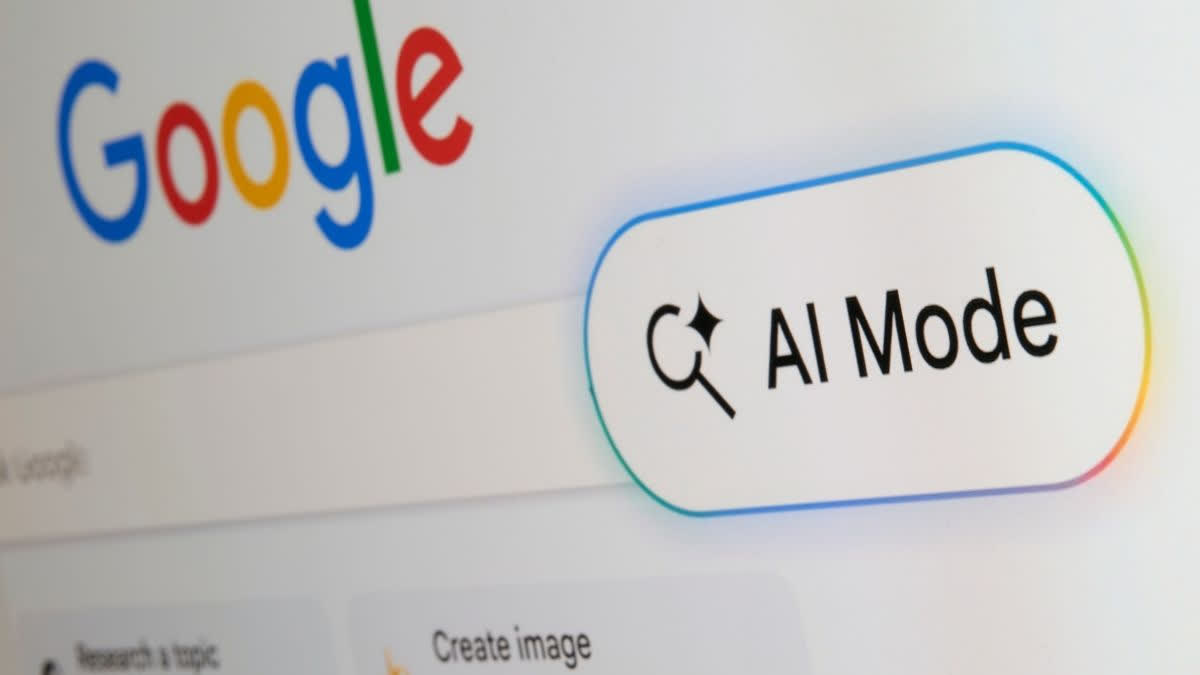
Google’s updated privacy policy says personalised AI features may use users’ Gmail and Photos data for ads. Here is how to switch them off.
Representational Image (Image Credit:
Hyderabad: Google has changed its privacy policy, and it could affect how a user’s personal data is used for advertising. If a user uses personalised Artificial Intelligence (AI) features in or Gemini, the company may now use their activity on other connected Google services to show them targeted ads. Let’s see what has changed and how to stop it.
What has changed?
The Mountain View-based tech giant updated its privacy policy on October 16, 2026. It says users can let services such as Search or Apps use data from other Google services, including Google Photos, Gmail, and Drive. Google says this gives users a more personalised experience.
The policy gives an example: Search may process some of the data users allow it to see, to personalise content, including ads. Google says it does not show personalised ads based on their Drive, Gmail, or Photos content unless they choose to make that data available to other Google services that support such ads. The change was first
Why this matters?
The feature behind this is called Personal Intelligence. Google launched it in Gemini in January 2026. It lets users connect services such as , , and , so the AI can give more personalised answers.
The feature is rolling out in a beta version to eligible users aged over 19 worldwide. It is not available in the European Economic Area, Switzerland, the United Kingdom (UK) or Nigeria.
How to turn it off?
Here are the simple steps to turn off personalised AI for Google:
Step 1: Open your Google Account settings.
Step 2: Navigate to the Data and privacy tab.
Step 3: Under Personalisation and activity, select Search Services Personalisation.
Step 4: Go to Manage Personalised Recommendations to find your Connected Content apps (such as Gmail, Google Photos, and YouTube).
Step 5: Select each app you want to disconnect from Personal Intelligence, or go to Google Search Personalisation to manage your global settings.
Step 6: Turn off Personalised Recommendations to switch off the tracking altogether.
Disconnecting single apps provides users more control over their shared data, while turning off Personalised Recommendations completely is the quicker option.
Users must think about the trade-offs before connecting to any app. Personalised answers can be handy, but they may come at the cost of their data. Users must connect the services they really need, and check their settings every so often, because policies can change.
People in the UK will not currently have Personal Intelligence, but it is still wise to review their Google privacy settings regularly.
Other AI firms are moving towards ads too
Google is not the only company bringing advertising to AI tools. In January 2026, OpenAI began showing ads to logged-in adult users in the US on the free and ChatGPT Go tiers. This week, it said it had expanded ads to 26 more countries, bringing the total to 89. The new markets include 14 more Latin American countries and several across Europe, Africa, and Asia.
OpenAI says it keeps conversations private from advertisers and does not sell customer data. It also says ads are clearly labelled, are separate from ChatGPT’s answers, and do not influence what the chatbot says.
