

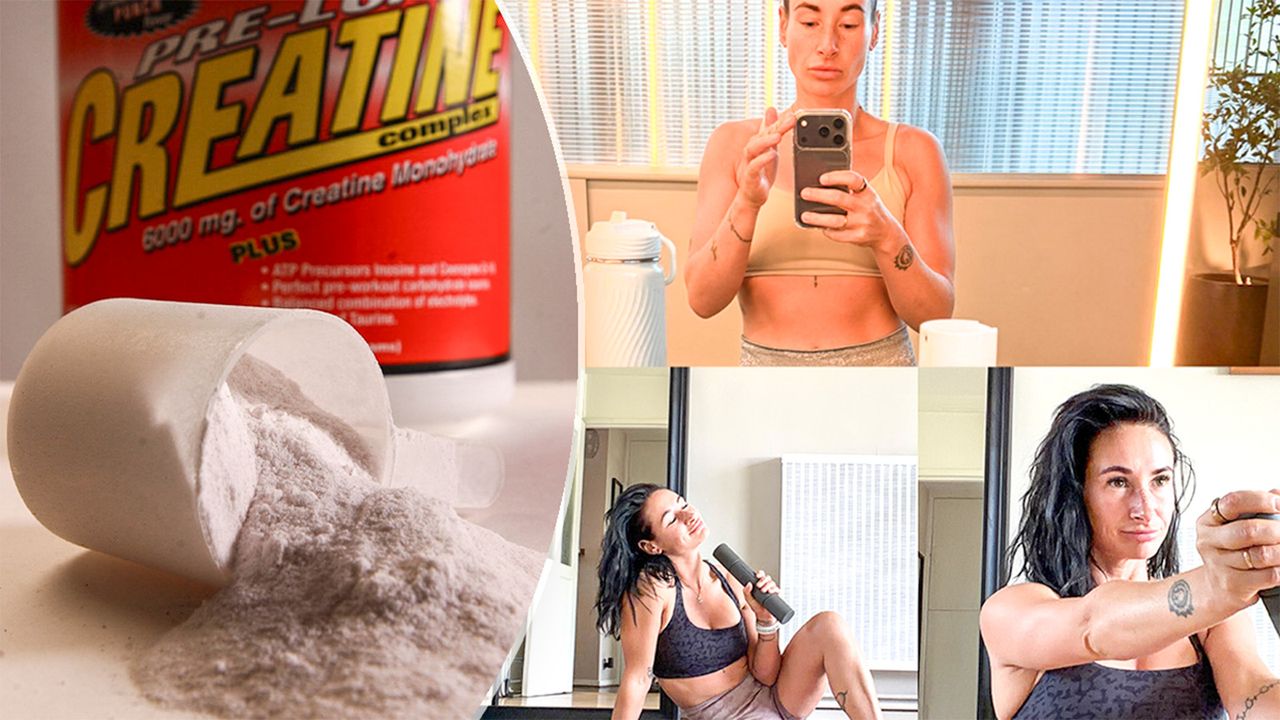
Creatine, like many supplements right now, is having its moment. There‘s heightened press around the benefits of creatine, especially for women, in helping sustain energy levels and your efforts in the gym, and building or maintaining strength and muscle mass.
Creatine is often taken in powder form, and anywhere between 3 and 5 grams per day is estimated to suit most people, though creatine cycling or opting for other forms like creatine gummies or tablets has also become increasingly popular.
In my line of work as a personal trainer, I’m never too far away from a trending supplement, protein shake, or pre-workout. Despite dabbling with it here and there, though, I’ve never really used creatine consistently. Until now.
A few months back, I started taking creatine monohydrate every morning, mixing a 4g scoop into my water before exercise. If you’re unfamiliar with creatine and its benefits, I cover them below, plus contraindications and what I experienced when taking it.
Here’s what happened to my body.
What is creatine?
Creatine is a naturally produced organic compound from amino acids. It’s primarily stored in skeletal muscle cells as phosphocreatine and acts as an energy supply during exercise, especially bouts of high-intensity movement.
Typically, exercisers supplement with creatine for high-energy or power-output demands, like powerlifting or sprinting. That said, it isn’t a pre-workout, in the sense that it won’t pump you full of caffeine or give you a slightly hectic buzz in the same way.
Creatine + Electrolytes: was £14 now £10
This creatine is unflavored and packed with electrolytes, perfect for fueling your workouts. It mixes really well and can be added to cold or warm drinks on the go. This is a UK-based supplement, but I’ve provided another tried-and-tested brand below for you.View Deal
Many creatines, like the Warrior Creatine Monohydrate powder (above), come fortified with electrolytes, and you can also get unflavoured options if you don’t like the taste of powders in your drinks.
In short, creatine helps people, from the everyday gym-goer to sportspeople, boost athletic performance by supporting rapid energy replenishment or turnover, helping you go longer and recover quicker. It is also used to help increase muscle mass and strength over time with regular, safe usage.
There is even a growing body of evidence “showing that creatine supplementation, particularly when combined with exercise, provides musculoskeletal and performance benefits in older adults,” which is useful for anyone over 35 or women who are hitting perimenopause or menopause.
While the body produces creatine in the liver, kidneys and pancreas, you also absorb it through consuming foods like fish and red meat. Supplements should never replace natural supplies, but as the name suggests, they can act as a way to top up levels if you might be falling short.
If you’re quite new to creatine, there’s a process called ATP recycling. This means that inside your cells, creatine turns to phosphocreatine and helps regenerate adenosine triphosphate (ATP), which is basically the primary currency of energy for producing muscular contractions. ATP is depleted during hard exercise efforts, so to sustain exercise, you want rapid turnover to keep you going.
Users supplement creatine to help bolster energy reserves in cells, which can increase training volume overall and translate into gains in strength, endurance and muscle mass.
According to sources like the Mayo Clinic, this could lead to “greater gains in strength, muscle mass and performance” and also help exercisers who require “rapid recovery during training and competition.”
There is even a growing body of evidence “showing that creatine supplementation, particularly when combined with exercise, provides musculoskeletal and performance benefits in older adults,” according to the National Institutes of Health. This is useful for anyone over 35 or women who are hitting perimenopause or menopause, as these are all instances where muscle mass, strength and bone density begin to naturally decrease (called sarcopenia).
There’s also research that suggests creatine can lower blood sugar and improve brain function. As reported by Tom’s Guide, studies indicate that (larger) doses of creatine can fight fatigue and improve sleep deprivation.
I’ve been taking creatine for months — here’s what’s happened to my body
Before jumping in, we don’t encourage supplementation fads at Tom’s Guide, and I work based on my experience as a personal trainer and on existing research. What works for my body might not for you, so exercise caution if you try supplementation.
Also note that if you want to take larger doses, this isn’t generally recommended every day long-term, so I strongly advise you to research creatine cycling to keep your body safe so that you can take breaks and taper appropriately.
In terms of day-to-day safety, creatine is well-researched and generally considered safe for daily use in healthy adults, though it can cause mild water retention. If you have any health conditions related to your liver, pancreas, or kidneys, or you’re just unsure, seek medical assistance.
I’ve taken creatine before, but this time I locked in. Several months down the line, with consistent use, I’ve experienced the gentle uplift creatine provides during the slog of intense workouts, and my overall training output has increased. However, it shouldn’t be treated as a pre-workout or an iso gel that will pump you full of caffeine or quick carbs, so try not to anticipate this if you take it.
That said, creatine is often found as a single ingredient in pre-workouts alongside caffeine, but rather than leaving you with the dreaded jitters, creatine takes care of improving performance output over time instead.
For the first time, I’ve really noticed a change in how my body looks. I feel great during exercise efforts, and I feel like I’m maintaining a great level of muscle mass right now.
I’ve been taking 4 grams daily, and I plan to have a week off soon as a reset. I have noticed a little water retention this time around, but otherwise, no adverse effects yet, despite having a pretty sensitive stomach. I’ve been using Warrior Creatine, but I’ve just moved to C4 and have also taken Optimum Nutrition before (featured below).
I recommend doing your research and looking for pure creatine monohydrate with maximum bioavailability. Check the ingredients list: I like to opt for unflavoured (I hate the taste of anything pretending to be something it isn’t. “Mixed berry” can get straight in the bin) and with added electrolytes.
I prefer the powder and trust it more, but if yours doesn’t mix well and sits at the bottom of your drink, I would move to another brand.
This is a hugely popular US supplement brand, including brilliant options for protein and creatine. I’ve tried this creatine, and it blends well. Big tick from me.View Deal
Granted, as a trainer, I tell my clients to fuel with adequate protein (protein taken before workouts can help increase muscle protein synthesis, andthis is how much protein you actually need to build muscle), plus plenty of sleep and active rest. But creatine is hitting the headlines more and more as a daily supplement with real, lasting benefits, especially for women who need to cling to muscle later in life.
As a woman myself, I know this battle already, and if it works for you, I recommend it. For the first time, I’ve really noticed a change in how my body looks. I feel great during exercise efforts (crucial if you have to perform continuous efforts), and I feel like I’m maintaining a great level of muscle mass right now.
Building muscle — called hypertrophy— takes months of consistency with your workout routine and progressive overload, and even then, body fat percentage plays a role in the definition you can see. Although I have leaned out a little this summer, I have definitely seen more muscle definition in my body from taking creatine consistently, along with my balanced lifestyle.
The Journal of the International Society of Sports Nutrition reports on gains in lean muscle mass and power, which can occur from regularly taking creatine alongside lifting weights.
There aren’t any contraindications to taking creatine at night, but if you’re looking for the best time to exercise, a general rule of thumb is to avoid high-intensity workouts and heavy weightlifting sessions within a few hours of bedtime.
Personally, in the summer, I stick to early workouts, so this isn’t really a problem for me. Whether this shift in timing has also improved fatigue and recovery levels alongside taking creatine, possibly.
Taking creatine shortly before (and after) exercise is the best way to fuel, as creatine is believed to also improve exercise recovery. First and foremost, I recommend always looking at your diet before adding a creatine supplement.
And finally, combining caffeine with creatine could worsen sleep and cause some stomach discomfort if you consume more than the recommended daily dosage. Always check the label and stick to the guidelines given by the product brand.
FollowTom’s Guide fitnesson Instagram for more workouts, routines, tips, and tricks.
- Idrank lemon water every day for 2 weeks — here’s what happened
- Idrank a gallon of water a day for a month, here’s what happened
- Forget crunches — this standing move trains your core and hip flexors and improves posture at the same time
