

ByAnthony Di Pizio–Nov 20, 2026 at 5:25AM EST
Key Points
- Corning has manufactured glass for some of the world’s most revolutionary products over the last 175 years.
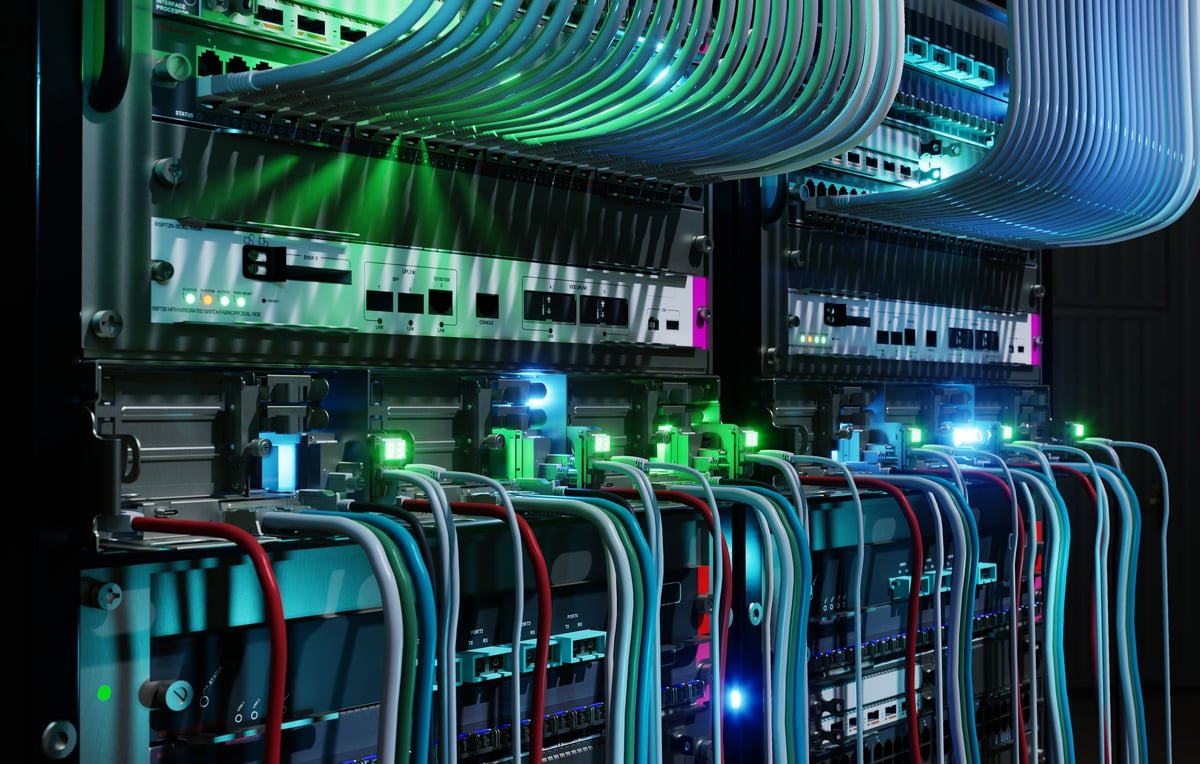
- The company is now a top supplier of fiber-optic cables for data centers, which transmit data much faster than copper alternatives in artificial intelligence workloads.
- Corning stock has plummeted by 57% amid the broad tech sell-off, and it now looks attractively valued.
-
10 stocks we like better than Corning ›
When investors think of artificial intelligence (AI) hardware stocks, chip giants like Nvidia(NVDA-3.30%) and Advanced Micro Devices(AMD-7.72%) normally come to mind. However, many other opportunities exist in this space for investors who are willing to venture off the beaten path.
Corning(GLW-2.02%) was founded in 1851, and it has since manufactured the glass for some of America’s most revolutionary technologies, including Thomas Edison’s original lightbulb and every generation of Apple‘s (AAPL-0.92%) iPhone. It’s now one of the top suppliers of fiber-optic connectivity solutions to AI data center operators, transmitting information at much faster speeds than copper alternatives.
Corning has inked deals with a series of AI giants this year, and with its stock down 57% from its peak amid the sell-off in the broader tech sector (as of the market close on Nov. 17), here’s why it might be time to buy.
The transition to optical fiber is happening fast
The graphics processing units (GPUs) supplied by Nvidia and AMD do most of the heavy lifting in AI workloads. They are typically grouped together in a data center rack alongside central processing units (CPUs) and a series of networking components. Nvidia’s NVLink-72 rack, for example, includes 72 GPUs and 36 CPUs, and they are connected using two miles’ worth of copper cables.
However, there is an ongoing shift toward fiber optic cables instead because they offer faster processing speeds and are significantly more energy-efficient. Corning has developed an entire portfolio of optical fiber solutions under a brand called GlassWorks AI Solutions, including the Multicore Fiber (MCF) product, which packs four cores into a single 125-micron strand of fiber, making it 4 times as dense as a traditional fiber-optic cable.
In essence, it means data center operators can achieve the same performance with 75% fewer cables, which is highly useful as clusters grow larger. Corning says clusters of over 130,000 GPUs require an additional optical layer, which increases the necessary fiber content by 50%, so products like MCF can provide significant cost savings in those applications.
In January, Meta Platforms(META-3.27%) signed a deal to buy $6 billion worth of optical connectivity solutions from Corning over the next few years, and a short time later, Amazon(AMZN-3.87%) inked a similar agreement. Under a separate deal, Nvidia will assist Corning with the technical expertise and financing it needs to grow its manufacturing capacity to fulfill its orders.
Accelerating revenue growth
Corning delivered $5.1 billion in core revenue during the third quarter of 2026 (ended Sept. 30), a 19% increase from the year-ago period. That growth rate accelerated from 17% in the second quarter just three months earlier. The momentum was driven by the optical communications segment, which contributed $2.4 billion in revenue, with growth accelerating to 44%.
Corning said AI-related sales within the optical communications segment increased by more than 100% year over year during the third quarter, and I think further rapid growth is likely ahead considering some of the company’s enormous customer agreements.
Corning is also enjoying rising profit margins because of the sheer demand for optical connectivity solutions. As a result, the company’s third-quarter core net income grew by 36% to $795 million, led by the optical communications segment where net income soared by 80% to $532 million.
Corning stock might be attractively valued following its recent sell-off
Following its recent 57% decline, Corning stock is now trading at a price-to-earnings (P/E) ratio of 34.9. But Wall Street expects the company to grow its adjusted (non-GAAP) earnings to $4.55 per share in 2027 (according to Yahoo! Finance), placing its stock at an even lower forward P/E ratio of 23.7.
GLWCorning
NYSE · As of 4:00 PM ET 11/19/26
Premium FeatureMoneyball Superscore85/100
Key data points
Market capMarket cap calculated using publicly traded shares outstanding only. Does not include unlisted, private, or dual-class non-traded shares. Implied market cap may vary.$91.28B
Day’s range$105.83 – $114.02
52wk range$77.39 – $271.78
Volume143.8K
Avg volume9M
Gross margin35.46%
Dividend yield1.06%
Corning is currently more expensive than Nvidia, but that company is going through a unique set of circumstances following the recent departure of founder Jensen Huang. It’s much cheaper than AMD, however, which has a P/E ratio of 75.7 based on its adjusted earnings, and a forward P/E ratio of 28.5.
Plus, Corning expects to double its annual run rate revenue from $20 billion to $40 billion by 2030, so if its earnings experience a similar increase, then its current stock price might look like a bargain when investors reflect back on this moment in a few years’ time.
In summary, this stock offers investors a relatively unique way to expose their portfolios to the AI boom at an attractive price, so using the recent sell-off as a buying opportunity could yield significant rewards over the next few years.
Where to invest $1,000 right now
When our analyst team has a stock tip, it can pay to listen. After all, Stock Advisor’s total average return is 790%* — a market-crushing outperformance compared to 202% for the S&P 500.
They just revealed what they believe are the 10 best stocks for investors to buy right now, available when you join Stock Advisor.
*Stock Advisor returns as of November 20, 2026.
