

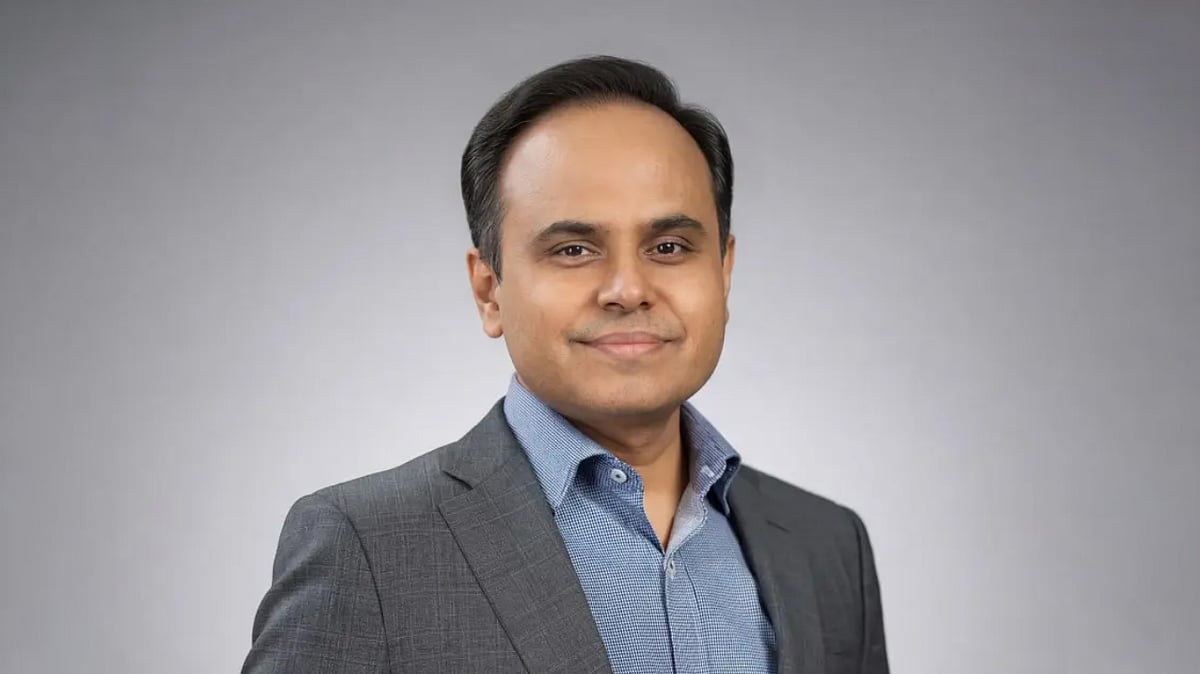
Srikanth Velamakanni wants the intelligence his company works with to become cheaper.
In a letter to shareholders accompanying the company’s latest quarterly results, Fractal’s co-founder and group chief executive explains why. Lower AI costs, he believes, will encourage businesses to automate decisions they previously considered too expensive to tackle. Fractal wants to earn from helping them make that change.
The India-founded enterprise AI company has just crossed $100 million in quarterly revenue for the first time. Revenue rose 20% to ₹956.5 crore in the September quarter, while net profit increased 139% to ₹79.2 crore. Velamakanni’s letter sets out how he hopes to build on that growth.
The letter explains where he wants the next phase of growth to come from.
Open Magazine Latest Edition is Out Now!
The Era of Forever Wars
30 Oct 2026 – Vol 05 | Issue 44
Coping with an explosive Middle East
Why does he compare AI with India’s mobile-data boom?
Because he expects falling prices to change how much people use the technology.
Velamakanni points to India’s experience with cheap mobile data. In his telling, lower prices encouraged far greater consumption and helped other businesses develop around that usage.
He expects a similar expansion in AI: as intelligence becomes cheaper, companies will apply it to more decisions, including tasks where the cost previously outweighed the benefit.
For Fractal, that would mean more opportunities to build AI into businesses. It is a demand forecast. Falling model prices alone cannot establish how much customers will spend on implementation, or who will win that work.
What does he think businesses are getting wrong?
They have acquired increasingly capable technology without sufficiently changing how they work.
Velamakanni argues that much of corporate pricing, planning and customer service still operates much as it did four years ago. His opportunity lies in closing the gap between a model’s capabilities and a company’s everyday practices.
His letter uses a factory-electrification analogy, drawing on economists Ajay Agrawal, Joshua Gans and Avi Goldfarb. Replacing a steam engine with an electric motor brought limited gains while the factory retained its old layout. Greater gains followed when machinery and work were reorganised.
Applied to AI, his argument is that buying access to a model leaves substantial work unfinished. Companies must decide how information, approvals and responsibilities should change.
What would that rebuilding involve?
Consider the insurer described in his letter.
Fractal says it mapped connections between policies, coverage, exclusions, past claims and the rules employees use when assessing insurance applications. An AI system needs those relationships to assist a decision. The insurer also needs controls over the tools it can use and the decisions people must review.
Velamakanni calls this surrounding structure a harness. It makes the model useful within a particular business.
That helps explain his commercial ambition. A more capable model could increase the usefulness of a well-built system. Fractal’s challenge is to remain valuable as models themselves become better at using company information and tools.
Why does he believe Fractal has an advantage?
Because it has spent 26 years working on the decisions it now wants to redesign.
Velamakanni argues that companies will first trust partners already familiar with those decisions. He also expects each assignment to leave behind knowledge and software that make subsequent work easier.
That is the potential economic advantage: experience from one implementation could reduce the effort required for the next.
His ambition is explicit: “The firms that build intelligence, rather than supply the people to deploy it, will earn the largest share of it.”
The important test is how much software and expertise can be reused across customers while respecting their different requirements and confidentiality.
Where can readers see this thinking in practice?
In the tasks Fractal’s products address.
Cogentiq connects company knowledge, AI agents and controls. Agents are software systems that use tools to perform sequences of tasks. Asper supports pricing and promotions.
The letter describes a seven-day Cogentiq trial at a business handling more than 3,000 transactions daily. Fractal says matching payments to invoices achieved more than 85% same-day application and reduced manual effort by over half.
For a coffee company, Asper produced a promotion plan projected to add $4 million in gross profit using the same budget. The gain was projected, rather than reported as realised. Both examples are company accounts involving unnamed clients.
They show the practical work Velamakanni wants Fractal to be paid for.
Has that ambition already turned into a large product business?
It is growing from a small base.
Products generated ₹38.3 crore in Q2, up 39%, and accounted for 4% of group revenue. Their approximately ₹153 crore annual run-rate extends the quarter’s pace over a year; it is not completed annual sales. The category includes enterprise AI and data-science training as well as software.
Fractal’s broader business also involves AI. The distinction is between separately identified products and the larger business of services and implementation.
Velamakanni’s strategy becomes more convincing if product income grows and repeated implementations require less fresh work. The current product share leaves substantial room for that transition.
How big does he think the opportunity could become?
He expects large companies to spend up to 2% of revenue on AI over the next few years. That is his forecast, rather than an established spending norm.
Fractal is pursuing Indian demand too. It announced a dedicated India business unit in August. The letter describes patients using Vaidya.ai through WhatsApp to understand lab reports in English or Marathi and find clinics in Mumbai. Preparing summaries for doctors and providing administrators with an anonymised view of lab reports are described as subsequent phases.
These applications show how his idea extends from corporate decisions to public services. Their value will depend on reliable performance and measured outcomes.
What do the accounts say about the journey?
There is progress, alongside costs that faster AI does not automatically remove.
Gross margin, revenue left after direct delivery costs, fell from approximately 46.2% to 44%. Velamakanni attributes the pressure mainly to hiring AI engineering talent ahead of growth. Lower overhead ratios and employee share-related costs helped overall profitability improve.
The reported 20% rupee revenue growth was approximately 10% after removing currency movements. Healthcare and life sciences grew 79%, while technology, media and telecommunications declined 18%. Demand remains uneven.
Cash collection also deserves attention. First-half profit was ₹151.5 crore, but operating cash flow was negative ₹23.7 crore. Increased customer receivables absorbed ₹140 crore, alongside other movements and taxes. Q2 operating cash flow was positive ₹79.3 crore.
Growing the business, delivering it profitably and collecting payment each require evidence.
The next results will help test Velamakanni’s argument: whether cheaper AI brings larger assignments, whether products grow beyond their current small share, and whether delivery margins and cash collection improve.
His letter identifies the business he wants Fractal to become. The opportunity rests on making better AI useful in more places. Fractal must show that the knowledge and software accumulated along the way make it progressively better at that job.
