

After their first year of classes, AI majors put what they learned in the classroom to use in internships spanning fields from biotech to finance
Story by:
- Katherine Connor
–
khconnor@ucsd.edu

Published Date
Story by:
- Katherine Connor
–
khconnor@ucsd.edu
Topics covered:
Article Content
As the University of California San Diego welcomed the second cohort of undergraduate students in its Artificial Intelligence major to campus this fall, students in the inaugural class returned after applying what they learned in the classroom to summer jobs, internships, classes – and of course mixing in some fun travel, too.
From applying AI to finance, drug discovery and biocompatible biomaterials, these second-year students in the AI major found that the skills they acquired through their first year in this major were useful in many different fields.
In September 2026, UC San Diego was ranked the#8 AI undergraduate program in the countryin the U.S. News & World Report Best Colleges rankings. The Jacobs School of Engineering launched theundergraduate AI major in 2025, in collaboration with the Halıcıoğlu School of Data Science and Computing, after more than a decade of growth in AI teaching and research on the UC San Diego campus. Housed in UC San Diego’s Department of Computer Science and Engineering, this is one of the few AI majors in the U.S. built on a robust computer science foundation. The major is designed to meet the workforce demands of industry and the career preparation needs of students. It prepares students to build, apply and assess artificial intelligence technologies across disciplines; ground AI studies in societal and professional contexts; and engage students with the ethical questions surrounding these systems and their impact on society. The innovative major draws on expertise from across the Jacobs School and the entire campus, reflecting UC San Diego’s broader emphasis on interdisciplinary education, research and innovation.
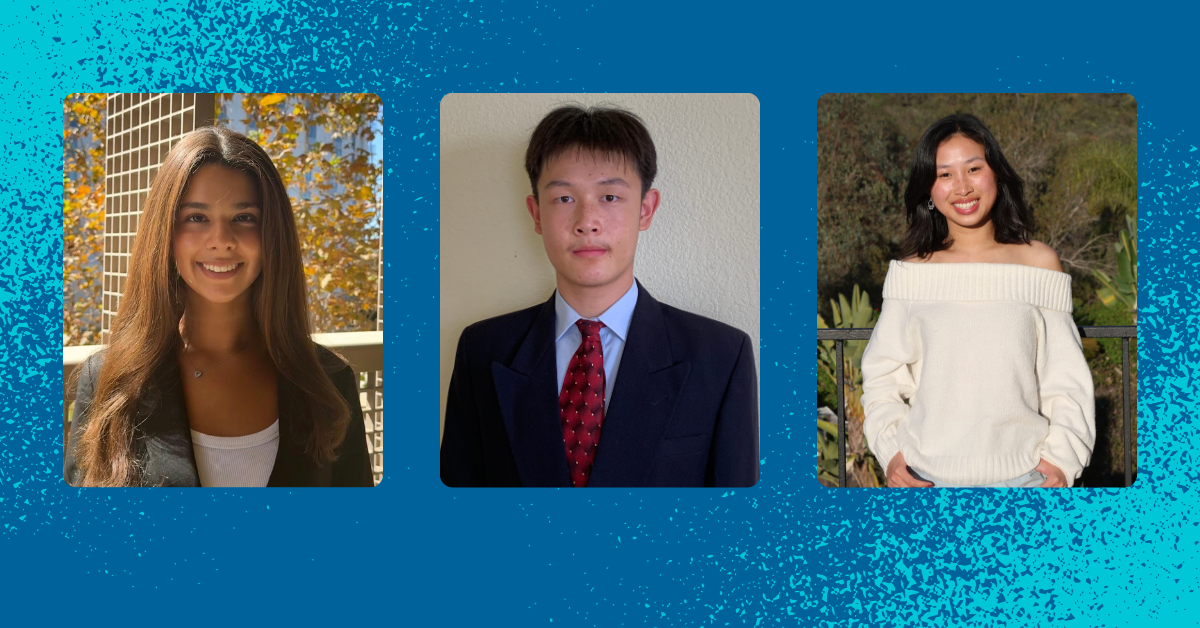
Here’s how three students in the inaugural cohort of AI majors spent their summers:

Leena Banga
This summer, I worked as a product management intern at Synergie Tech Solutions. I helped create a Power Business Intelligence dashboard that made it easier to track the progress and overall health of more than 20 software projects. I worked with the project management, finance and engineering teams to figure out which information was most helpful, including project schedules, costs, resource use and financial forecasts. I also helped test ways machine learning could be used to flag projects that might be at risk. I’m pursuing a finance minor alongside my artificial intelligence major, so this internship connected really well with both of my interests. My finance classes helped me understand things like project costs, burn rates and forecasting. My AI and programming classes helped me think through how data and machine learning could be used to spot patterns and identify potential risks.
I also used the problem-solving skills I’ve learned in my engineering classes. A lot of the work involved taking a big, complicated problem and breaking it into smaller parts that we could actually work through and test.
Read a full Q&A with Leena here: Leena Banga
Daniel Zhang:
This summer, I worked as an AI/Software Engineering Intern at a biotechnology company called Protillion Bioscience, where I helped develop and improve the infrastructure supporting research software. My work focused on making software more reliable, reproducible, and easier to run across different computing environments. I worked on containerizing software tools, automating testing and deployment, and troubleshooting technical challenges along the way. As an AI major, I was especially interested in seeing how reliable software infrastructure can support computational and AI-driven research. The experience gave me a broader perspective on the engineering systems that make advanced software and AI applications possible.
The experience reinforced my interest in pursuing a career at the intersection of AI and software engineering. Studying AI has taught me about the algorithms and concepts behind intelligent systems, while this internship showed me the engineering infrastructure required to make software reliable and useful in practice. I came away with a greater appreciation for how closely AI and software engineering are connected.
Read a full Q&A with Daniel here: Daniel Zhang
Nicole Fong:
I had a pretty busy summer: I was an AI/ML intern at ChakraTech, a biotech company building biodegradable solutions, and I worked on predictive modeling for material science. Many of the people I worked with were students or alumni from UC San Diego, so it was really lovely connecting with them about college classes and relatable stories. I also became one of the two Google Student Ambassadors representing UC San Diego and got to stay at headquarters in Mountain View for a multiday onboarding kickoff! Lastly, I took a few summer courses and then spent time with my student orgs prepping for the fall quarter events and logistics.
Read a full Q&A with Nicole here: Nicole Fong
The full Q&As with Leena, Daniel and Nicole are below.
Leena Banga
Q: How did you spend your summer? This summer, I worked as a product management intern at Synergie Tech Solutions. I helped create a Power Business Intelligence dashboard that made it easier to track the progress and overall health of more than 20 software projects. I worked with the project management, finance and engineering teams to figure out which information was most helpful, including project schedules, costs, resource use and financial forecasts. I also helped test ways machine learning could be used to flag projects that might be at risk.
Q: What did you learn? I learned that creating a good product involves much more than just building the technology. You have to understand the problem people are facing, decide which features will actually help and communicate those ideas clearly to the technical team. I also learned a lot about working with people from different areas of a company. Each team looks at a project from a different perspective, so I had to learn how to take everyone’s needs into account and turn them into something useful.
Q: Were you able to apply any knowledge or skills you learned in the classroom to your summer internship? I’m pursuing a finance minor alongside my artificial intelligence major, so this internship connected really well with both of my interests. My finance classes helped me understand things like project costs, burn rates and forecasting. My AI and programming classes helped me think through how data and machine learning could be used to spot patterns and identify potential risks.
Q: Did this experience influence or confirm your future goals at all? If you had asked me last year what I wanted to do, I would have been completely sure that I wanted to go into software development. That is still a huge part of what I want to do, but this internship showed me that I’m also really interested in product management and in exploring how AI can be used in different industries.
I’m especially interested in fintech and quantum computing, and I want to keep learning about how new technology can make industries more efficient. At the same time, I want to help make sure that technology is developed ethically and that more women and people from different backgrounds have the opportunity to be involved in building it.
Q: Anything else you’d like to share? Outside of my internship, I took five community college courses and traveled to three countries: Malta, Spain, and Morocco. It was definitely a busy summer, but UC San Diego has helped prepare me to balance a lot of things at once. I was able to focus on my internship and classes while still making time to travel, meet new people, and experience different cultures. I’m really glad I got to have such a productive and fun summer.
Daniel Zhang
Q: What did you learn? I learned that real-world engineering is often less about finding one “correct” answer and more about understanding a problem, considering different approaches, and making thoughtful decisions based on practical constraints. I also learned how important it is to understand existing systems before trying to improve them. Working with an established codebase taught me how to navigate unfamiliar code, ask better questions, and build on the work of other engineers. As an AI student, this was particularly valuable because developing useful AI systems requires more than designing models—it also requires strong software engineering, reliable infrastructure, and the ability to work effectively with complex systems.
Q: Were you able to apply any knowledge or skills you learned in the classroom to your summer internship? Yes. My coursework as an AI major at UC San Diego provided a strong foundation that I was able to apply throughout the internship. CSE 29, Systems Programming and Software Tools, was particularly relevant because it introduced me to systems-level concepts such as processes, memory, and how software interacts with the operating system. The course also gave me practical experience working in a UNIX command-line environment. I was able to apply those concepts directly while working with containers, automation, testing, and software infrastructure. My AI coursework also helped me think about software from the perspective of building systems that can eventually support data-driven and intelligent applications.
Q: Did this experience influence or confirm your future goals at all? The experience reinforced my interest in pursuing a career at the intersection of AI and software engineering. Studying AI has taught me about the algorithms and concepts behind intelligent systems, while this internship showed me the engineering infrastructure required to make software reliable and useful in practice. I came away with a greater appreciation for how closely AI and software engineering are connected. In the future, I hope to work on AI systems that are not only innovative, but also reliable, scalable, and useful for solving real-world problems.
Q: Anything else you’d like to share? One of the biggest lessons I took away from the summer is that engineering is often about making good decisions without having all the answers. There were times when I had to work through unfamiliar problems, evaluate multiple possibilities, and determine the best path forward. Learning to be comfortable with that uncertainty and to support my decisions with careful reasoning was one of the most valuable skills I developed.
As an AI major, I also came away with a stronger understanding that building impactful AI is not just about the models themselves. It requires strong foundations in software, systems, testing, and infrastructure. This experience helped me see how the different areas I am learning about can come together to build technology that can have a meaningful impact.
Nicole Fong
Q: What did you learn? I learned how much a machine learning project depends on the quality of its data. At ChakraTech, a big part of my work was figuring out which material properties were worth predicting and whether we had enough reliable data to predict them, and I changed direction a few times as I found out what the data could support. I also learned to pick up a new field quickly by asking my teammates a lot of questions, since I was learning biology and chemistry concepts as I progressed. Outside of work, helping plan fall events with my student orgs and meeting other student leaders at the Google kickoff taught me how much behind-the-scenes planning goes into making an event feel easy for the people attending.
Q: Were you able to apply any knowledge or skills you learned in the classroom? I was! As a Warren student, I had the opportunity to write research papers and spend time learning about animals in our environments. The WCWP (Warren College Writing Program) 10B course I took was focused on the relationship between humans and animals. This class really helped me when it came to my internship at ChakraTech where I spent much time familiarizing myself with biology and chemoinformatic concepts since WCWP gave me the skills to write in a technical manner while creating connections between groups that sometimes seem so unrelated.
Q: Did this experience influence or confirm your future goals at all? For me, it confirmed that I want a career where I’m constantly meeting new people and making connections, while still having the technical understanding to present and explain AI and technology to people who don’t share that background. The part of my summer I enjoyed most was talking with people from different fields and finding common ground, and I’d like to keep working on removing the technical barrier around AI so more people can understand it, feel included, and choose to get involved.
Q: Anything else you’d like to share? I’m grateful to have had so many chances to learn from people this past summer and throughout my first year at UC San Diego! I’m looking forward to a busy fall with everything it’ll bring, from my classes to meeting new people across campus. I’m also very excited to continue working with TESC, ACM, and Google, so a lot of my year will be dedicated to creating communities and helping students find their passions.
Learn more about research and education at UC San Diego in: Artificial Intelligence
Read more news about: Artificial Intelligence
