

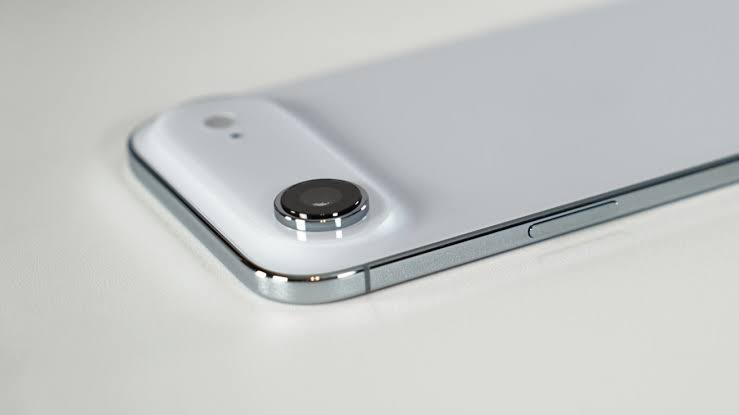
The 2027 anniversary phone looks like a design milestone, not a second iPhone X.
ByJinPublished 30 minutes ago•7 min read
Ten years ago, Apple skipped the iPhone 9 and used the iPhone X to end the wide forehead and chin that had defined the first decade of the iPhone. The notch was mocked. Face ID was doubted. The gesture interface was called a learning curve. In September 2017, Craig Federighi took the stage, held up a phone, and Face ID failed to unlock. He tried another unit. It failed again. The room laughed. Within hours, the internet was pasting the notch onto cats, moustaches, and cartoon faces.
A decade later, the notch is remembered as the starting point of the full-screen era.
The supply chain now points to a similar jump. Apple is expected to skip the iPhone 19 and release the iPhone 20 in 2027, the twentieth-anniversary model. The leaks describe four-sided curved glass, a front that hides as many holes as possible, a glass back, two sizes around 6.41 and 6.96 inches, under-display Face ID, solid-state buttons, eSIM-only designs, and a custom image sensor.
Will it be great? It can be great in one narrow sense. It probably will not be great in the way the iPhone X was. Its greatness will come from pushing the iPhone to the edge of “a single slab of glass” through optical tricks and structural compromise. It will mark the next decade of iPhone design. It will not be a flawless object.
The “single slab of glass” is an optical trick
Jony Ive’s old ambition was to turn the iPhone into “a single slab of glass.” The iPhone 20 leaks suggest Apple is finally moving toward that shape: a four-sided micro-curved glass cover, curved glass wrapping around the sides, and a front that reads as borderless.
It is not a pure glass body. A pure glass chassis failed for engineering reasons. Glass is hard but brittle. It handles compression well and edge flaws badly. The more complex the curve, the harder it is to control thickness, curvature, and residual stress. Joining multiple glass panels is worse. The adhesive must be strong, transparent, and durable. Increase bond strength and the seam becomes visible. Hide the seam and structural strength drops.
Apple’s solution keeps a metal frame. Curved glass extends toward the sides. A metal band carries the structure. To make that band strong enough, Apple is using 3D-printed titanium. Laser powder-bed printing builds internal lattice structures and micro-textures that CNC cutters cannot reach. The USB-C port housing on the iPhone Air already uses a 3D-printed titanium part. Under a 50-micron microscope, the surface shows a chain-like circular pattern. Those micro-textures help metal bite into glass or plastic, improving mechanical locking and water sealing.
The display itself is not bent. The OLED panel stays flat. The glass cover is thermally bent. Pixels do not reach the edge. The curved glass refracts light and hides the border. What you see as a borderless front is glass doing a refraction trick for your eye.
That is the first compromise. The “single slab of glass” is a visual effect built on a flat OLED panel, a curved cover, and a metal frame. It is a real design change. It is not a material revolution.
The front gets closer to hole-less, but the hole remains
Under-display Face ID is moving forward. A full Face ID system needs a flood illuminator, a dot projector, and an infrared camera. The iPhone 18 Pro is expected to put the infrared camera under the OLED panel, shrinking the Dynamic Island for the first time. The next step is to put the dot projector under the display as well. Apple’s patents describe compact projector modules that combine the flood illuminator and dot projector, and planar optical waveguides that guide infrared light through the gaps between display pixels.
The under-display front camera is a different problem. The folding iPhone Duo is expected to be the first production iPhone with an in-display selfie camera on the inner screen. Early reports describe the image as gray and soft. The pixel layer blocks light and diffracts it. Android makers have spent years on the same problem. The common fix is to remove some subpixels above the lens and increase pixel spacing to raise transmittance. Display sharpness drops. Selfies stay hazy.
On a straight-slab flagship that relies on one screen, Apple will not gamble on the main selfie camera. The iPhone 20 will likely ship with an under-display Face ID system and a punch-hole front camera. The pill-shaped Dynamic Island shrinks to a single “Dynamic Hole.” That is progress. It is not the hole-less front people have been asking for.
The rest of the body loses holes. Solid-state buttons are back in testing. Apple prototyped solid-state volume and power buttons during the iPhone 15 Pro cycle under the code name “Project Bongo,” then paused. Patents continued. The twentieth-anniversary model is the obvious launch window. eSIM removes the SIM tray, especially in China as carrier activation flows improve. Screen-based audio can replace the top earpiece. The iPad mini already ships an “Acoustic Display” system. A woofer vibrates the display for low frequencies. Tweeters sit between the glass and the aluminum chassis. The iPhone does not have the same panel area, so the likely implementation is screen audio for the earpiece and a reduced bottom speaker grille.
The iPhone 20 will be the closest iPhone to a hole-less body. It will still have a hole.
The internals: LOFIC is the upgrade that matters
The display is expected to move to tandem OLED, the structure Apple introduced on the M4 iPad Pro. Two OLED layers stacked together raise full-screen brightness without pushing single-layer emission harder. COE, color filters integrated into the OLED encapsulation to remove the polarizer, has been discussed for the iPhone. Supply-chain reports say mass production challenges have pushed COE on straight-slab iPhones to 2029. The iPhone 20 gets a brighter, thinner display. It does not get every advanced panel technology at once.
The camera is where the engineering becomes concrete. The iPhone 18 Pro is expected to introduce a physical variable aperture. Apple is moving beyond software-simulated depth of field and putting a mechanical iris into the lens module. The iPhone 20 is expected to keep it and add a 1/1.12-inch main sensor. The iPhone 14 Pro through the current models have used a 1/1.28-inch sensor. The larger sensor collects more light.
The bigger change is Apple’s custom LOFIC sensor. In a patent titled “Image Sensor With Stacked Pixels Having High Dynamic Range And Low Noise,” Apple describes a pixel design that replaces the traditional 4T circuit with a 3T design. It removes the transfer gate to make room for a LOFIC circuit. When the photodiode fills with charge, excess electrons do not spill into a white highlight. They flow laterally into two capacitors with different capacities. The sensor uses a stacked architecture. The top chip handles light capture and overflow charge. The bottom logic chip handles noise reduction and signal processing, with an internal current-storage circuit canceling dark noise from sensor heat.
If it ships, the result is a single exposure that holds highlight, midtone, and shadow detail. Dynamic range lands around 120 dB, close to 20 stops. MacRumors reports that Apple’s stacked sensor is physically more compact than Sony’s current offering. A 1/1.12-inch sensor with LOFIC and a variable aperture would force Apple to redesign the internal stack. The camera bump, the logic board, the thermal path, and the battery layout all change. The iPhone 20’s biggest internal job may be the rearrangement, not the sensor alone.
The chip is expected to be the A21 Pro on a 2nm process. That is a routine iteration. The shift is where the compute goes: more on-device AI, more image processing, more thermal management. The iPhone 18 Pro is already expected to enlarge the VC heat plate to three times the previous area and redesign the chip packaging to conduct heat more directly. That reduces the need to use an aluminum frame as a heat sink. It also makes a titanium frame easier to justify.
iPhone X changed how you use the phone. iPhone 20 changes how it looks.
The iPhone X removed the Home button. It replaced it with Face ID and gestures. The notch was ugly, but the notch was the entrance to a new interaction model. The change was in how you used the phone.
The iPhone 20 removes holes and borders. Under-display Face ID, solid-state buttons, eSIM, screen audio. Each item reduces the number of openings. The interaction logic does not change. You still tap, swipe, and look. The shape changes. The usage does not.
The difference is simple. The iPhone X was an interaction shift. The iPhone 20 is a form-factor push. The iPhone 20 can still be a great product, but its greatness is narrower. It defines the next decade of iPhone design language, not the next decade of phone interaction.
How to judge whether it is great
Look at the 2028 Android flagships. Do they follow the four-sided curved glass plus under-display Face ID combination? Do they adopt LOFIC-style stacked sensors with lateral overflow? Do they remove the top earpiece in favor of screen audio?
If they do, the iPhone 20 is a direction marker. If they do not, it is a more expensive anniversary iPhone with a nicer curve.
Time does not judge products. Followers do.
gadgetstech newsfact or fictionthought leadersapps
