

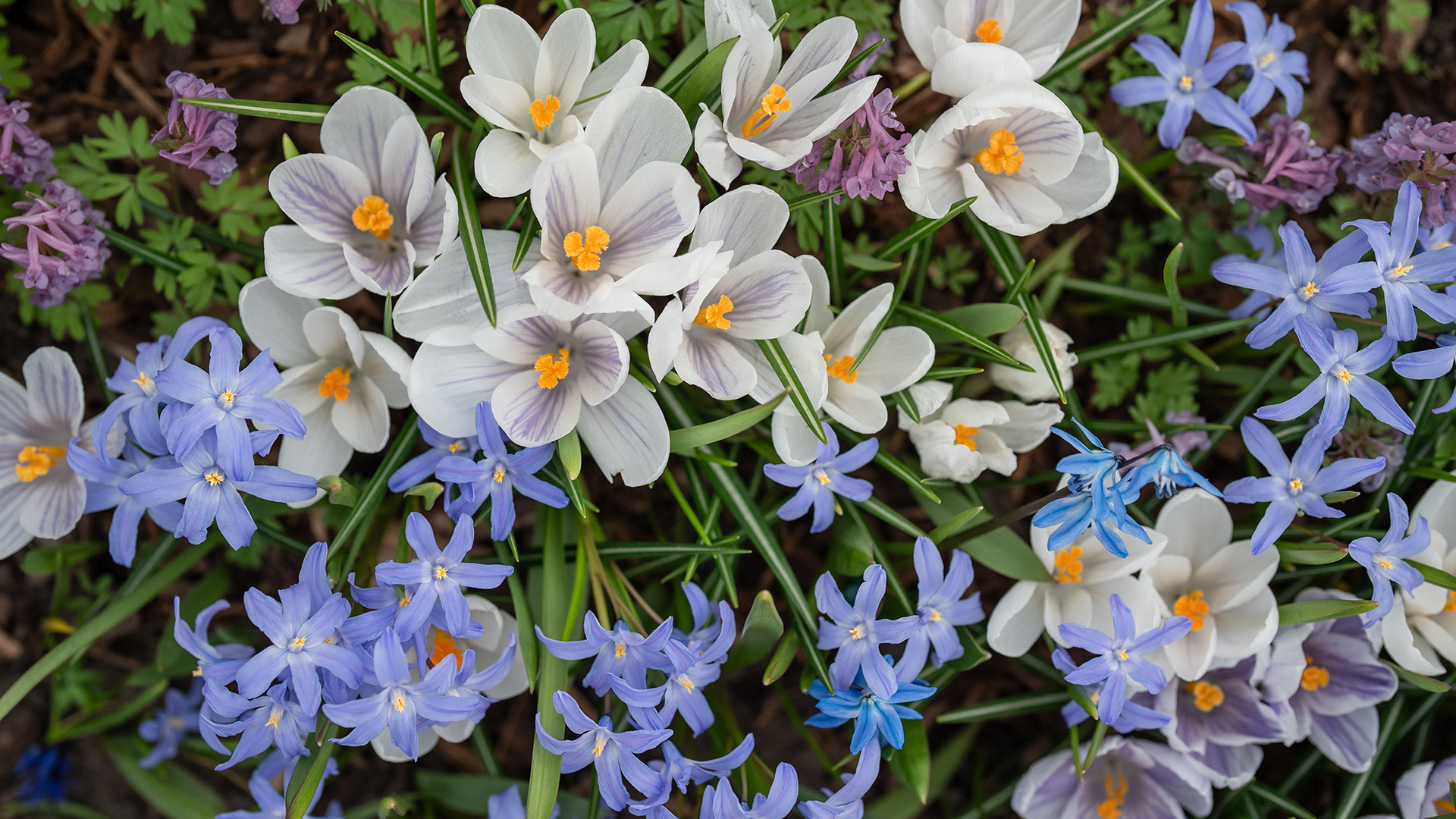
As temperatures drop and <a href="https://myappsplus.com/why-your-spotify-might-be-using-so-much-storage/” title=”Why your Spotify might be using so much storage”>your backyard is covered in fallen leaves, it’s easy to assume that apart from clearing your lawn, gardening takes a backseat until spring. But in reality, it is just the start of your spring garden.
The secret to a lush display of cheery daffodils, tulips and crocuses starts well before you spot the first shoots breaking through the soil. These bright blooms depend on the cool earth to take root, which is why the work to create a beautiful spring garden starts right now.
Why fall is the best time to plant bulbs
Most spring bulbs need a period of cold to initiate flowering — a process known as vernalization. That’s why mid to late fall is a good time to plant bulbs.
“You want to plant before the soil has cooled off, but before it freezes,” says Lindsay Chastain, author at Waddle & Cluck
Getting the timing right allows the bulb to develop a strong root system and bloom fully in spring, without sprouting too early, explains Marina Prokaten, plant expert atPlantum.
Timing varies by region
Because bulbs should be planted in the ground before the soil freezes, timing depends on your local climate.
“In colder northern regions, your planting window is September and October, for the most part,” explains Chastain. “In moderate climates, October through November, and in warmer regions, you can often wait until November or December.”
To give your bulbs the best chance, Chastain advises planting them about six weeks before your area’s typical hard freeze.
Top tip
But planting too far ahead has its own risks. “Don’t plant too early,” warns Prokaten. “If the weather is still warm, the bulbs may sprout prematurely and get frostbitten, or die off during a cold snap.”
To get your timing just right she suggests keeping an eye on the forecast and waiting until the night temperatures consistently drop to between 40-50°F.
Which bulbs can you plant now?
Mid-to-late fall is prime time for planting daffodils, crocuses, snowdrops, muscari, alliums and fritillaries. You can also plant plenty of other spring-flowering bulbs. Besides common spring bulbs, Elizabeth Waddington, garden designer, writer and horticulturist at First Tunnels, recommends that gardeners look for bulbs that are native to where you live.
Native species often establish with ease and offer vital sustenance for local pollinators.
How to plant bulbs for success
Starting with healthy bulbs will give you the best chance of success. Chastain says to choose bulbs that feel firm and heavy, with no spots or mold. How can you tell if they are fit to plant? “Give them a sniff and make sure that they don’t have a foul smell, because that will indicate that the bulb is not good,” she advises.
When planting your bulbs, Waddington says choosing the right site matters. “Many spring-flowering bulbs prefer a sunny site with free-draining soil,” she says. “But some are well-suited to damper conditions, and options can also be found for partial shade.”
Once you have the right location, she suggests planting your bulbs in groups of at least three to five for a more natural look. What’s more, large drifts of bulbs will look far more spectacular than one isolated flower.
Bury the bulbs at three times their own height — making sure the sprouting end is facing upwards
Elizabeth Waddington, First Tunnels
You also need to follow the golden rule of bulb planting. “Bury the bulbs at three times their own height — making sure the sprouting end is facing upwards,” she adds.
Once your bulbs are in the ground, Chastain advises giving them a thorough water before allowing the soil to settle and filling in around the bulb, which will all help to encourage root growth.
If you’re planting in a container, make sure the pot has a drainage hole and use a well-draining potting mix. You can also plant the bulbs closer together than you would in the soil, just make sure they are not touching.
Hand bulb planter: was $20 now $19
This bulb planter is not only ideal for planting bulbs, it can also be used to plant seed potatoes and bedding plants. It allows you to plant to a diameter of 2.36-inches, with a 6-inch measurement scale to judge the planting depth.View Deal
When planting in a container is best
If you have heavy soil or it is prone to waterlogging, Waddington says container planting offers a workaround. But she warns that you have to make sure that the soil doesn’t dry out, or that the pots don’t stand in water through the winter.
Watch the cold
Cold exposure is another problem. Waddington explains, “Container-grown bulbs are more exposed to freezing temperatures than bulbs planted in the ground, so pots may need to be placed in a polytunnel or greenhouse, or have some other form of protection during prolonged cold spells.”
Peggy Anne Montgomery, horticulturist at Flowerbulbs, offers an easy solution to overcome the cold problem, and advises, “It’s best to select bulbs that are two hardiness zones colder than your zone. For instance, daffodils are generally hardy in zones 3-8. If you live in zone 5, you’re safe to plant them because they can withstand the cold of zone 3.”
Experiment with your planting
Growing bulbs in containers also gives you the opportunity to experiment with different planting techniques, such as lasagna planting, which is based on a layered approach. The bulbs are layered by bloom time to give a continuous show.
The biggest mistake you can make when planting bulbs
According to Chastain, getting drainage right is the most important thing you can do for your bulbs, which is why planting them in waterlogged soil or in a container without drainage is the biggest mistake you can make. And Montgomery agrees, “They will rot in soil that is consistently wet or has standing water.”
Bulb planting tools
Besides a sturdy hand trowel and a pair of gardening gloves, Waddington says a bulb planter can help when planting lots of bulbs in a lawn or established border. You might also want to consider a bulb auger, which attaches to a drill, such as Power Planter’s DIY Guru Garden Auger, for $28 at Amazon.
That’s it; you don’t need fancy equipment to get planting, and if you follow the expert advice above, you should have a yard full of blooms by springtime.
- Don’t make these 7 bulb planting mistakes — and what to do instead
- Stop planting bulbs one by one: Why ‘bouquet style’ is the new secret to a fuller garden
- The gardener’s guide to surviving heavy storms and waterlogged lawns
