

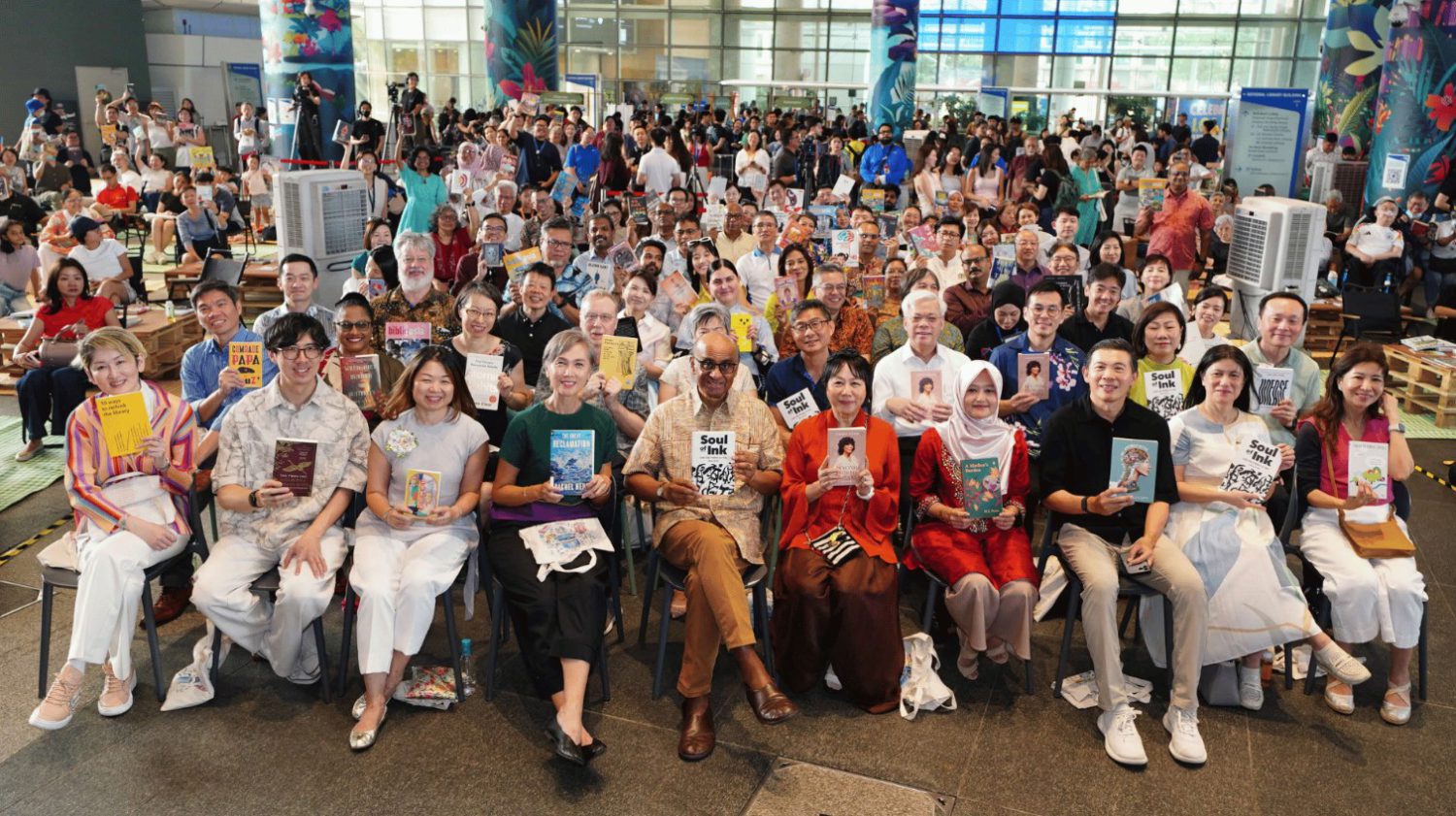
Singapore’s National Library Boardlaunched ReadSG on 6 September 2026, a five-year national reading campaign that converts logged reading time into virtual coins redeemable for cash. The initiative has drawn attention from governments and educators worldwide who are watching to see whether a small financial reward can reshape phone-centric habits.
How the Scheme Actually Works
The program uses a simple coin mechanic: log reading time on a government platform and earn rewards redeemable for cash.
Log at least 15 minutes of reading on GovTech’s CrowdTaskSG platform and you earn 20 virtual coins. The conversion rate is fixed: 1,000 coins equal S$1, putting one daily session’s value at roughly S$0.02.
Only one session per day counts toward your coin balance. Fifty consecutive days of reading earns you a single Singapore dollar
The National Library Board has characterized the payout as deliberately modest, designed as a behavioral nudge rather than an income stream, according to coverage in multiple outlets. This is not a side hustle.
A parallel track called Read for Good adds a communal dimension to the campaign. The program targets 7.5 million cumulative reading minutes across all participants, a collective goal that would unlock a charitable donation of up to S$150,000
Your 15 minutes of daily reading is no longer just a personal habit. It contributes to a shared number with a concrete social outcome attached.
A Decade of Trying to Get Singapore Reading
ReadSG builds on nearly a decade of national literacy initiatives, but arrives with a new gamified mechanic and a pilot-phase designation.
ReadSG follows Singapore’s <a href="https://www.nlb.gov.sg/main/about-us/press-room-and-publications/media-releases/2016/read-more-read-widely-read-together-launch-of-the-national-reading-movement-at-read-fest-2016″ rel=”nofollow noopener” target=”_blank”>National Reading Movement, launched in 2016, and a series of earlier literacy initiatives documented by The Financial Coconut. The National Library Board has described the current campaign as still in a pilot phase, according to the Straits Times, with plans to refine the program based on user feedback.
Critics note that the financial reward is too small to attract anyone who was not already inclined to read. Supporters point to behavioral economics research, which broadly suggests that even trivial incentives can help establish a new habit when participation friction stays low.
The coin mechanic borrows from the familiar language of fitness apps and loyalty programs. Those platforms have spent years conditioning users to close their rings or collect their points.
What Singapore’s Experiment Means Beyond Its Borders
Governments and educators are watching ReadSG as an early test of whether gamification and micropayments can shift public behavior at population scale.
Gamification and micropayments applied to public-interest behavior represent a relatively new frontier in civic design. Libraries and education agencies globally are hunting for tools that can compete with a notification feed.
If ReadSG generates strong participation data over its five-year run, it may become a case study for other cities to examine. The behavioral data collected could prove valuable to policymakers trying to understand what genuinely pulls people away from their screens, according to analysts following the campaign.
It says something specific about 2026 that a government created a financial incentive to make reading competitive with a scroll. Whether 20 virtual coins is a meaningful answer depends on one thing: how many people open a book tomorrow and remember to log it.
