

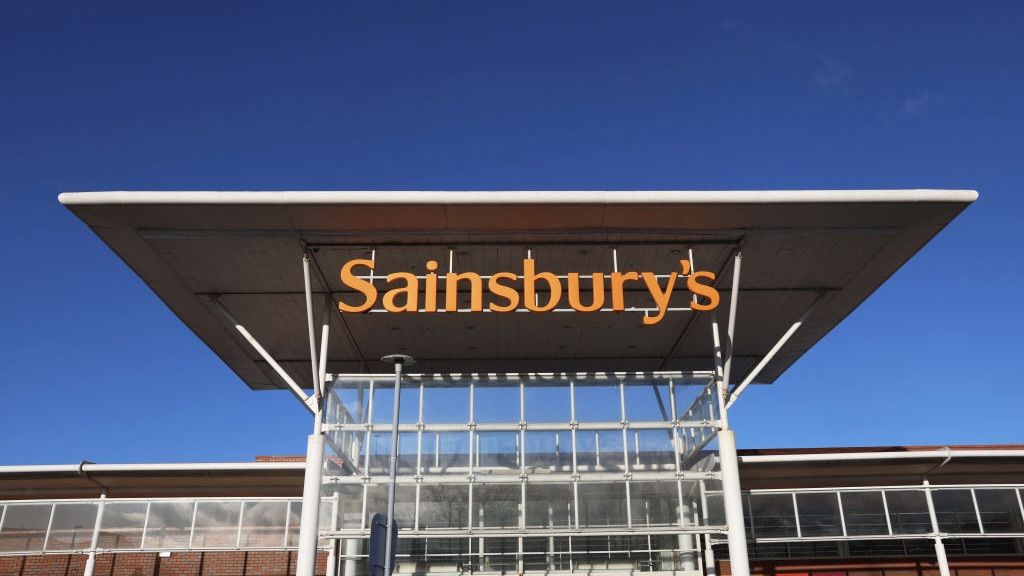
This week, I tried to opt out of the facial recognition system at my local Sainsbury’s supermarket. The only solution? Shop elsewhere.
Judging by the look on the security guard’s face when I asked if I could avoid having my biometric data processed, it was an unusual request — surprising, given that an innocent customer was mistakenly flagged and ejected from the exact same store just a few months ago.
Sainsbury’s is far from alone in using live facial recognition technology. Facewatch, the company behind the tech, also lists Sports Direct, Budgens, Costcutter, and B&M as customers on its website. Meanwhile, an increasing number of police forces across the UK are adopting the technology, despite persistent legal challenges.
With facial recognition rapidly becoming a staple of the high street across the UK, what risks does it pose to our privacy, and is improved supermarket security really worth it?
Supermarket surveillance: scanned before you shop
One of the most important principles of any modern data privacy law — including the UK GDPR — is the right to be informed when an organization collects and processes your personal data. It’s why you constantly encounter cookie banners on websites and why app privacy policies often run thousands of words long.
At the supermarket entrance, however, the notice isn’t asking for permission; it’s informing customers that the scan is underway. Because retailers claim tracking crime is a “legitimate interest”, they bypass the need for customer consent.
When I visited the East Dulwich Sainsbury’s store, there was a small sign next to the sliding glass doors that I initially missed, and a larger board positioned inside. While the notices reassure shoppers that “your privacy is protected”, they offer very little substantive detail.
To access the full information, you have to scan a QR code leading to Facewatch’s privacy policy — something I could only do because I happened to have a charged smartphone with mobile data, facilities not everyone will have when popping out for milk.
To his credit, the security guard offered to find the store manager to answer any additional questions. But, by then, the point felt moot. Glancing up at the cameras hanging directly along the entrance path, I conceded that my face had likely already been scanned, analyzed, and checked against a database.
Walking away to shop elsewhere might be relatively simple in London, but supermarkets are essential national infrastructure. In rural areas or places where alternatives do not exist, telling customers to choose another shop isn’t a realistic option.
The cost of a false match
For victim of mistaken identity, Matt Arnold, the consequences of the system weren’t just theoretical. This summer, he was wrongfully accused of being a shoplifter and escorted out of the East Dulwich store.
Speaking to the BBC, Arnold said: “What upset me was thinking this is what the future could be — people just listen to what the machine tells them to do without thinking about the consequences.” Following the debacle, the system was paused.
While Sainsbury’s declined to comment on the record and referred data privacy inquiries to Facewatch, the tech company confirmed to TechRadar that the pause is over and live alerts have resumed. But with the cameras quietly back online, broader civil liberties concerns have reignited.
How does Facewatch’s facial recognition work?
As you enter, cameras map your facial features into biometric measurements and check them against a watchlist of suspects. Facewatch does not sell customer data, and if there is no match, that biometric math is deleted in milliseconds — though photographic crops of detected faces are held for up to seven days for retroactive incident review.
UK-based civil liberties group Big Brother Watch regularly intervenes to help innocent shoppers remove their details from Facewatch’s database after being wrongly flagged, noting that some “aren’t so lucky and are blacklisted from all the stores in their local area”.
Even if the technology worked with total accuracy, questions about its proportionality and fairness remain.
Jasleen Chaggar, Senior Legal and Policy Officer at Big Brother Watch, warned that “shoppers are being subjected to airport-style security just to buy a pint of milk,” arguing that the system is “indiscriminate by design, meaning every customer is treated with suspicion”.
Who does supermarket surveillance really protect?
There’s no denying that shoplifting harms supermarket profits. Recent industry indicators cited by Facewatch estimate annual losses from shoplifting have reached £2.2 billion.
In an email to TechRadar, a Facewatch spokesperson defended the technology as an essential safeguard, arguing that “while campaign groups are highlighting the rights of consumers, they are overlooking a shop worker’s right to feel safe at work”.
“Giving a shop worker advance warning that someone known to have violently offended has entered their store can give them confidence and precious time to consider a safe response, de-escalate a potentially dangerous situation or seek support before an incident occurs.”
Addressing concerns about accessibility and notice, the company said that store cameras are positioned at an “appropriate distance between the entry point and image capture area”, and noted that entrance posters provide a landline telephone number and postal address for anyone unable to scan the QR code. In practical terms, that means a customer without a smartphone must step outside, make a phone call, or send a letter in the post before doing their weekly food shop.
Digital rights campaigners remain unconvinced that worker protection justifies pervasive biometric tracking. Sarah Lasoye, programme manager at Open Rights Group, told TechRadar the technology represents a “dangerous infringement on our data, privacy, and human rights”.
She also questioned whether surveillance tackles the real issue, saying: “These costly facial recognition technologies only work to line the pockets of private tech companies, and do nothing to address the root causes of crimes of poverty such as theft — unmet social and economic need.”
The future of facial recognition at the supermarket?
Sainsbury’s first began trialing facial recognition in September 2025 across just two stores. Following an initial run that reportedly led to an almost 50% drop in theft, verbal abuse, and antisocial behavior, the supermarket is in the process of expanding the technology to 200 stores this in 2026.
With market leaders like Sainsbury’s publicly endorsing facial recognition, other high-street chains will watch the rollout closely.
But the rapid spread of automated surveillance is meeting a growing resistance. Big Brother Watch has launched a campaign encouraging shoppers to object, while a petition calling on the Government to halt the use of facial recognition has surpassed 41,000 signatures.
Surprisingly, Facewatch is also calling for intervention. A company spokesperson told TechRadar that Facewatch “actively supports” tighter regulations on the development and use of the technology, noting it has engaged with the Home Office and hopes “the Government will consider a high bar of regulation for its use by private companies.”
While civil liberties campaigners and surveillance companies wait for the law to catch up, the responsibility for protecting personal privacy has been left with the individual. And until genuine opt-out mechanisms are established, that responsibility comes with only one choice. As the security guard at Sainsbury’s made clear: shop somewhere else.
