Close Menu
MyAppsPlus

    Subscribe to Updates

    Get the latest creative news from FooBar about art, design and business.

    What's Hot

    NYT Connections hints and answers for Sunday, September 13 (game #1190)

    September 12, 2026

    Automattic confirms Mullenweg has returned as CEO after attempted ouster by board

    September 12, 2026

    Quordle hints and answers for Sunday, September 13 (game #1693)

    September 12, 2026
    Facebook X (Twitter) Instagram
    Facebook X (Twitter) Instagram
    MyAppsPlusMyAppsPlus
    Saturday, September 12
    • Home
    • Breaking Tech
    • Apps & Software
    • AI & Automation
    • Android
    • iPhone & iOS
    • More
      • Reviews
      • How-To Guides
      • Deals & Discounts
      • Shop
    MyAppsPlus
    Home»AI & Automation»Machine learning improves irradiance prediction in bifacial PV systems
    AI & Automation

    Machine learning improves irradiance prediction in bifacial PV systems

    myappsplusBy myappsplusAugust 29, 2026003 Mins Read
    Share Facebook Twitter Pinterest Copy Link LinkedIn Tumblr Email Telegram WhatsApp
    Follow Us
    Google News Flipboard
    Machine learning improves irradiance prediction in bifacial PV systems
    Share
    Facebook Twitter LinkedIn Pinterest Email Copy Link

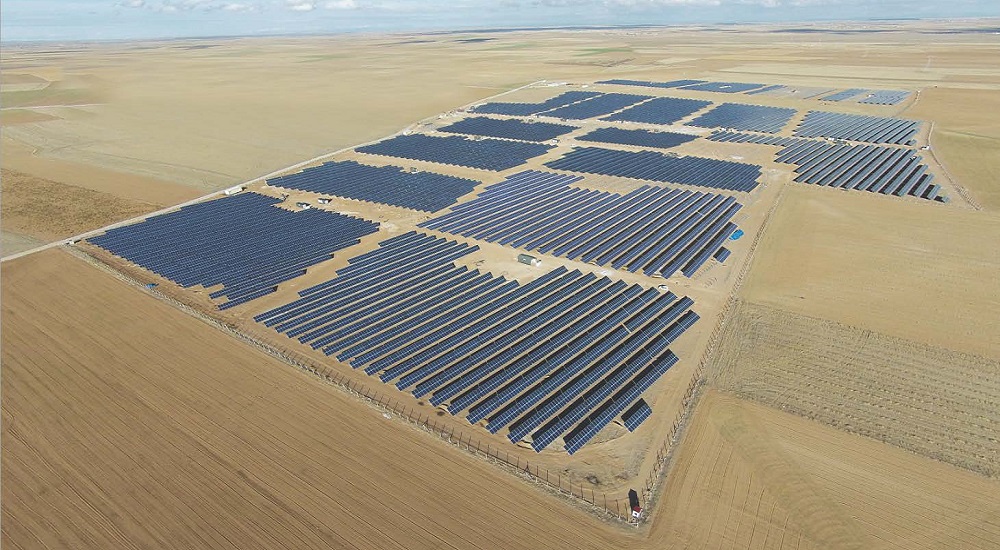
    A researcher at Turkey’s Selçuk University has conducted a comparative analysis of multiple machine learning algorithms for predicting plane-of-array (PoA) irradiance on bifacial PV panels. The researcher used identical input conditions to predict PoA irradiance on both the front and rear sides of the panels.

    “This study presented a comprehensive machine learning–based framework for predicting front-side and rear-side PoA irradiance in a bifacial photovoltaic system using routinely measured meteorological, surface-related, and temporal input variables,” researcher Ayşegül Toprak said in the paper. “This study demonstrates that accurate and interpretable prediction of both front and rear PoA irradiance can be achieved using a compact set of easily measurable inputs.”

    The study used synchronized field measurements collected between Nov. 17, 2023, and May 29, 2024, from a vertical bifacial PV testbed operated by the US Department of Energy’s National Renewable Energy Laboratory (NREL) in Golden, Colorado. The testbed consisted of a vertically mounted bifacial PV array positioned close to the ground, along with meteorological sensors, ground-reflected irradiance measurements and six IMT reference cells.

    The input dataset included global horizontal irradiance (GHI), diffuse horizontal irradiance (DHI), ambient temperature, wind speed, testbed albedo and a binary reflector variable, as well as hour_sin and hour_cos, which represent the daily solar cycle. Before model training, the researcher removed physically implausible zero values, sensor faults and records containing missing or inconsistent measurements.

    Toprak then evaluated six regression algorithms: linear regression, k-nearest neighbors (KNN), support vector regression (SVR) with a radial basis function kernel, random forest (RF), extreme gradient boosting (XGBoost) and a feedforward multilayer perceptron (MLP). Each model was run separately for front and rear PoA irradiance using the same input variables and identical five-fold cross-validation partitions in MATLAB. Predictive accuracy was assessed using root mean square error (RMSE), mean absolute error (MAE) and the Pearson correlation coefficient (r).

    The results showed that nonlinear models clearly outperformed linear regression in predicting both front- and rear-side irradiance. Random forest achieved the best performance for front PoA irradiance, with an RMSE of 0.188, an MAE of 0.061 and a correlation coefficient of 0.982. It was followed closely by MLP, XGBoost and SVR, all of which recorded correlation coefficients above 0.97.

    Rear PoA irradiance proved more difficult to predict. Random forest again performed best, with an RMSE of 0.236, an MAE of 0.080 and an r value of 0.973, while MLP recorded the same RMSE but a slightly higher MAE of 0.086. Linear regression ranked last for both targets, with RMSE values of 0.682 for front PoA irradiance and 0.593 for rear PoA irradiance.

    “The results indicate that front-side irradiance is primarily governed by global irradiance and diurnal solar geometry, whereas rear-side irradiance is strongly influenced by surface-related factors such as ground albedo and the presence of reflective ground cover, confirming the conditional and interaction-driven nature of rear-side irradiance formation in bifacial systems,” Toprak concluded.

    The study, “Front and rear plane-of-array irradiance in bifacial photovoltaic systems: A machine learning-based prediction approach,” was published in Energy Reports.

    improves irradiance learning Machine prediction
    Follow on Google News Follow on Flipboard
    Share. Facebook Twitter Pinterest LinkedIn Tumblr Email Copy Link
    myappsplus
    • Website

    Related Posts

    A Texas university just got $20M gift to shape the future of AI

    September 12, 2026

    This Artificial Intelligence Stock Is Down 71% and Could Be a Screaming Buy

    September 12, 2026

    Anthropic CEO Dario Amodei says AI industry needs to give safety measures time to catch up

    September 12, 2026
    Add A Comment
    Leave A Reply Cancel Reply

    Top Posts

    The 6 AI-free Linux distros I recommend most

    August 19, 20263 Views

    AI, automation, robot dogs ensure on-site nuclear safety

    September 7, 20262 Views

    This tiny AI box could save me from upgrading my perfectly good laptop

    September 6, 20262 Views
    Latest Reviews

    Apple Wallet driver’s licenses are coming to North Carolina, but there’s a catch

    myappsplusAugust 18, 2026

    3 Japanese AI Stocks Turning Automation Spending Into Real Revenue

    myappsplusAugust 18, 2026

    Apple: DOJ’s latest challenge in antitrust case ‘fails at every level’

    myappsplusAugust 18, 2026
    Stay In Touch
    • Facebook
    • YouTube
    • TikTok
    • WhatsApp
    • Twitter
    • Instagram

    Subscribe to Updates

    Get the latest tech news from FooBar about tech, design and biz.

    Most Popular

    Apple Wallet driver’s licenses are coming to North Carolina, but there’s a catch

    August 18, 20260 Views

    3 Japanese AI Stocks Turning Automation Spending Into Real Revenue

    August 18, 20260 Views

    Apple: DOJ’s latest challenge in antitrust case ‘fails at every level’

    August 18, 20260 Views
    Our Picks

    NYT Connections hints and answers for Sunday, September 13 (game #1190)

    September 12, 2026

    Automattic confirms Mullenweg has returned as CEO after attempted ouster by board

    September 12, 2026

    Quordle hints and answers for Sunday, September 13 (game #1693)

    September 12, 2026

    Subscribe to Updates

    Subscribe to our newsletter and get the latest tech news, app updates, AI trends, smartphone reviews, and exclusive deals delivered straight to your inbox.

    Facebook X (Twitter) Instagram Pinterest
    • About Us
    • Get In Touch
    • Disclaimer
    • Privacy Policy
    • Terms & Conditions
    © 2026 MyAppsPlus. All Rights Reserved.

    Type above and press Enter to search. Press Esc to cancel.