

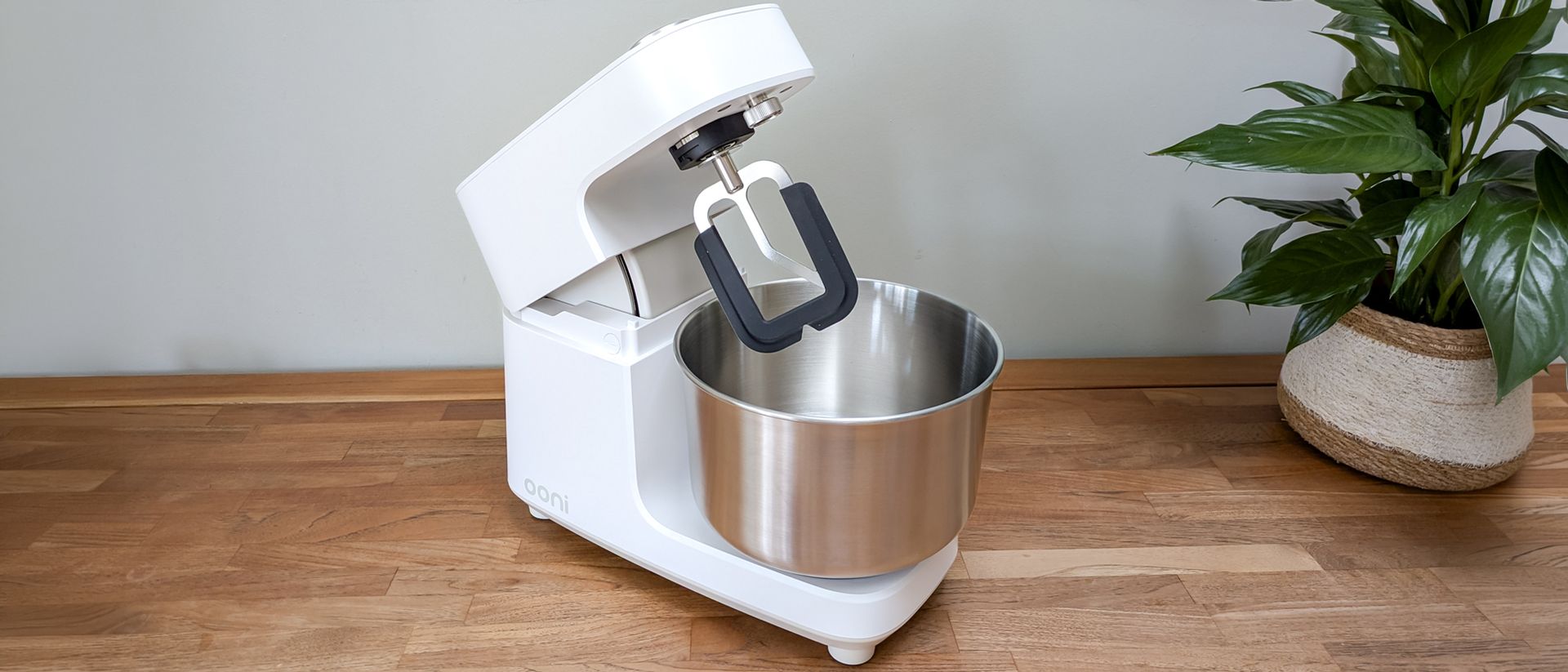
Price:$599
Weight: 18 pounds
Dimensions:7.7″ (H) x 7.2″ (W) x 14.2″ (D)
Capacity:4.8 quart
Wattage:300W
Speed levels:20 Speeds
Attachments: Flexible Beater, Spiral Dough Hook, Breaker Bar, Geared Whisk, Splash Guard, Removable Bowl with Proofing Lid
Materials: Die Cast Aluminium Internal Core, Polymer Outer Body, Stainless Steel Bowl
KitchenAid has long been synonymous with stand mixers, but it now faces stiff competition from an unexpected rival. Ooni, known primarily for its outdoor pizza ovens, is expanding into the baking market.
Following the launch of its second spiral mixer, Ooni is proving to be a serious contender for home bakers who enjoy crafting dough from scratch. Ooni’s Halo Pro spiral mixer already takes the top spot for bread making in our best stand mixer buying guide, but at $799 on Amazon it’s above most people’s budgets.
To address that issue, Ooni has released the Ooni Halo Core, with a smaller 4.8-quart capacity and a more favorable price point, although it’s still undoubtedly expensive at $599 on Amazon.
My verdict? If you make more dough than cakes and cookies, the Halo Core Spiral Mixer is a great buy. But if the majority of your bakes don’t require kneading, I’d stick with my favorite KitchenAid Artisan Plus,which just happens to be the same price.
Ooni Halo Core review: Price and availability
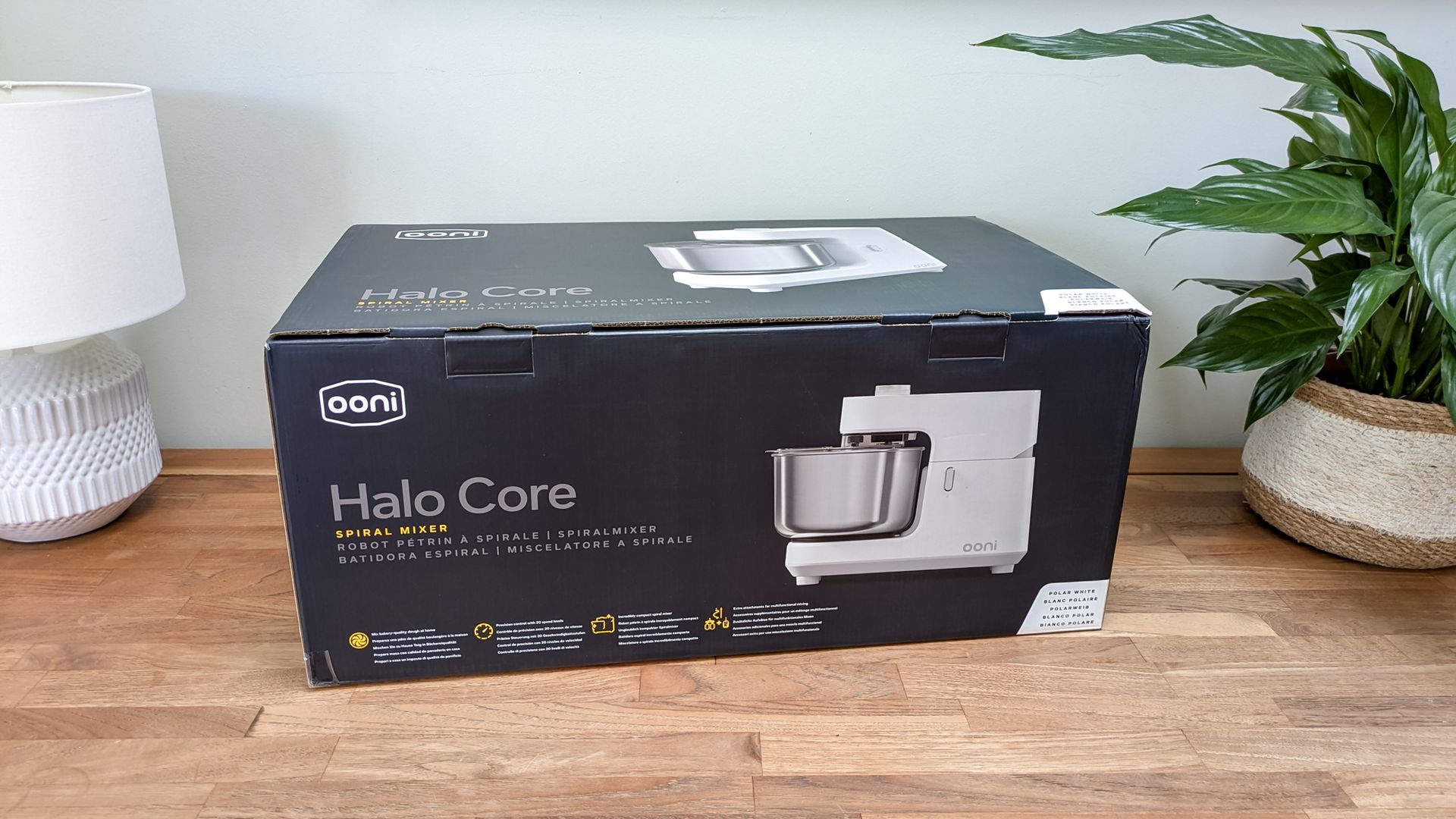
As already mentioned, the Halo Core Spiral Mixer is $599 at Amazon, where it’s available in Foundry Black. It’s also available for $599 at Williams Sonoma, where you’ll also find the Polar White version that I tested.
In the U.K., you can buy it directly for £499 at Ooni, and it’s also available for the same price at John Lewis andLakeland.
Ooni Halo Core review: Unboxing and set up
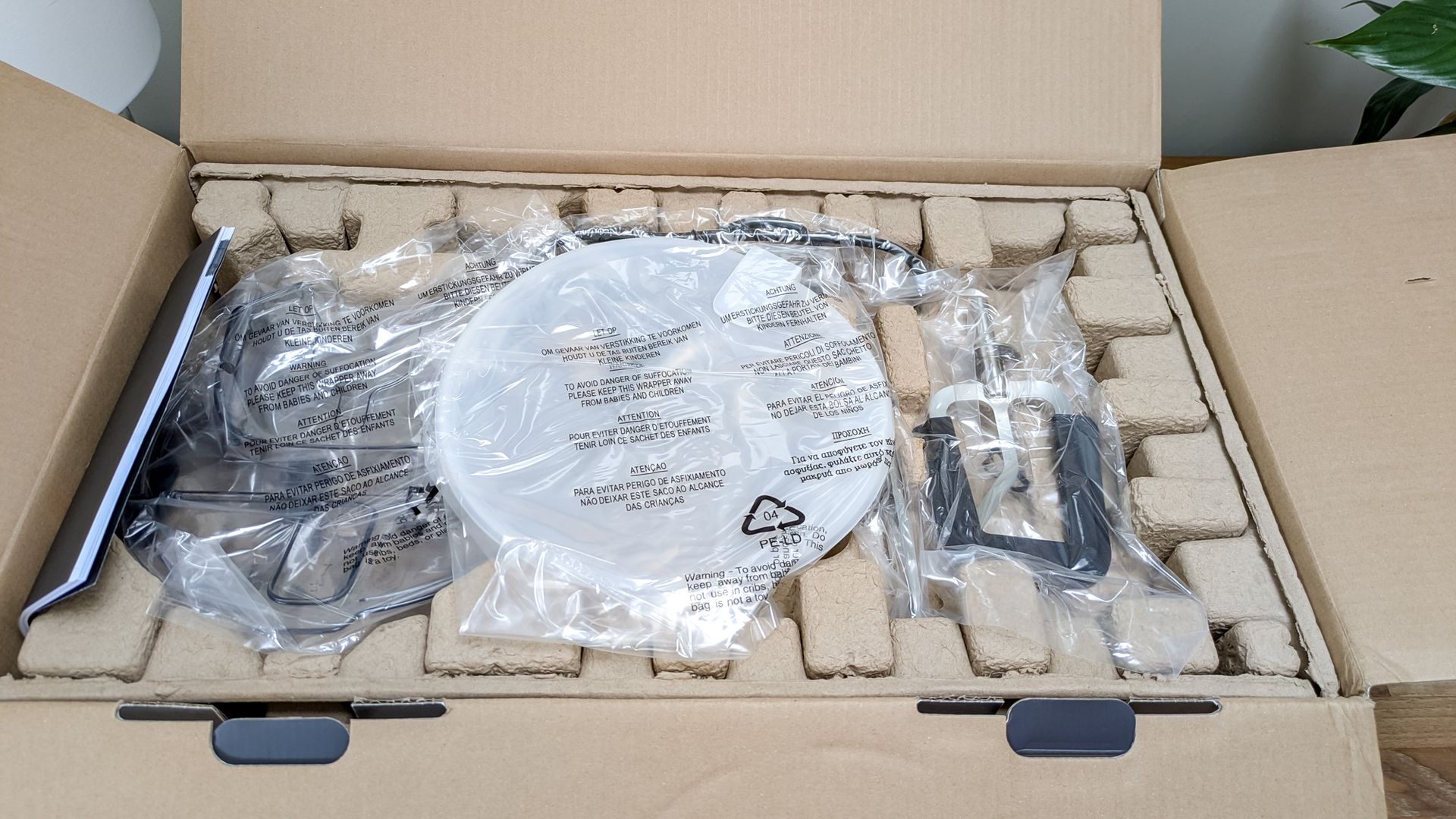
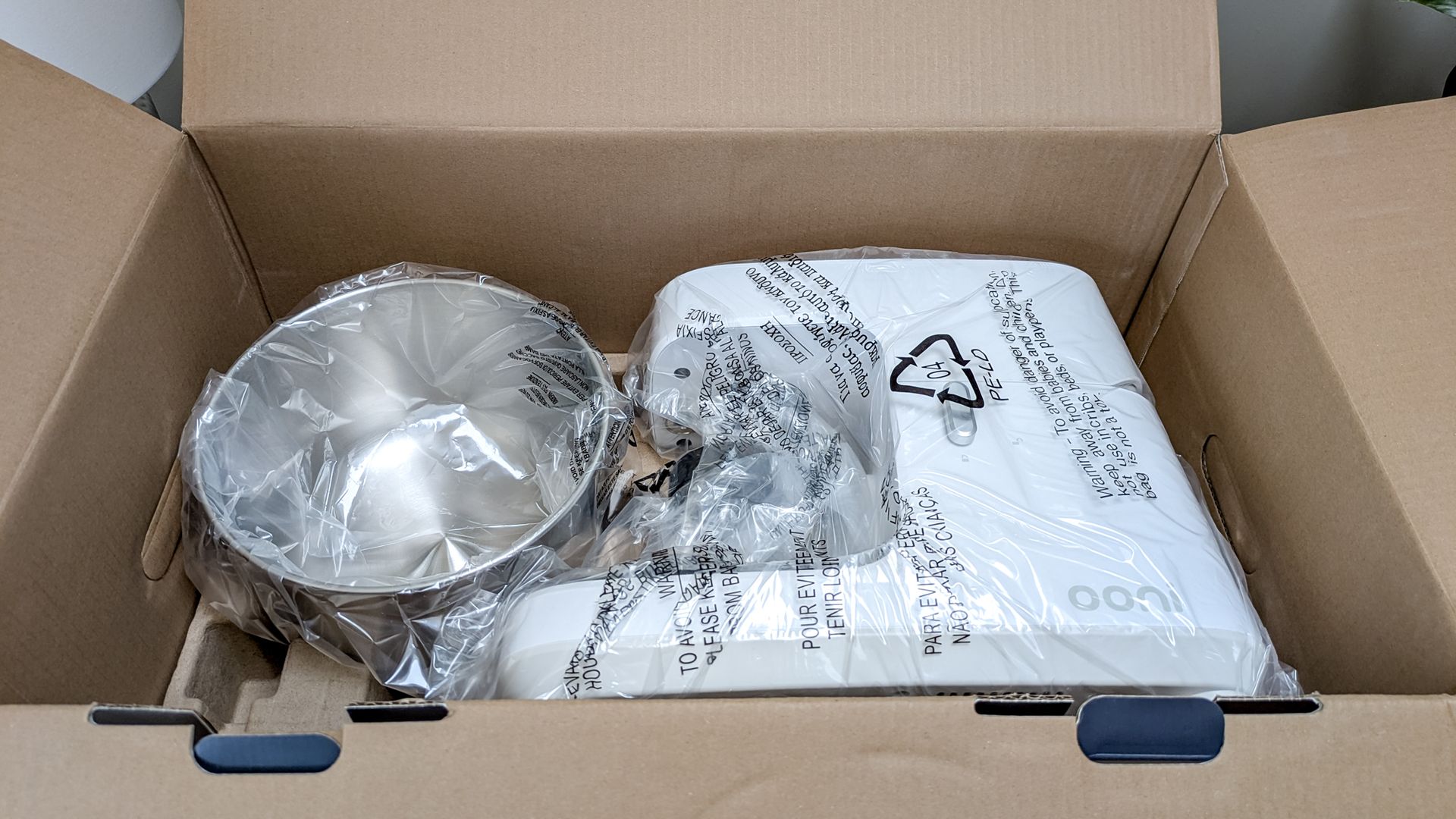
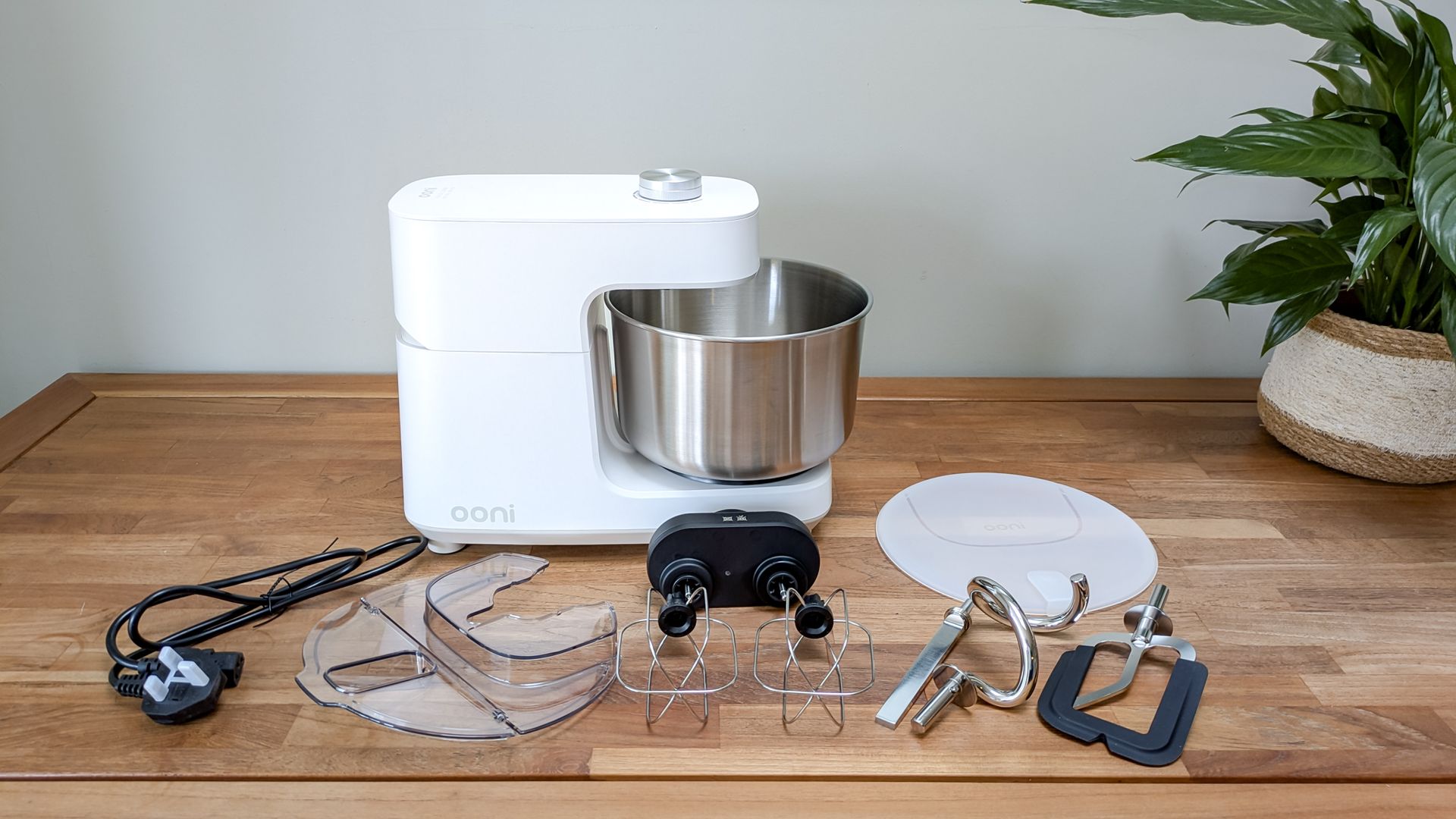
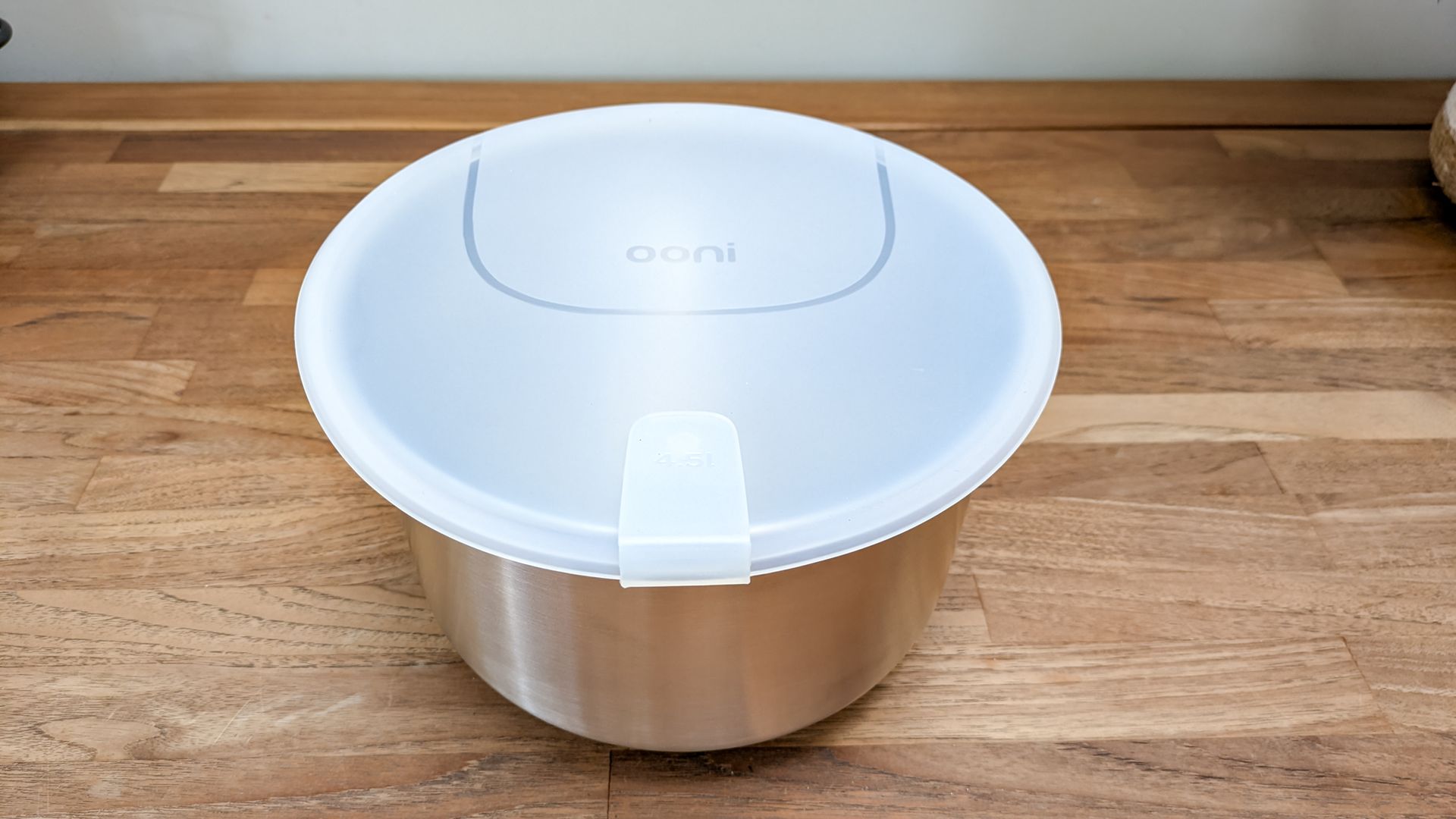
The appliance arrives well packed, and along with the 4.8-quart bowl (with a proofing lid), you get a dough hook and beater bar, a double-edged silicone beater, and a dual-motor whisk, (I’ll be sharing more on the attachments later). The cable also detaches, making it easy to store and keep out of the way when not in use.
Ooni’s stand mixers are a little different from the likes of KitchenAid, and while I like to think appliances are intuitive and I can use them without poring over the instruction booklet for hours, I didn’t take that risk with the Ooni Halo Core. Although my colleague has already tested the Halo Core’s big brother, I was going blind with its younger sibling. For this reason, I’d recommend downloading the Ooni appbefore you get started.
What makes Ooni’s spiral mixers different?
The Halo Core’s main attraction is its dough-making ability, which sets it apart from other stand mixers. Instead of a dough hook for kneading, it also includes a breaker bar. I’ve never used a stand mixer with a breaker bar before, and it’s not just a gimmick.
Beyond stopping the dough from climbing up the dough hook, the breaker bar creates a double-kneading action that builds stronger gluten strands, which Ooni says is essential for high-hydration pizza and bread dough.
Professional appliances have a permanently attached breaker bar, but Ooni’s can be removed so that you can use the appliance for other bakes, such as cakes and cookies.
You also need to know that the bowl doesn’t stay put. Traditional stand mixers work with an attachment around a fixed bowl, but with Ooni’s mixers, both the bowl and attachments rotate. It’s fun to watch! It’s similar to how the Ankarsrum mixer works, with the base rotating above the attachments on its arm.
Ooni Halo Core review: Design
The Ooni Halo Core looks like it means business. It doesn’t come in any shiny colorways like other domestic mixers, including KitchenAid’s extensive offering and Smeg’s Retro stand mixer. Still, you can choose Polar White orFoundry Black. I think it has a contemporary look, although it might not be your first choice if you want a stand mixer that looks pretty on your countertop.
The Halo Core isn’t as large as the Halo Pro, but it can still handle anything from 1 lb to 5.5 lbs of dough(500g to 2.5kg) — the equivalent of two to ten 12-inch pizzas in a single batch.
Ooni Halo Core review: Ease of use
Apart from being the younger sibling, it’s also 25% smaller and 30% lighter than the Pro, and although it’s over 3 lbs lighter than Kitchen’s Artisan Plus, at 18 lbs it still feels hefty.
The mixer has a tilt-head design and locks in place, releasing with a lever on the right side. You’ll find thecontrol button on top of the mixer, making it easy to use whether you’re right- or left-handed. The 20 speed settingsaren’t marked in numbers; instead, an interface lights up around the control dial at 10% increments.
To pause the machine, tap the control button; there’s no need to go back through the settings to zero. It’s an excellent feature if you want to pause your mix partway through, and then you can press the control dial again, and it will resume where it left off. I love this feature.
Unlike other mixers I’ve tested, the splash guard attaches neatly to the mixer, not the bowl, so when you lift the mixer’s head, you don’t need to remove the cover to get a clear view into the bowl. It also has a small space to pour in liquid, and when using the dough hook and beater bar, the liquid goes straight to the bar — to the heart of the mix.
Plus, you always get a clear view of what’s happening inside the bowl, with two LED lights positioned on either side of where the beater bar attaches to the mixer.
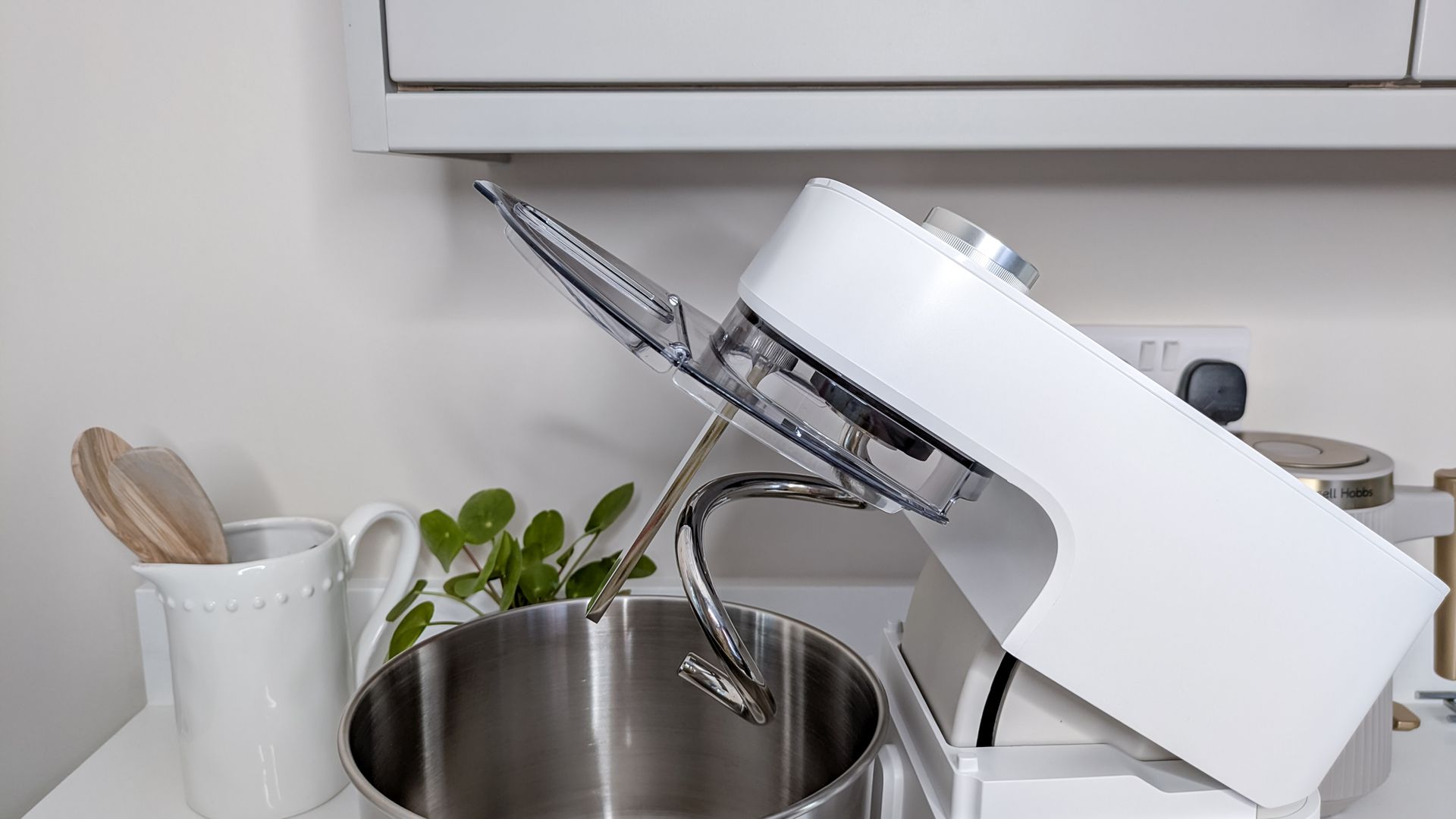
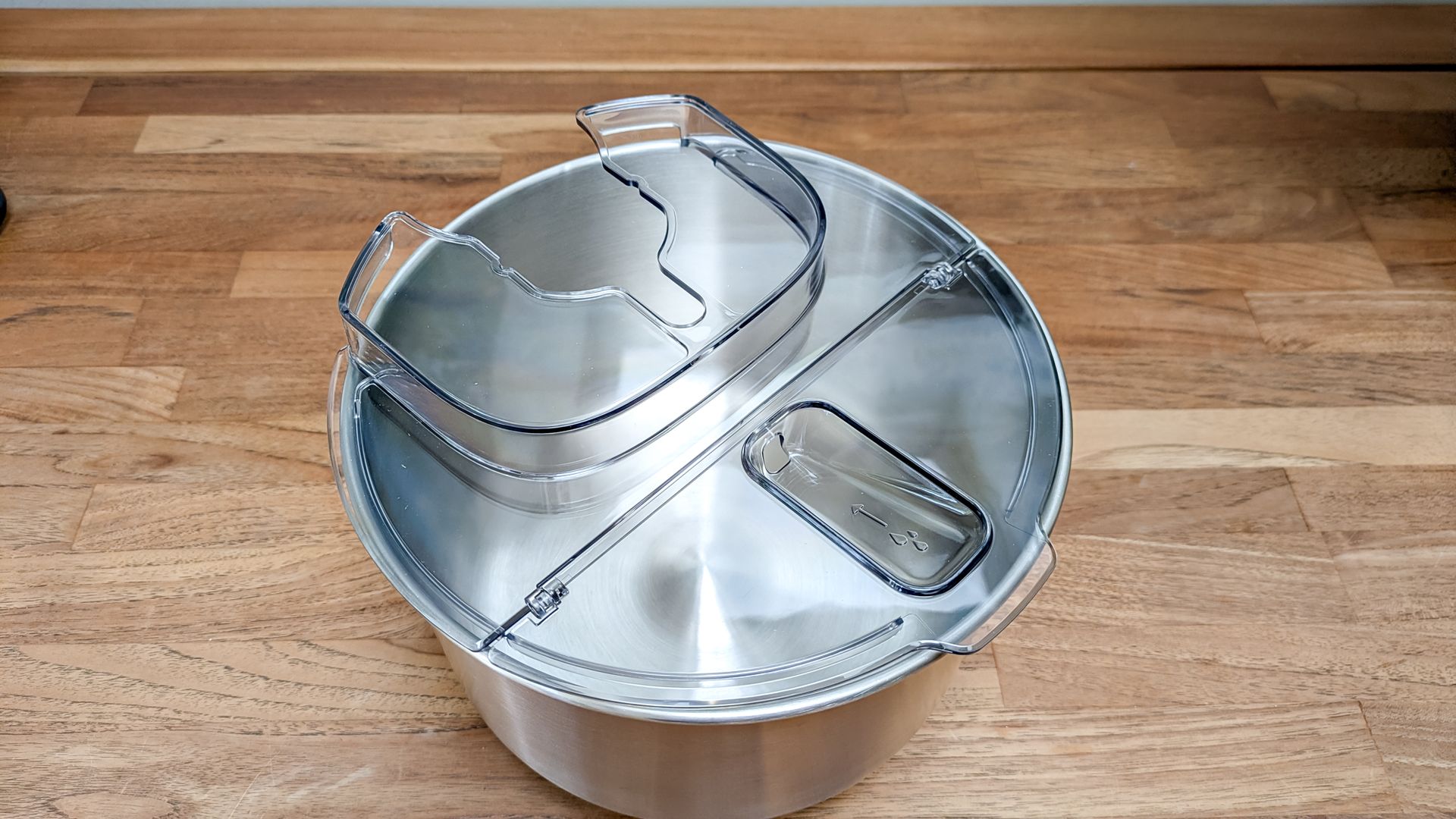
Theattachments feel premium and heavyweight, with the dough hook and breaker barused together, plus an angled silicone-edged beater designed to work deep in the bowl for a better mix while scraping ingredients off the side. It also includes a dual-motor whisk with an integrated gearbox to increase mixing speed for rapid, high-performance whipping.
Ooni Halo Core review: Performance
I used an all-in-one lemon cake recipe, and after attaching the flat beater, I added all the ingredients to the bowl. I used softened butter, but in hindsight, I would have softened it more. Unlike the KitchenAid stand mixers I’ve tested, the Ooni Halo Core struggled to beat in the butter. Even at 100% power, I found small bits of unblended butter in the mix, though from a distance it looked perfect. In fact, I found a large clump of butter left on the beater.
I have since used the mixer again to make cake, and I softened the butter even further to help it incorporate into the mix. But be warned, I didn’t find its performance quite up to the standard of a KitchenAid for cake batters.
However, the splash guard worked perfectly and stopped any mixture from dispersing from the bowl, and even on full power the mixer stayed steady on my countertop.
Whisking
I usually test a mixer’s whisk by whipping heavy cream or whisking egg whites, but following my colleague who tested the Ooni Halo Pro, I made butter. I’ve never had a reason to make butter before, and if you haven’t either, I’d recommend giving it a go. It’s fun to try, and the results were tasty.
I added 10fl. oz. (300ml) of heavy cream to the bowl with a pinch of sea salt, attached the splashguard and set the speed to 50%. After a short while, I gradually increased the speed to full power, at which point it measured 74 dB, although the appliance wasn’t under any strain.
As soon as the cream started to look like overcooked scrambled eggs, I could see the buttermilk separating from the fat — it happens quickly! So beware: keep the splashguard in place instead of lifting the flap to peek inside.
Once I was happy with how the buttermilk had separated, I strained away the liquid (I saved it for pancakes), squeezed the butter and ran it under cold water to remove any remaining buttermilk. I then shaped it and placed it on some baking parchment in a butter dish.
I started by making an easy white loaf in the Halo Core. It’s a standard recipe I turn to that uses 1.1 lb (500g) of strong white flour, and olive oil as the fat.
I attached the dough hook and the breaker bar. The breaker bar slides into place and needs to be tightened with a nut — this is slightly different from the other attachments, which are simply locked in place by twisting. I also attached the splash guard.
I added the dry ingredients to the bowl, started the mixer on low speed, and then poured in the liquid through the slot in the guard. You’ll see that the liquid is directed straight to the breaker bar.
I noticed it was taking a little while for the ingredients to pull in from the square edge of the bowl, so I increased the speed to 50% to help the remaining flour incorporate. With KitchenAid mixers, the bowls are narrower at the bottom, so there is less chance of dry ingredients getting stuck around the edges.
I set a timer for 10 minutes and left the dough hook and breaker bar to work the dough to form strong gluten strands. During the kneading phase I noticed how well the mixer handled the tough job; it didn’t appear overworked and remained steady on my countertop, as it had done previously.
Once the kneading was complete, I removed the dough, which looked soft and smooth, knocked it back and waited for it to double in size. I then knocked it back again, shaped it into a round loaf, and placed it on a baking tray, leaving it to prove for an hour before baking.
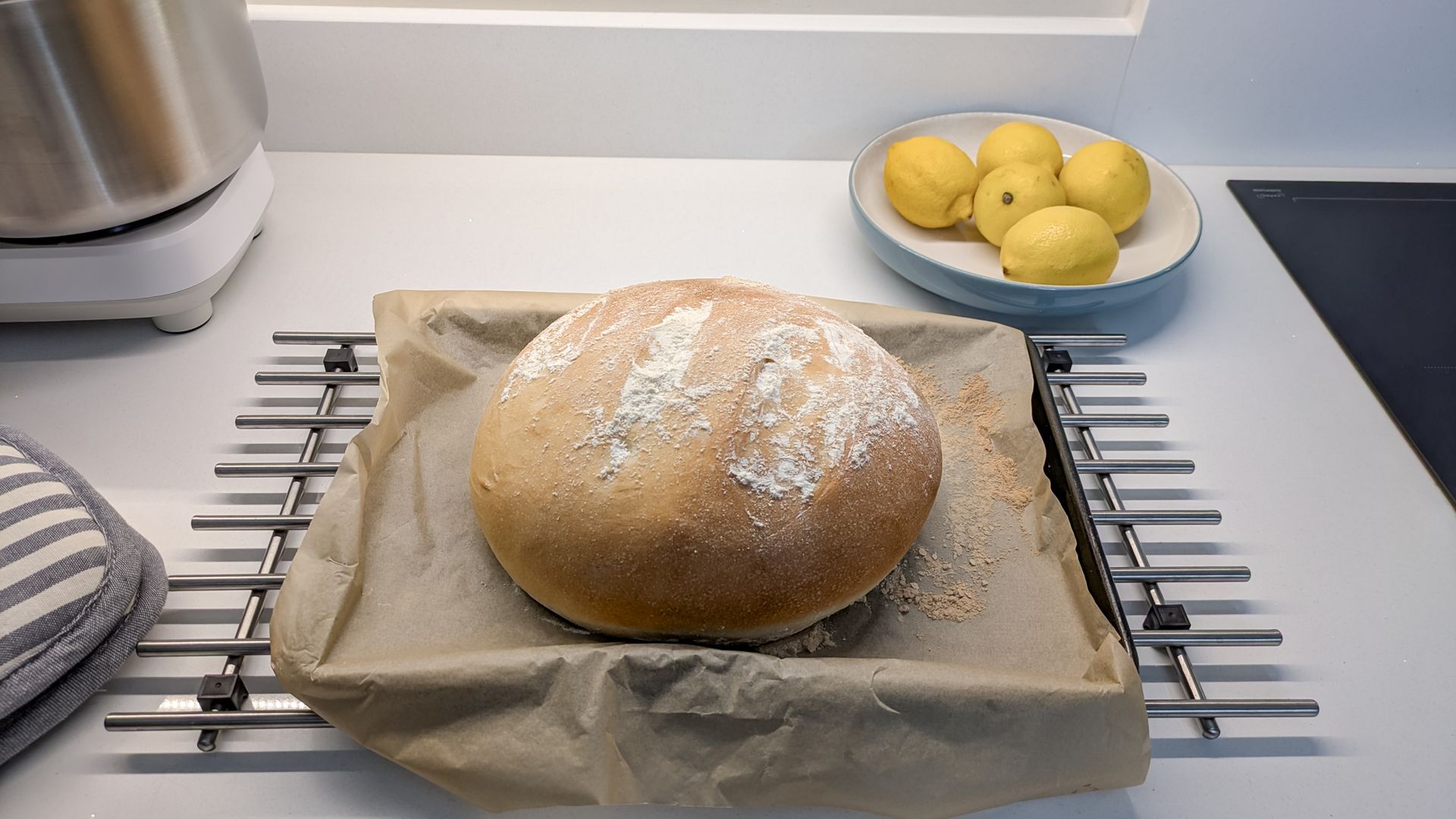
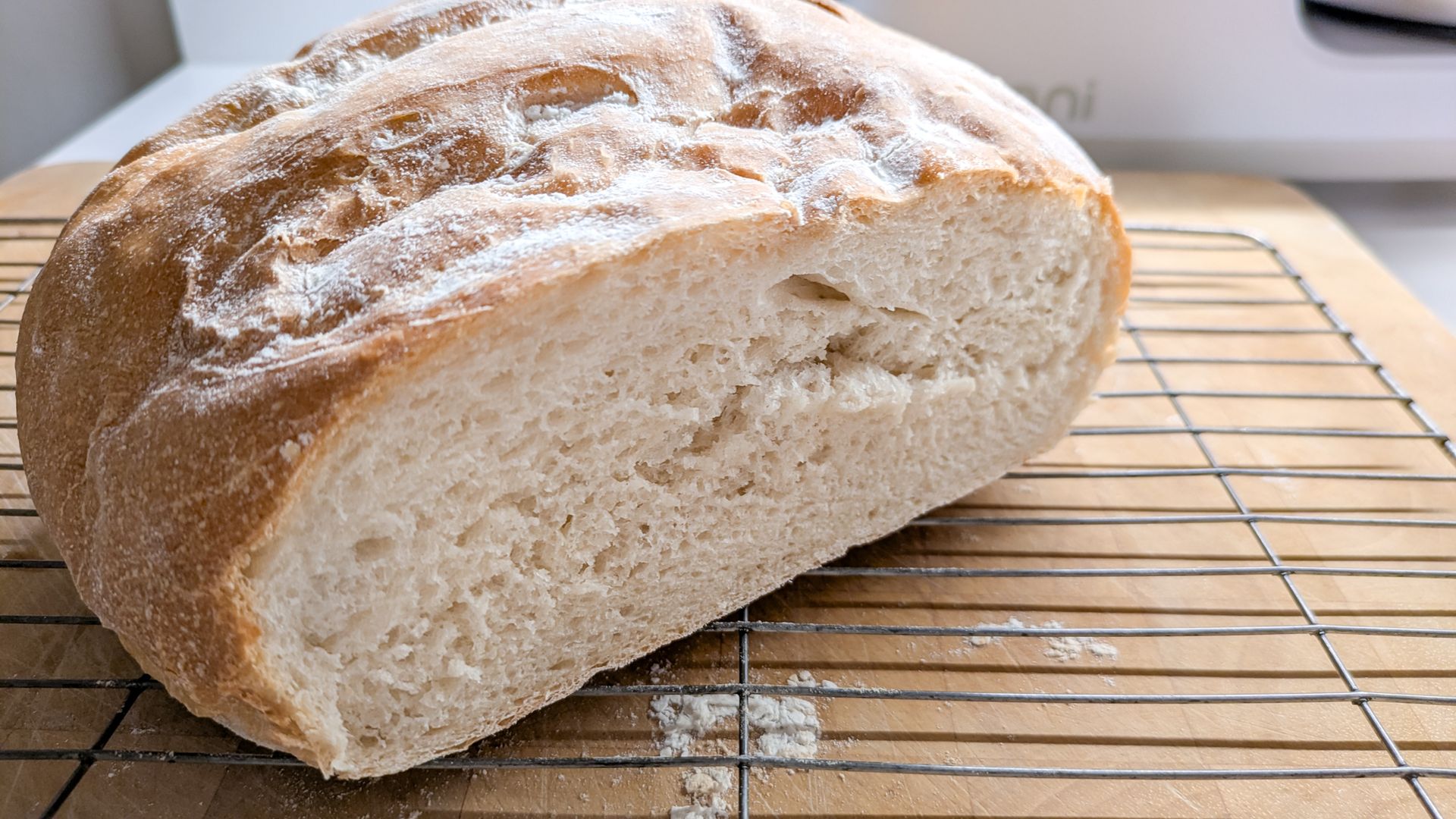
The finished loaf had a lovely flavor with a light texture. In fact, my husband didn’t realize it was homemade, and he was even more surprised when we enjoyed it spread with homemade butter.
Pizza dough
Ooni is known for its pizza ovens, so I wasn’t going to get away without making pizza dough in the Ooni Halo Core. I’d already discovered how good it is at making bread, so I expected to impress my family with homemade pizza and a perfect crust.
I used a New York-style pizza dough recipe using 1.5 lbs (638 g) of flour, using a mix of 00 and bread flour. I set the speed to 20% and watched the ingredients come together as I slowly added the liquid. I kept the mixer on for 10 minutes, then removed it for cold proofing overnight in the fridge.
I loved watching the dough hook and breaker bar form an attractive pattern as it kneaded.
I could clearly see how the dough was developing, and then, two hours before baking, I removed it from the fridge to allow it to come back to room temperature. After that, I stretched out the dough and covered it with my favorite toppings.
I’m not the best at shaping pizza — I obviously need more practice — but the dough formed a beautiful crust.
Ooni Halo Core review: Verdict
The Ooni Halo Core spiral mixer is a real powerhouse when it comes to making dough — whether you want to make homemade pies or bake bread. The breaker bar is a real genius at double kneading and stopping the dough from climbing up the dough hook, destabilizing the mixer. Plus, it’s much more affordable than the Ooni Halo Pro and brings professional mastery into domestic kitchens.
I’m not convinced it’s as good as other stand mixers for making cake batters, particularly when dealing with butter, but if you make more dough than cakes and cookies, the Halo Core is a good choice. However, if you’re serious about sweet treats and only occasionally need extra power to knead dough, I’d stick with a KitchenAid.
There’s no doubt that it’s a premium appliance — if I had my choice I hold onto my KitchenAid Artisan Plus for cakes and use the Ooni Halo Core for breads.
