

Something I’ve wanted to do for a long, long time: ask an audiologist for their expert advice on protecting our hearing when it comes to today’s ever-advancing audio tech. I test headphones, speakers, DACs, turntables and the like all day every day, so my auditory system is one I’d like to safeguard — and sometimes I worry that noise cancellation and volume control aren’t always the rock-solid defense shields we think they are.
I also happen to have a friend who recently spent over £4,800 (around $6,390 or AU$9,189) on top-of-the-range Amplifon hearing aids, a notable expense for a freelance professional guitarist even if their hearing loss is classed as ‘severe’ in the left ear and ‘moderate-to-severe’ in the right (that’ll be the amp under their left ear, won’t it?). If we can all stave off that extra cost, it’d be lovely to know how, no?
On the day of this interview, I’m also heading out to see Brandon Flowers in Bournemouth’s O2 Academy (a rather loud gig venue, I think we can all agree). I wonder what we lifelong live music lovers can do to help protect our ears when we’re not covering or invading our canals with small speakers, all piping sound into them — but paying to be surrounded by massive, loud line arrays instead?
Meet the expert: Dr. Rachel Artsma
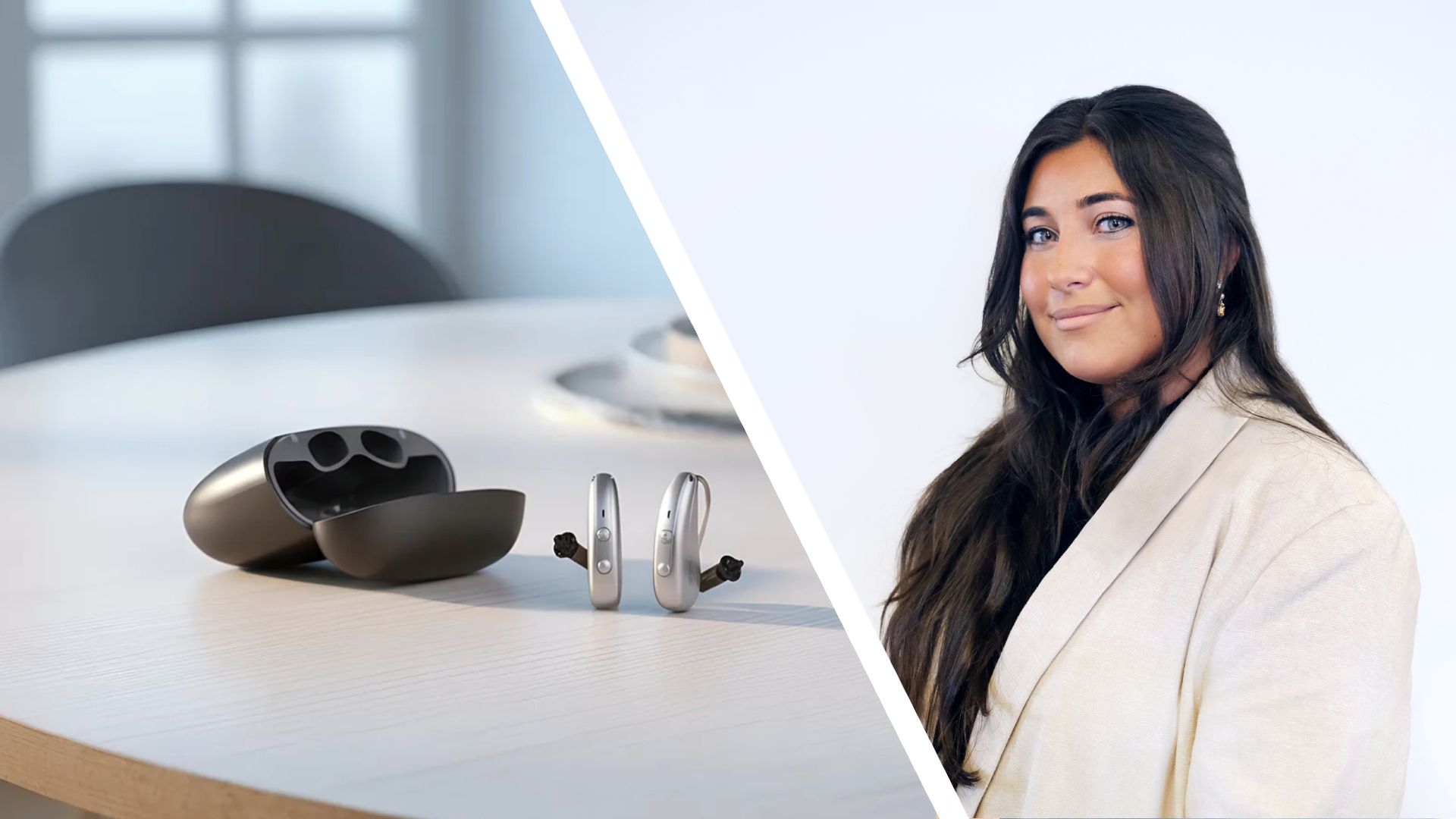
So, I have questions. And Dr. Rachel Artsma, Lead Audiologist at Hear.com (a US company billed as the world’s leading online provider of medical hearing aids) has agreed to provide the answers.
I ask her what we need to know about the damage we may inadvertently be doing to our hearing, and it becomes immediately clear that Dr. Artsma has more experience in explaining these complex systems to worried patients than I’ve had hot dinners. “Essentially, when we’re talking about damage to the inner ear, or damage to the ear, we’re talking about little hair cells that stand up”, she explains, putting both hands straight up, to offer a visual representation. “And when sound comes in, either at high volumes or for a long duration, or both, the hair cells lay flat.
“Unfortunately, if somebody does that damage to those hair cells, they don’t stand back up. They remain damaged.
“So sometimes if somebody goes to a concert or they’re exposed to noise, they might feel like their hearing’s muffled after, or they might get ringing in their ears — but it does reverse. That was almost like a warning sign, ‘Hey, we were listening to a lot of noise there.’ But sometimes it can be permanent.
“Just being aware of the warning signs can be really beneficial: ringing in the ears, feeling like your hearing’s muffled, dizziness, that buzzing sound. These are all signs that you should definitely go and get your hearing checked.”
Hearing health features can be a useful tool, but they’re not a replacement for professional hearing care
Dr. Rachel Artsma, Lead Audiologist at Hear.com
I wonder whether Dr. Artsma is against the use of consumer earbuds that offer listening tests and profiles to atone for your hearing loss. Several flagship options such as AirPods Pro 2 and 3, Samsung’s Galaxy Buds3 Pro and Galaxy Buds4 Pro as well as Nothing’s Ear (3) and CMF Buds 2 Plus offer such tests now, with Apple leading the charge thanks to its ‘Hearing Health’ suite of features.
Actually, Dr. Artsma welcomes these innovations, with one caveat. “It is something that people are talking more and more about, now that it’s becoming more available for consumers,” she begins. “Of those features, especially when it comes to a feature that’s being marketed as almost like hearing amplification, it’s very similar to what we see with over-the-counter hearing aids.
“In general, it can be a good thing, because it’s increasing awareness and getting people more into the hearing space. But while it definitely can be a tool, it’s not a replacement for care, and not a replacement for getting professional hearing care.
“The way I look at it is, it helps get people in the door, almost like a gateway. But definitely we don’t recommend that [consumer earbuds] as the long-term solution for hearing care, and we of course recommend getting a full diagnostic evaluation so we know where your hearing stands.”
When treating hearing loss we need to be wearing our hearing aids all waking hours — it’s really important for the brain. So, not just in restaurants
I’m ready to move on, but there’s another point Dr. Artsma wants us to know. “Something that also is really important is when it comes to treating hearing loss is that we are wearing the hearing aids all waking hours,” she adds emphatically. “It’s really important for the brain. So in terms of treatment, that’s also where hearing aids are beneficial, because we want to be wearing them all waking hours, not just for restaurants or things like that.”
I hadn’t thought of the issue of stamina, and it’s a key point — very few consumer earbuds will last a full 12 hours without needing to be charged, and when battery-draining features such as personal hearing profiles are deployed, you’re looking at a number much less than that.
What of ANC to protect our ears — help, or hindrance?
I ask about the active noise cancellation technology most of us use in our headphones now. Is this helping our hearing? “Typically when we’re talking about active noise cancellation and the cancellation of that sound wave, we’re usually talking about 20dB — that’s what it’s going to actually reduce, in terms of noise,” Dr. Artsma begins. “So for some people, yes, they might not hear noise at all if it’s within that range to start with, but if said noise is still really loud, the person will still hear it. So it does depend on the noise level surrounding them.”
Interesting. Because ANC works by creating an anti-phase sound wave to effectively counteract the audible one we perceive as noise, I ask whether it would it be fair to say that active noise cancellation technology in headphones doesn’t actually protect your hearing, and that controlling the volume of your headphones is much more beneficial to hearing health? “Correct, exactly, and I feel that this can be a misconception with active noise cancellation”, Dr. Artsma says. “Sometimes people see that, or they read it and they think, ‘Oh, I’m protecting my hearing with these.’ But volume is important; we want to make sure that the consumer is also reducing the volume because of the benefit of ANC.
“Usually ANC is more effective for lower frequencies, so the lower-pitched tones. And in general, this can be a beneficial feature — it definitely doesnot protect our hearing, but indirectly it can, because this feature allows for the listener to not have to compete with outside noise.
ANC only works to help protect your hearing if you also lower the volume
“So if commuting on a train or on a plane, say, often wearers have to increase the volume of what they’re listening to, to compensate for the noise. Active noise cancellation can be a nice feature because it allows the consumer to still hear what they’re listening to, just at a lower volume.”
Dr. Artsma sighs. “Of course, that only works if they do actually lower the volume though!”
Again, I wonder whether that’s this topic covered, but no — we’ve not even got to the key issue yet. “But what’s really important is the duration of how long people are exposing themselves to noise,” Dr. Artsma continues. “Exposure is cumulative. So volume is only half the equation; duration is the other half.
“I like to use the 60/60 rule, which essentially means you don’t listen with the volume higher than 60 percent, and no longer than 60 minutes in duration, and then you take a break. The two go hand in hand and both are very important when it comes to hearing protection.”
It’s a key point and one I’ve thought about often in the two days since we spoke. I can’t help but think that when I review the best headphones for battery-life and sound, I stick to 50% volume (since that’s how brands themselves measure that metric) but I have no idea what volume buyers will listen to, once they’ve made their purchase.
Is the pressure sensation I experience with ANC anything to worry about?
We’re nearing the end of our allotted time, but I’m keen to ask Dr. Artsma about the pressure sensation some readers tell me they experience when listening to music with the ANC deployed in their headphones. Does it mean anything is wrong?
I mention that readers have emailed to tell me they experience a wind tunnel effect, or a vacuum noise when using ANC. What’s happening there? Dr. Artsma smiles and I know that this time, she’s about to reassure, rather than warn. “Absolutely, but lots of times that pressure sensation is a perception, not real pressure,” she says. “What happens is because the active noise cancellation is reducing the low frequencies, the brain perceives that in a similar way to when we go on an airplane and we have that altitude change.
“Now in general, of course, if somebody ever feels like they’re getting any ringing, or they feel like their hearing is muffled after listening, and they feel like they’re getting ringing after using headphones, then of course you want to get your hearing checked. But all in all, it’s typically just harmless and it’s the perception of pressure, but not actual pressure.”
Volume is only half the equation; duration is the other half
Seeing as we’re on a reassuring curve, I ask what I might do tonight at my Brandon Flowers gig to keep my shell-likes — that really do love his new album but don’t want to suffer — from damage? “Oh, there are things that you can do as a concert-goer, and a key one is to position yourself appropriately,” Dr. Artsma says. “Don’t stand right next to the speaker, right! Distance yourself from the speaker.
“Of course, if you also are going to be exposed to this level of noise, wearing high-fidelity hearing protection and protecting our ears is also a recommendation.”
I quickly circle back to the 60/60 rule and ask how long a break we should be taking from our cans, after listening for an hour at 60% volume? Dr. Artsma is more serious here. “Definitely not just like a two-minute break and then going back,” she says. “Probably closer to an hour break, because we want to allow time — our ears are very sensitive.”
I understand and have to confess, that recommended break from exposure is longer than I’d have thought. I consider the concert I’m attending tonight and realize that I will not be leaving the arena after an hour, to take an hour’s break for my hearing health. And perhaps, then, I really do need to be thinking about at least a set of inexpensive noise-reducing concert ear plugs. I’ll add a link to a set that my colleague swears by (called the Loop Experience 2), below this missive.
If we love music (and I do), we want to keep our ears healthy enough to enjoy it for a long old time, right?
