

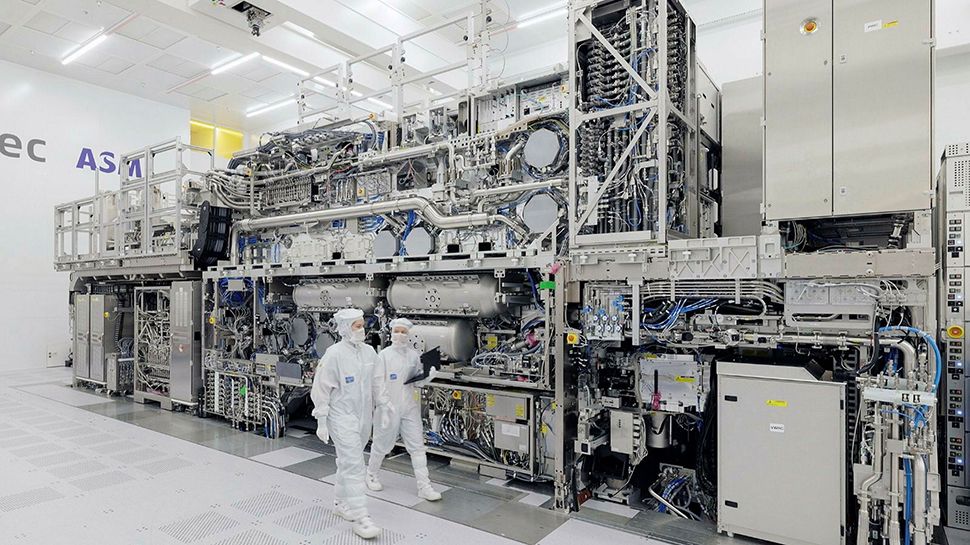
- Intel says it has processed more than one million wafers on High-NA EUV scanners
- The figure includes tool certification, R&D, and production combined
- ASML’s total figure of 1.35 million High-NA wafers made to date puts Intel at roughly three-quarters of the world total to-date
Intel Foundry and ASML used the recent SPIE Photomask Technology and EUV Lithography conference in Monterey to announce the former has now processed more than one million 300mm wafers on ASML’s High-NA EUV scanners.
The milestone is a key achievement for the chipmaker, which was only recently being considered an also-ran in the AI race, even as pressure continued to build up around its foundry ambitions.
A resurgent Intel, however, has seen its stock price soar nearly 155% year-to-date and an increasing number of collaborations, even as Nvidia and the US government took stakes in the corporation to gain exposure to its foundry business.
What does a million wafers mean in the nutshell?
The <a href="https://www.asml.com/en/news/press-releases/2026/intel-foundry-and-asml-collaborate-to-accelerate-industry-readiness-for-high-na-euv” rel=”nofollow noopener” target=”_blank”>joint press release by Intel and ASML carefully notes that the 1 million figure includes Intel’s own R&D projects, tool certification runs, and volume production of its Core Ultra Series 3 CPUs, also known as Panther Lake.
One can therefore not read this as one million commercial-grade Panther Lake wafers already being produced by the company, and neither company is touching base on offering a number.
Despite this, it is a huge achievement for one of the largest pioneers in semiconductors, especially when one considers that ASML’s head of High-NA product management, Greet Storms, said the company’s EXE systems had collectively exposed more than 1.35 million wafers, with ten systems running at four customers and three more being shipped or installed.
This makes Intel’s share of the total exposed wafers roughly 74% of the total ASML mentioned in a list that has some of the world’s largest foundry players, including TSMC, Samsung, and SK Hynix.
For investors, this matters because Intel has a lead none of its competitors do: it is the only company running High-NA on shipping product, and by ASML’s own numbers, it has done most of the world’s High-NA wafer exposure by itself.
It could also be that Intel’s actual production figures might be much lower in an industry where most of the competition continues to tread cautiously when it comes to High-NA EUV; TSMC, for example, does not plan to begin High-NA volume production until 2030, even as Intel has considerably bet the farm on the tech, which costs as much as $350 million apiece, and the first-mover advantage it offers.
