

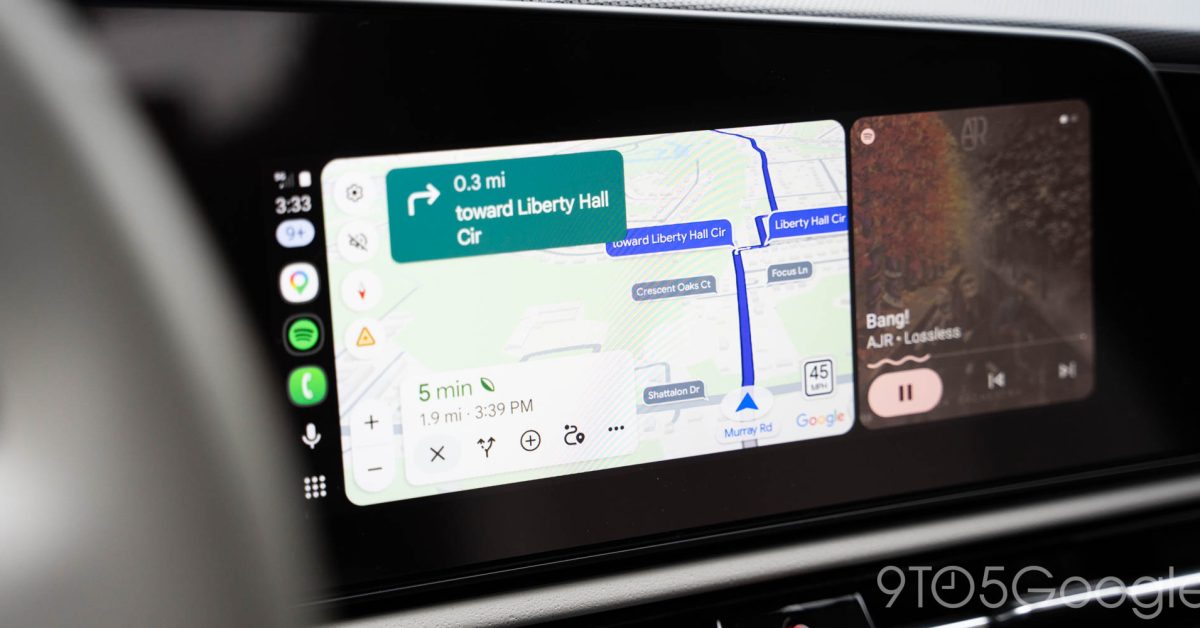
When it’s working fully, Google Maps is a powerful navigation app, but bugs are a bit more common than anyone wants. Over the past month, issues with traffic data have been popping up, more recently affecting users on Android Auto specifically.
Google Maps typically shows green, yellow, and red lines to indicate the speed of traffic. Green (or blue) means that traffic is flowing normally, yellow indicates a slowdown, and red indicates heavy and slow-moving or stopped traffic. It’s very useful in figuring out the most efficient way to get around.
Right now, though, it’s broken for many.
In July, there were quite a lotof reports around traffic data in Google Maps being broken, with Google fixingthe issue late in the month. Now, it seems to be back, especially for Android Auto users.
Reports as far back as two weeks ago, but especially in the past several days, show that traffic data in Google Maps remains at leastpartially broken on Android Auto. Some map settings seem to still show traffic data, but general navigation in its default view seems to be broken. The issue is also still happening on the phone directly for some users.
Google hasn’t publicly acknowledged this latest wave as far as we can tell, but it’s obviously frustrating for those affected. Some claimthat uninstalling Google Maps updates seems to at least temporarily fix the problem.
More on Google Maps:
- Ask Maps in Google Maps rolling out Personal Intelligence, real-time transit, global launch
- Google Maps rolling out Immersive Navigation, speedometer in Android Auto to more users
- Android Auto redesigned Google Maps alerts to be less distracting – it’s a huge upgrade [Gallery]
Follow Ben: Twitter/X, Threads, Bluesky, and Instagram
You’re reading 9to5Google — experts who break news about Google and its surrounding ecosystem, day after day. Be sure to check out our homepage for all the latest news, and follow 9to5Google on Twitter, Facebook, and LinkedIn to stay in the loop. Don’t know where to start? Check out our exclusive stories, reviews, how-tos, and subscribe to our YouTube channel
