AI in customer experience: Finding the right level of automation
October 21, 2026 | 09:03(0) user say
AI is creating new opportunities to transform customer interactions, from automating routine tasks and empowering employees to analysing customer needs and personalising services.
However, faster response times and higher interaction volumes do not necessarily translate into better outcomes. The real challenge lies in how businesses deploy AI and integrate human expertise to optimise operational costs, improve problem resolution, and deliver a consistently better customer experience.
Chatbots, voicebots, and AI-powered platforms are helping businesses automate customer service, reduce response times, and optimise resources. However, even an instant response can leave customers dissatisfied if it is inaccurate, lacks context, or fails to resolve their issues.
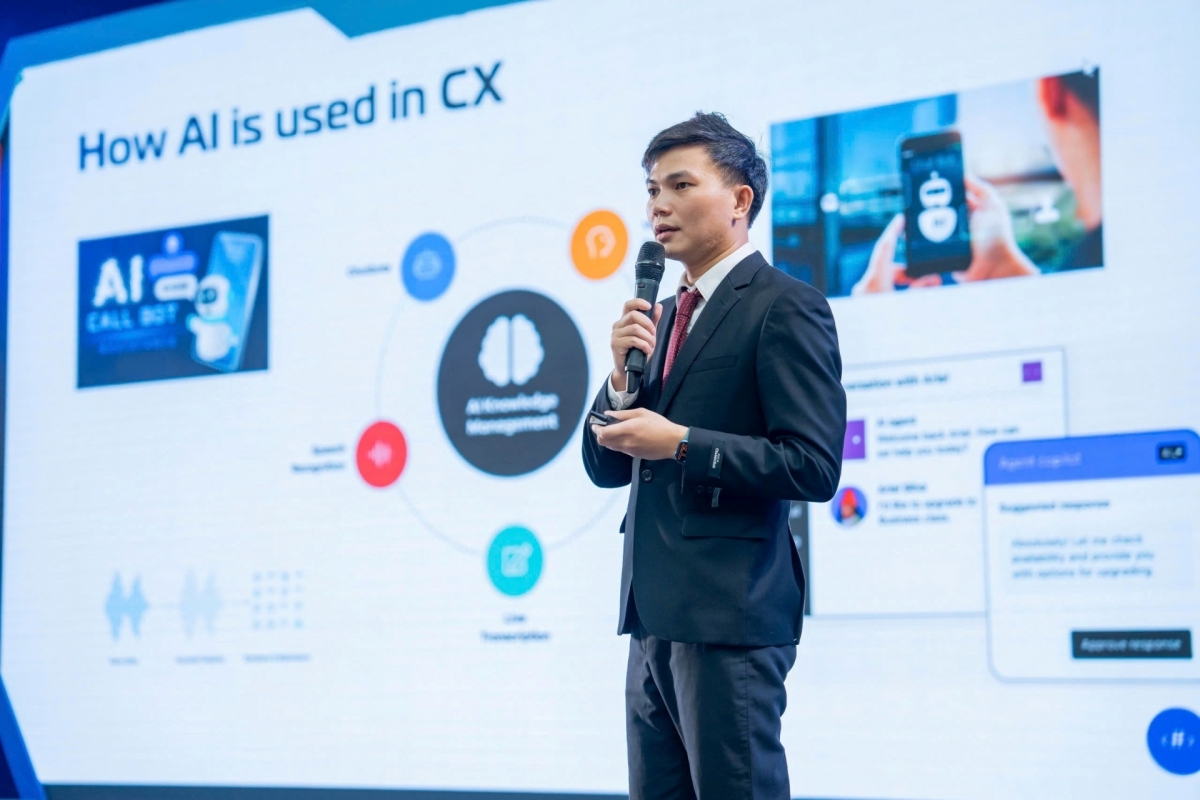
At VIDEX Cambodia 2026 held from October 14-17 in Phnom Penh capital city, Pham Manh Hung, deputy director of Customer Experience at Viettel Customer Service (VCX), highlighted a key message in his presentation, “The Future of Human + AI Collaboration in Customer Experience”: “More AI ≠ Better CX” – deploying more AI does not necessarily lead to better customer experiences.
| Pham Manh Hung, deputy director of Customer Experience at Viettel Customer Service (VCX). Photo: VCX |
While AI offers speed, scalability, and cost efficiency, poorly implemented technology can undermine empathy, erode trust, and increase customer frustration.
This is particularly relevant in situations involving complaints, complex service issues, or sensitive matters, where human judgment, adaptability, and empathy remain essential.
Businesses must therefore look beyond processing speed when evaluating AI performance. In addition to Average Handling Time and First Contact Resolution, organisations should consider Customer Satisfaction, Customer Effort Score, repeat contact rates for the same issue, and cost per resolved issue.
Ultimately, the value of AI should be measured by problems successfully resolved, customer experiences improved, and operational costs optimised.
From automation to human-AIcollaboration
If automation marked the first stage of AI adoption in customer service, the next phase places greater emphasis on collaboration between technology and people.
This represents a shift from Automation to Collaboration, where AI goes beyond performing tasks independently to enhancing employees’ capabilities and service performance.
| Photo: VCX |
AI is particularly effective at handling repetitive, rule-based tasks that require rapid data processing and information retrieval. Human employees, meanwhile, remain indispensable in complex situations requiring professional judgment, flexible problem-solving, or empathy.
The appropriate level of automation should therefore be determined by the nature of each customer request, AI’s processing capabilities, and the extent to which human intervention is needed.
To put this approach into practice, businesses can adopt several human-AI collaboration models:
Under the Assistive AI model, AI acts as an intelligent assistant, helping employees retrieve information, analyse conversations, and recommend solutions during customer interactions.
In the Human-in-the-Loop model, AI executes processes while human employees retain oversight and intervene when complex or sensitive situations arise.
Sequential Handoff enables AI to handle initial customer requests before transferring more complicated cases to human agents, along with the relevant interaction history and context. Meanwhile, Multi-Step Process distributes different stages of the customer journey between AI and human employees according to their respective capabilities.
These models demonstrate that automation does not necessarily mean allowing AI to manage the entire customer journey. Businesses can automate selected tasks or complete processes, provided they maintain accuracy, effective problem resolution, and a seamless customer experience.
Tailoring AI solutions tobusiness and marketneeds
To create real value with AI, businesses need to look beyond technologies that offer high levels of automation. Successful AI adoption also depends on how well the solutions fit business operations and meet customer needs.
This approach is reflected in philosophy, “Consulting First, Technology That Fits.” Rather than focusing on technology, Viettel Customer Service starts by understanding business challenges, identifying customer needs, and designing customer journeys before recommending the most suitable solutions.
| Photo: VCX |
This approach was also highlighted at VIDEX Cambodia 2026, the Vietnam-Cambodia Trade Connectivity and Product Promotion Fair. As part of the event, Viettel Customer Service joined Metfone and eMoney in a panel discussion on the application of AI and digital technologies in business operations.
The discussion provided an opportunity to explore approaches to improving operational efficiency and customer experience in the Cambodian market.
The ability to implement technology solutions across different markets is built on extensive operational experience and a deep understanding of customer needs.
Viettel Customer Service has over 22 years of experience in customer service, with a workforce of more than 4,000 employees serving over 120 million customers across more than 10 countries and territories.
Viettel Customer Service offers an integrated suite of CX solutions designed to enhance business operations and customer experience.
Along with this, OmniX enables businesses to manage and coordinate customer interactions across multiple channels, while CXBot leverages AI to automatically receive and handle routine customer requests. KnowXHub supports knowledge management, allowing employees to quickly access the information they need to assist customers.
In addition, InsightCI supports customer data analytics, QualityX applies AI to evaluate conversation quality, and vCOC enables operational monitoring. Together, these solutions help connect automation with quality management and data-driven operations.
When deploying AI across different businesses or markets, technology selection must reflect the specific characteristics of customer journeys, operating models, and service requirements, rather than relying on a one-size-fits-all approach.
What is the right level of automation? The answer is not a fixed percentage, but the ability to identify which tasks AI should handle, which situations require human involvement, and how the two can work together effectively.
Only when technology is implemented appropriately can automation deliver its full potential in optimising operations and enhancing customer experience.
 |
Ericsson and Viettel to accelerate autonomous network development
Ericsson and Viettel are set to strengthen their partnership to advance the use of AI at scale, orchestration, and high-performance programmable networks. |
| <img src="https://vir.com.vn/stores/news_dataimages/2026/032026/06/14/thumbnail/viettel-ky-ket-120260306142509.jpg?rt=20260306142510" alt="Viettel and Qualcomm to co-develop AI smartphones” loading=”lazy”> | Viettel and Qualcomm to co-develop AI smartphones
Viettel has signed an MoU with American multinational Qualcomm Technologies to establish a strategic partnership for AI-integrated smart mobile devices. |
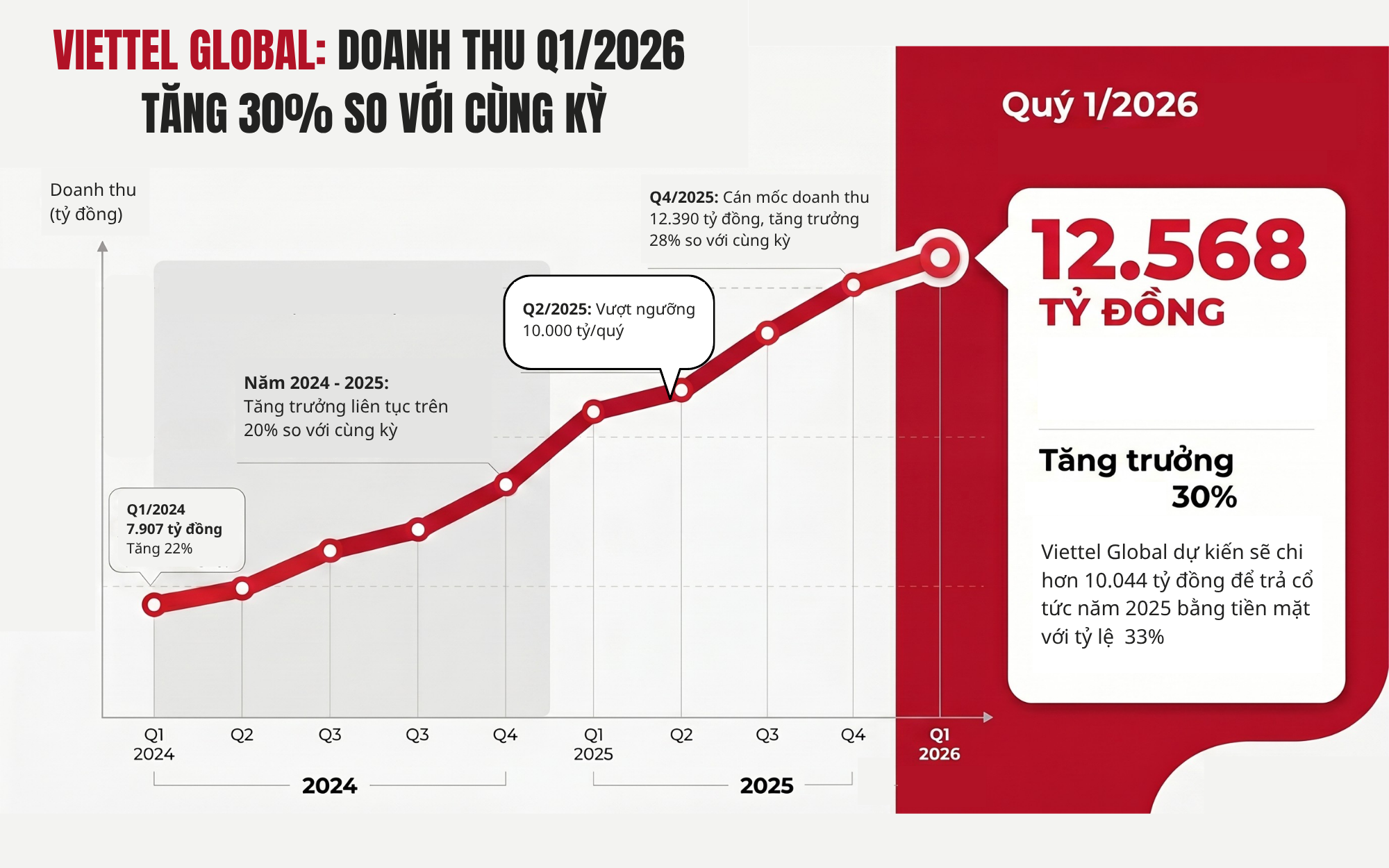 |
Viettel Global posted 30 per cent revenue growth in Q1
On May 4, Viettel Global released its consolidated financial statements for the first quarter of 2026, reporting after-tax profit of VND2.33 trillion ($89.62 million), up nearly six times on-year. |
| Viettel America joins OpenAI Partner Network as Select Partner
Telecommunications provider Viettel Group announced that its U.S. subsidiary Viettel America joined the OpenAI Partner Network to expand enterprise artificial intelligence deployments. |

Latest News