

- Related
- <a href="https://myappsplus.com/artificial-intelligence-creating-not-cutting-jobs-in-newport/” title=”Artificial intelligence 'creating, not cutting' jobs in Newport”>artificial intelligence
- General Assembly
- NCCapitol
Artificial intelligence helped cut the administrative costs of a Hurricane Helene recovery loan program by 90%, allowing more state money to be directed to Western North Carolina communities, according to the North Carolina Treasurer Brad Briner.
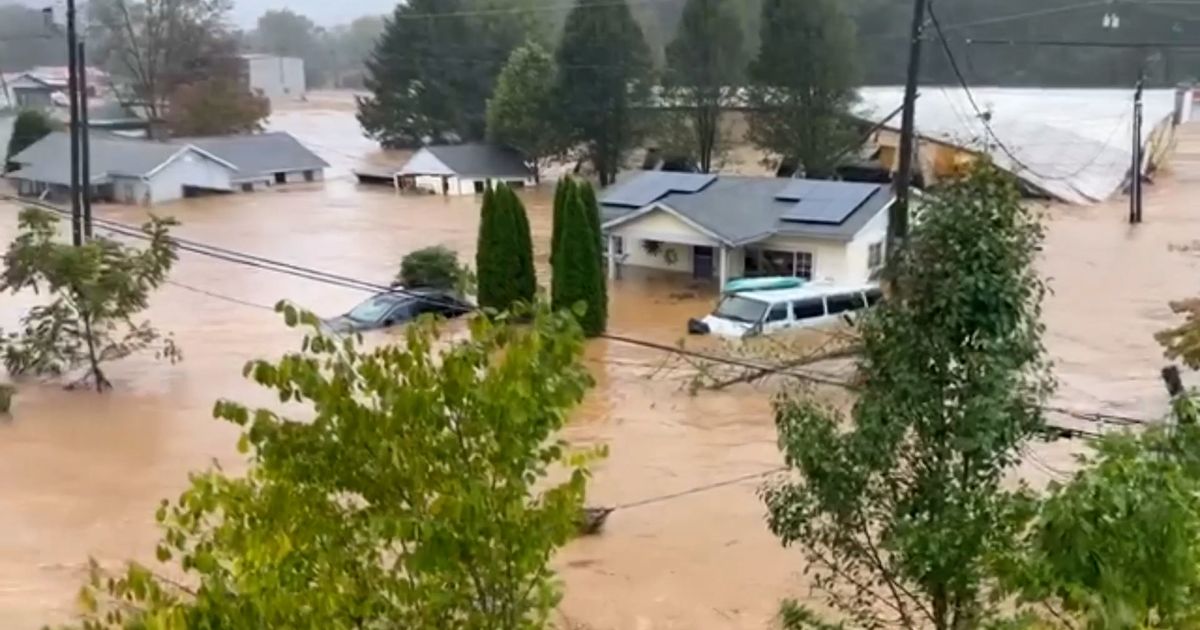
The Department of State Treasurer announced Tuesday that nearly $23 million in interest-free loans is being distributed to local governments still recovering from the deadly 2024 storm.
Briner told WRAL, in an exclusive interview Wednesday, that his office initially believed administering the program could require hiring additional help or an outside accounting firm. Instead, the department used AI and automation to help manage the loans.
“We’ve observed that we can do this much better with AI than we ever thought we could without it,” Briner said.
State law allows up to 2% of money appropriated for the loan program to be used for administrative costs. Briner says none will be deducted from this round, meaning the full $20 million appropriated in 2026 and $2.7 million remaining from previous appropriations will be distributed to Western North Carolina communities.
How does this work?
The cash-flow loan program was created in 2025 to provide local governments with money for rebuilding and cleanup while they wait for federal recovery funding.
Treasury currently has 119 borrowers with different agreements, deadlines and repayment schedules.
AI helps state employees track those obligations and identify when borrowers need to be contacted.
“What it’s done for us is removed a lot of the complexity and the tediousness that people experience in their day-to-day,” Briner said.
He said the technology allows employees to spend less time working with spreadsheets and more time communicating directly with local governments.
“The reality is humans plus technology is always going to be better,” Briner said.
Despite the lower administrative costs, demand for the Helene loans remains significantly higher than the money available.
Treasury received more than $100 million in requests for the 2026 round, compared with the nearly $23 million being distributed.
Briner said his department is prepared to expand the program if lawmakers’ appropriate additional money.
The loans must be repaid without interest by June 30, 2030. Treasury says repayments can then be loaned out again to other communities.
The General Assembly has continued adding money to the program since its creation. Briner said he expects lawmakers to consider its future when they return to Raleigh.
For now, roughly $80 million in requests from Western North Carolina communities remains unfunded
AI use expands within state government
The Helene program is one example of a broader expansion of artificial intelligence inside the state government.
Briner previously partnered with OpenAI on a pilot program to examine how ChatGPT could improve government operations, including analyzing public financial data and identifying potential process improvements.
Briner told WRAL the department later spent several months establishing safeguards, policies and a contract before rolling out OpenAI across the department earlier this year.
The department is now using AI in multiple divisions and is adding specialized tools for certain teams, Briner said.
“We have to get more efficient as government,” Briner said. “There’s a lot of people who are frustrated in government, as well as out of government, by the speed with which we move.”
