

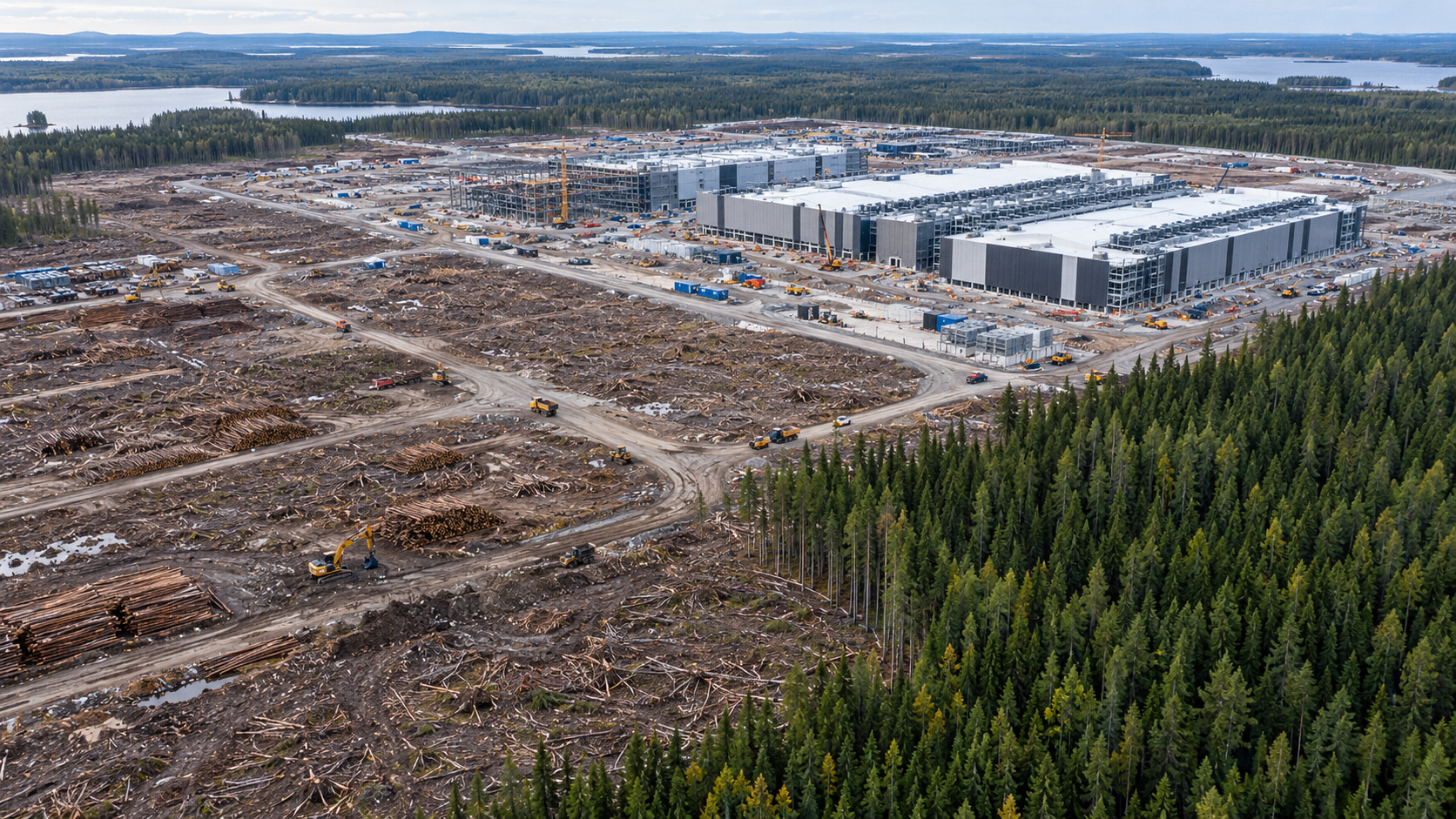
AI data centers are powering everything from ChatGPT to Google’s Gemini, but the enormous facilities that make these tools possible are facing growing resistance across the country.
On Tuesday, November 3, voters in 10 states will decide on 41 local ballot measures involving data centers Twenty-eight measures would restrict development if approved, while 13 would make it easier for projects to move forward
The votes come as Americans face rising electricity costs and questions about how much power AI infrastructure should consume, who pays for new energyinfrastructure and whether communities benefit enough from having these facilities nearby.
For households already struggling with higher utility bills, the debate has become about more than where technology companies build their next server farms.
Why data centers have become an Election Day issue
Data centers are essential to the AI boom.They power cloud storage, streaming services, internet applications and the sophisticated AI systems used by millions of people every day.
But they also require enormous amounts of electricity to operate servers and cooling systems around the clock. A June 2026 report from Lawrence Berkeley National Laboratory estimates that data centers could account for 11.8% of total U.S. electricity consumption by 2030, with projections ranging from 9.5% to 15.3%.
That growing demand is putting pressure on utilities to expand generating capacity, transmission lines and other infrastructure.
And consumers are growing concerned about whether they’ll be asked to help pay for those upgrades.
According to Reuters, residential electricity prices have increased more than 10% nationally since 2024, with increases exceeding 20% in Ohio.
Not every increase can be attributed to data centers. Rising fuel costs, aging infrastructure and other factors also contribute. But rapid growth in electricity demand is raising questions about how utilities allocate costs between large commercial customers and existing households.
Where voters are deciding the future of data centers
Ohio is at the center of the debate. According to Ballotpedia, the state accounts for 21 of the 41 measures appearing on November 3 ballots.
Several communities, including Sunbury, Defiance and Oregon, will vote on proposals to prohibit data centers that consume more than 25 megawatts of electricity.
In Sunbury, the restrictions could affect a proposed $2 billion Amazon data center project But the issue goes well beyond Ohio. California, voters in Alhambra will decide whether to prohibit data centers within city limits. In Edgewater, Florida, residents will consider an amendment restricting new data center development and expansion
Several Maine communities will vote on temporary moratoriums, potentially pausing projects while local officials establish development rules.
In Illinois, some voters will will weigh advisory questions about whether their communities should support or restrict data center construction.
And in New Jersey, residents of Downe Township will answer a straightforward question: Do they support data centers in their community? The New Jersey vote is advisory, meaning it measures public sentiment rather than directly authorizing or prohibiting construction.
The measures across the country differ significantly. Some establish outright bans, others would restrict only the largest facilities, and some would impose additional approval requirements. The common thread for all is that more communities want a greater say in how AI infrastructure is built.
Could these votes actually lower your electric bill?
Electricity markets operate across large regions, meaning power demand in one community can affect costs well beyond its borders. The PJM regional electricity market, for example, serves New Jersey, Pennsylvania, Ohio, Virginia and other states. According to a recent FactCheck.org analysis, PJM’s independent market monitor has identified data centers as a primary driver of higher capacity market prices.
The monitor estimates that data center demand will add billions of dollars in capacity market charges over the current and following delivery years.
Those charges are shared across the regional electricity market, although the impact on individual household bills varies. Even if a community blocks a new facility, demand from AI companies could shift to another location. Existing infrastructure costs and broader electricity-market conditions would remain.
Likewise, approving a project doesn’t automatically mean household bills will increase. The outcome depends partly on whether utilities and regulators require developers to cover the infrastructure costs their facilities create.
The takeaway
Technology companies and development supporters arguethat data centers create construction jobs, generate tax revenue and attract investment.Amazon, which has major expansion plans in Ohio, has emphasized the employment opportunities, economic benefits and technology services associated with its facilities.
Supporters also argue that data centers are necessary to support the digital services that households and businesses depend on, including AI tools that are rapidly becoming part of everyday life.
Restrictions, they warn, could move those investments to communities with more favorable development policies.
Opponents raise concerns about electricity demand, water consumption, noise, land use and the possibility of households subsidizing infrastructure built primarily for large technology companies. The issue crosses traditional political lines, with local opposition emerging in communities across the country.
Tomorrow’s election results could affect where major technology companies build new data centers, how local governments regulate them and the conditions developers must meet before construction begins.
For consumers in the U.S., tomorrow may determine how communities and utility regulators will manage the growing electricity and infrastructure demands of AI without placing unnecessary costs on existing customers.
- I asked ChatGPT, Gemini, Claude and Perplexity if there really is an AI bubble and when it’s going to burst — and one compared it to the dot-com crash
- ChatGPT has a clever new way to fight back against election deepfakes — I tried it and it actually works
- A few tech leaders are rebranding AI as ‘superintelligence’ — calling it that doesn’t make it accurate
