

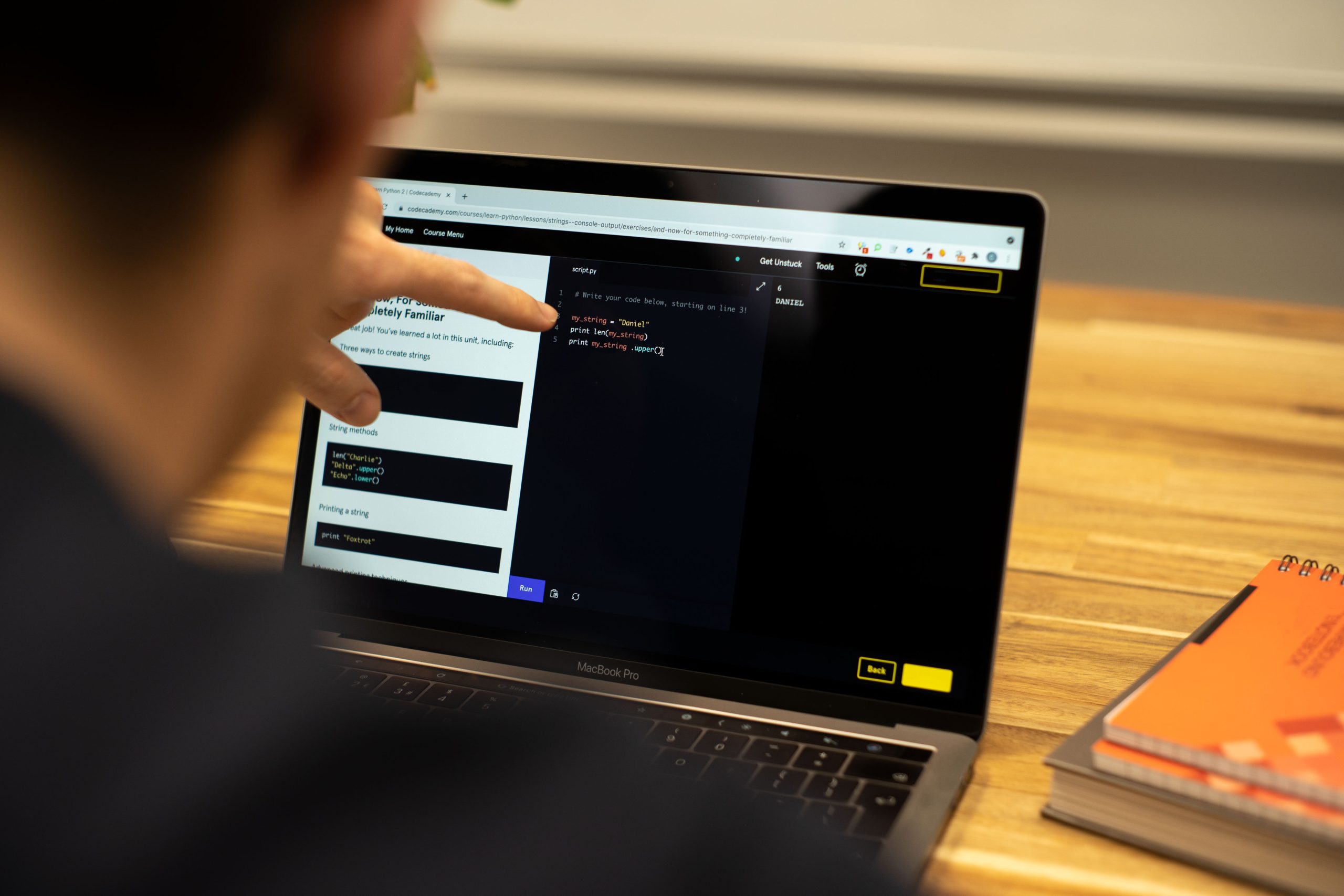
‘Coding Kids’ looks at big tech and AI’s impact on remaking public education
Among the criticisms of the U.S. education system that caught fire in the 2010s was the fear that students weren’t ready for the increasingly high-tech job market.
Teaching kids how to code became a priority in schools, driven by parents and educators but also with an aggressive push from tech CEOs at companies including Microsoft, Google and Apple. Today, coding and computer science curriculums in public schools are often created and branded by big tech companies.
Natasha Singer, author of “Coding Kids: Big Tech’s Battle to Remake Public Schools,” covers education and tech for the New York Times. She spoke to Texas Standard on technology’s impact on public education and college students.
This transcript has been edited lightly for clarity:
Texas Standard: Big Tech is deeply influential in the kinds of coding education that kids in public schools receive. Where did that start, and what was the problem that coding advocates wanted to solve?
Natasha Singer: Well, it’s fascinating because the push for coding in schools was driven by companies like Google, Microsoft and Apple. And the reason I wrote this book, “Coding Kids,” was to show this as one of the examples of how these companies have come to have extraordinary influence in our schools.
They don’t just provide the Chromebooks, laptops, iPads… They also provide the productivity software that kids are using. Kids are using Gmail and they’re writing their essays on Google Docs, and they are collaborating, and making presentations on Microsoft PowerPoint or Google Slides, and then their teachers are giving them quizzes on Google Forms.
So we’ve seen the companies move from providing the hardware, the classroom tech the kids use, to providing the apps the kids use to do all their schoolwork, to now moving in to influence the very subjects that schools teach, like computer science.
It’s important because computer science is an important subject. Many parents want their kids to learn to code, but it’s also important because when you have companies that have more money and power than most governments of most countries coming into schools and saying, “teach this,” schools are going to say, “well, our most powerful companies are telling us we need kids learning how to code.” So suddenly we had tens of thousands of schools beginning to offer coding and computer science.
Computer science is an important subject, right? It can teach you logic, problem-solving, it can teach you to make apps, but at the same time, we now have all these kids who were promised if they just learn to code, they were going to get high-paying, high-power jobs at Google and Facebook and Microsoft.Now AI has come along, and the companies that once pushed coding in schools, have pivoted to pushing for all kids to learn AI chatbots.
I talked to a lot of college students who believed that they learned to code, they were going to get these great jobs, now they’ve majored in computer science, they’re graduating from university, and they’re having trouble getting jobs.
» THE NEW WILD WEST: Texans on the AI Frontier, a Texas Standard special
So what was the motivation for these tech companies? Were they initially trying to create a workforce? Do you take them at their base level for that; that was the initial motivation?
Well, you know, my book takes the view that individuals at tech companies and at nonprofits sponsored by tech companies had good intentions. They believed that computer science and learning how to code was a very, very powerful skill.
It was self-interested and there was hubris because it was like, our thing is the most important thing. But they said, “look, I got rich from being a computer programmer. I want to give every kid in the United States the opportunity to learn this.”
At the same time, their complaint was, “we can’t hire enough talented programmers, and the fault is with the U.S. school system. If the school system would just teach every kid to code, every kid would be magicked into these high-powered, high-paying jobs. Also, we need to compete with China.”
And there’s an economic imperative that governors and the presidents of the United States felt very keenly, which is that we are a tech superpower, and if we want to remain one, the economic imperative was that we needed more kids who knew how to code and do it well.
So I guess the question is, and you’ve alluded to this already, that promise isn’t paying off for a lot of these kids now, going from high school to college and graduating into this world of AI.
You know, as a journalist, I’ve been following this for the New York Times for more than a decade. Last year I spent months talking to kids who had majored in computer science in college, and they had learned how to code in high school because the tech industry was pushing it. They actually loved programming, and they were hoping to get jobs where they made software.
They couldn’t get a job, yet they were on the dean’s list, and maybe they helped teach computer science, and now they were back in their childhood bedrooms with their Legos and their skateboards and their Matrix posters.
My book is a roadmap for teachers and parents about the history of how this happens and all the ways that tech companies like Google and Microsoft influence nearly every step of the education supply chain, because they are not just supplying the computers that kids use in class, the software that kids used to do their assignments, influencing what subjects schools teach; they are lobbying from state to state to require schools to teach AI or to use their products.
They are training tens of thousands of teachers on their Gemini AI from Google, ChatGPT AI from OpenAI or their Microsoft Co-Pilot, and then they’re providing lessons for students. We don’t have any other industry that influences education in this way.
It’s hard not to see a somewhat bleak picture in the ways that tech is remaking education, but what gives you hope when you look at this and do your research?
I spent a lot of time visiting schools for my book, and it was amazing to see teachers trying to navigate the way that big tech influences schools, because many schools have low resources, and they need these free industry products, and free industry lessons and videos.
What gives me hope is that I spent time in classes with some amazing teachers whose view is, we actually have to teach kids a much broader kind of tech education that’s not just about using whatever is the latest product of the day or teaching the latest coding or AI literacy. The world is now saturated with machines and AI, and we have to equip kids with agency to go out into that world and not just get jobs but be able to navigate software and apps and AI that is steering them, and know how these things are designed to get you to spend a long time online or to keep coming back or to keep clicking and keep liking, and to give kids some power.
So I interviewed an amazing teacher outside of Austin named Cheri Whalen, who is at Cedar Park High School. She had been teaching computer science for years, and mostly it was boys taking her class. She couldn’t interest any girls to take computer science. She started teaching this much broader class called computer science principles. It’s an advanced placement class, and it’s not just about programming.
She taught the students how the internet works, how a computer works, how you get email, and how social media works, and why the way that social media or YouTube is designed helps hook kids and keep them online for hours and hours at a time.
Also, she taught kids how to make apps and make games and make technology, and to go out in the world and be able to look at a new technology and be to understand: How does this thing work? How does it collect my data? What is it doing with my data? Who profits from this technology? Who might be at risk from this technology?
So for me, what gives me hope is these Texas teachers like Cheri Whalen or other teachers around the country who want to equip kids with this broader ability to navigate our tech saturated world.
If you found the reporting above valuable, please consider making a donation to support it here. Your gift helps pay for everything you find on texasstandard.org and KUT.org. Thanks for donating today.
