Resurrect Bio Uses Artificial Intelligence to Protect Crops | Agroempresario.com
Resurrect Bio Uses Artificial Intelligence to Protect Crops
The British startup is developing technology designed to restore plants’ natural genetic resistance to diseases and pests
viernes 09 de octubre de 2026 – 15:50
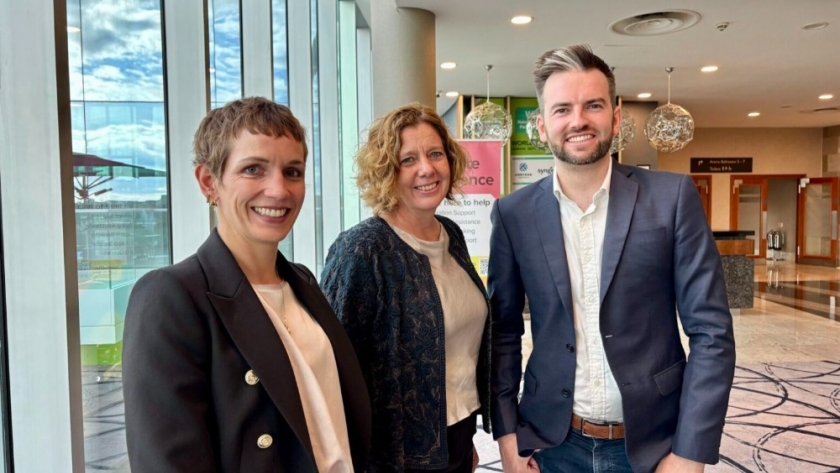
British startup Resurrect Bio is developing technology based on artificial intelligence and gene editing to restore crops’ natural defenses against diseases and pests. The company uses its FloraFold platform to identify interactions between plant proteins and pathogens, aiming to design targeted genetic modifications that strengthen plant resistance and reduce reliance on chemical crop protection products. Its co-founder and CEO, Cian Duggan, explained the approach at the World Agri-Tech Innovation Summit in London, according to AgFunderNews.
The technology addresses a recurring challenge in agriculture: pathogens and pests continuously evolve, developing mechanisms that allow them to overcome plants’ natural defenses.
In many cases, plants retain resistance genes that have become ineffective because certain pathogens have evolved ways to block them or escape recognition.
Resurrect Bio aims to reactivate these defense mechanisms through precise modifications to plant DNA, rather than necessarily introducing genes from other species or removing genes associated with disease susceptibility.
The technology focuses on plant immune receptors, proteins responsible for detecting threats and triggering protective responses.
Some pathogens produce proteins that bind to these receptors and prevent them from functioning. Others evolve to avoid detection by plant cells.
The company uses artificial intelligence to study these interactions and identify genetic changes that could prevent immune suppression or restore pathogen recognition.
The process begins with FloraFold, an artificial intelligence platform specialized in predicting protein structures and interactions involving plants, pathogens, and pests.
The tool draws inspiration from AlphaFold, developed by Google DeepMind, but has been adapted to address specific challenges in plant health.
Its primary purpose is to narrow the range of combinations that need to be tested experimentally, given the large number of plant immune receptors and proteins associated with agricultural diseases.
Once the most relevant interactions have been identified, researchers conduct laboratory experiments to determine which could support the development of new resistance traits.
Through protein engineering, they then design the smallest possible number of DNA changes needed to restore the plant’s defensive functions.
These genetic modifications can be licensed to seed companies and plant breeding programs, which incorporate them into their commercial development pipelines.
Unlike broader approaches, the technology seeks to create solutions tailored to specific combinations of crops and pathogens.
Duggan compared the strategy to a form of personalized medicine because each modification is designed around a particular threat and the characteristics of the plant.
The company is currently working on soybeans, corn, tomatoes, potatoes, and spinach, crops with different genetic and agricultural characteristics.
Its research includes diseases caused by fungi, oomycetes, and viruses, as well as certain pests, including nematodes.
The objective is to develop varieties capable of responding more effectively to these threats through their own immune systems.
However, the technology does not guarantee permanent resistance or automatically eliminate the need for crop protection products.
Pathogens continue to evolve and may develop new strategies to overcome plant defenses.
For this reason, Resurrect Bio also aims to use artificial intelligence to anticipate potential changes in disease-causing organisms.
The company believes that understanding how pathogens have previously overcome resistance mechanisms could help researchers design more durable defenses.
Another important consideration is the assessment of potential unintended effects resulting from genetic modifications.
Duggan explained that the company conducts early screening to identify changes that could negatively affect plant performance.
Nevertheless, he acknowledged that field trials are essential to determine how new resistance traits perform under real agricultural conditions, particularly across different environmental scenarios.
The development of this technology is also connected to regulatory changes affecting agricultural gene editing.
The company initially concentrated its commercial efforts on the Americas while monitoring the evolution of regulatory frameworks in the United Kingdom and the European Union.
Regulatory progress in these regions could expand opportunities to develop and commercialize varieties produced through new genomic techniques, provided they meet the applicable requirements.
Meanwhile, Resurrect Bio is seeking to strengthen partnerships with seed companies and plant breeding organizations.
Its business model includes both internally developed genetic traits that are subsequently licensed and projects funded from the outset by partners interested in specific crops or diseases.
The startup completed a Series A funding round and has invested in expanding its team and research and development capabilities.
Over the coming months, its priority will be to advance programs involving soybeans, corn, tomatoes, potatoes, and spinach, while establishing new commercial partnerships.
The application of artificial intelligence to plant immunity represents a promising research approach for improving crop resistance, although its agricultural impact will depend on experimental validation, field trials, and the adoption of new varieties.
For the agricultural sector, these developments could provide more targeted genetic tools for crop health management, potentially complementing and, in certain cases, reducing the use of chemical treatments.
Invertí en periodismo de calidad
En Agroempresario trabajamos para acercarte contenidos que agregan valor.
Quiero suscribirme
Notas Relacionadas
Plantik and Hudson River Target Heat-Tolerant Strawberries

Myca Raises $1.3 Million to Expand Across Latin America

Lilac Agriculture raises $2.3M to improve crop inoculants
FOOD FOUNDERS raises €4 million to build two foodtech startups

Revo Foods scales 3D printing and targets profitability in 2027
Todas las Categorías
Ecosistemas Agrícolas

Ecosistemas Pecuarios

Ecosistemas Regionales & Frutícolas

Ecosistemas Hortícolas

Ecosistemas Forestales
Ecosistemas Acuícolas

Agro Alimentos

Agro Fibras

Agro Energías

Agro Turismo

Ambiente Sustentable

Diseño del Paisaje

Insumos, Maquinarias & Agtech

Mejoras e Instalaciones

Créditos & Seguros

Economía Agraria

Transporte & Logística
Cámaras e Instituciones

Desarrollo Económico & Social

Universidades & Escuelas de Agronegocios

Cocina, Cultura & Regiones

Nación

Provincias y Municipios

Países












¡Ya salió la última edición!