

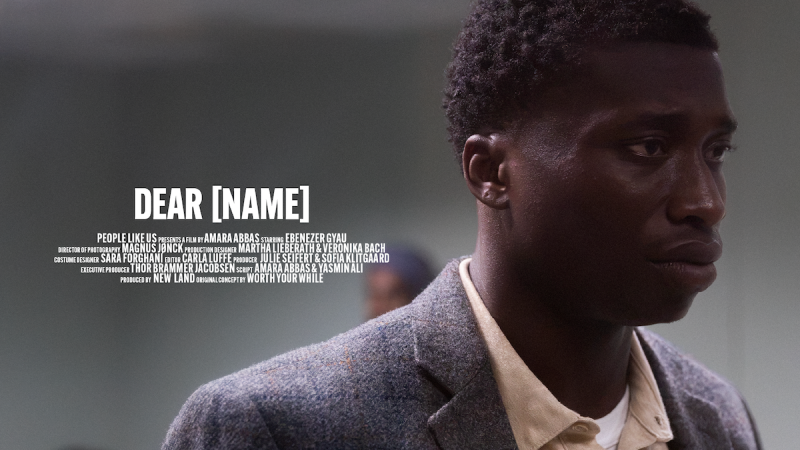
Workplace equality non-profit People Like Us is challenging the hidden role of AI and automated hiring software with Reject the Rejections, a new campaign exposing how recruitment technology can screen out ethnic minority candidates before a human sees their application.
Created with independent creative agency Worth Your While, the campaign follows research among 2,000 UK job seekers. Some 70% of ethnically diverse candidates said they had altered or hidden something on their CV, including their name, faith or country of origin, compared with 57% of white candidates.
Three quarters did not know they may have the right to request human review of an automated decision.
The creative centrepiece is Dear[Name], a four-minute film starring Ebenezer Gyau and directed by Amara Abbas through new—land. It turns lines from real rejection emails sent to ethnic minority candidates into a spoken-word performance, moving from the polite language of corporate rejection to the doubt and frustration it leaves behind.
The campaign also gives rejected applicants something practical to do. A free online tool, developed with Planes Studio, helps candidates ask employers whether <a href="https://myappsplus.com/barndoor-acquires-diaphora-to-bring-governed-ai-automation-to-enterprise-workflows/” title=”Barndoor Acquires Diaphora to Bring Governed AI Automation to Enterprise Workflows”>automation was used and request a human review where applicable.
Sheeraz Gulsher, co-founder of People Like Us, said: “Good faith isn’t governance – when 82% of the employers who checked found outcomes vary by ethnicity, ‘we didn’t know’ stops being a defence.”
It builds on People Like Us’s earlier auto-correct billboard campaign, which used mangled names to expose workplace exclusion. It also echoes the behaviour explored in the Dove workplace hair campaign, where candidates changed parts of their identity to improve their prospects.
Tim Pashen, creative director and partner at Worth Your While, said: “When a machine can reject you before a human has even had a chance to see you, efficiency starts to look a lot like exclusion.”
JCDecaux Community Channel will support the campaign across 19 large-format London screens from 16 September, followed by a national rollout in November. A 30-second version of the film will also run in cinemas with Pearl & Dean from 2 October.

Meta smart glasses mocked by fake notices on London Underground

Pokémon turns its Poké Ball into a bookable sleep pod
Puma puts Buddhist monks in trail shoes for campaign
Guinness finds a new idea hiding inside the word ‘lovely’
Advertising, Design, Food & Drink

The Whale museum that looks like a giant whale diving into the sea

Savage X Fenty casts giant lingerie shadows over New York

Michael J. Fox and Harrison Ford tackle the awkward side of Parkinson’s
IKEA turns its tongue-twisting product names into a test
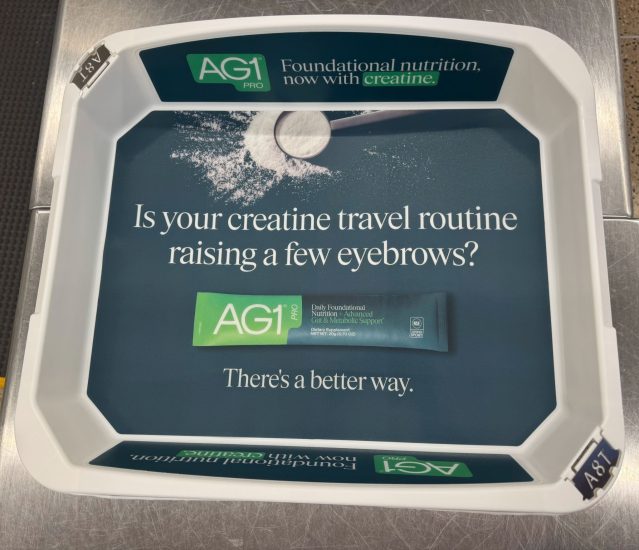
AG1 puts creatine’s airport problem straight into the tray
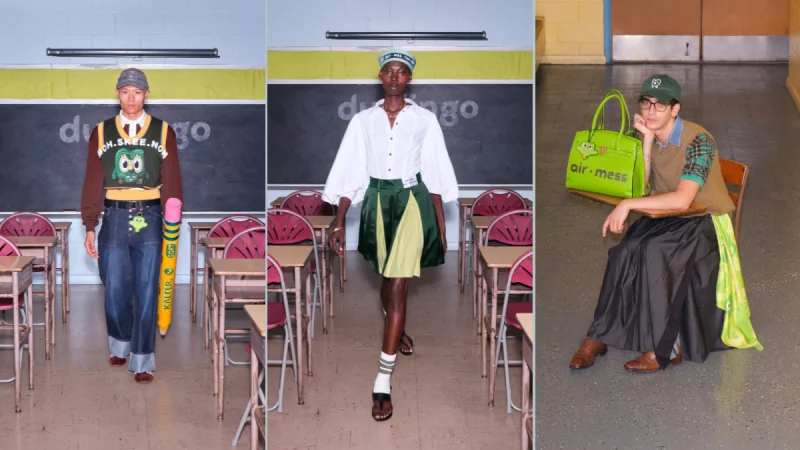
Duolingo turns mispronounced fashion names into a NYFW collection
