

Amazon locked the dates: Prime Big Deal Days runs October 6 and 7, 2026.
Forty-eight hours, more than 35 categories, and one category that consistently gets cut harder than the rest. Health gear carries a healthy margin, so brands can afford to slash the price, and they use these two days to clear inventory before the holiday rush. There’s a second clock running too, because most of the devices below are HSA and FSA eligible, and unspent FSA dollars vanish on December 31.
These are the ten we’d recommend keeping your eyes open for.
1. BestQool Pro100 Red Light Therapy Panel
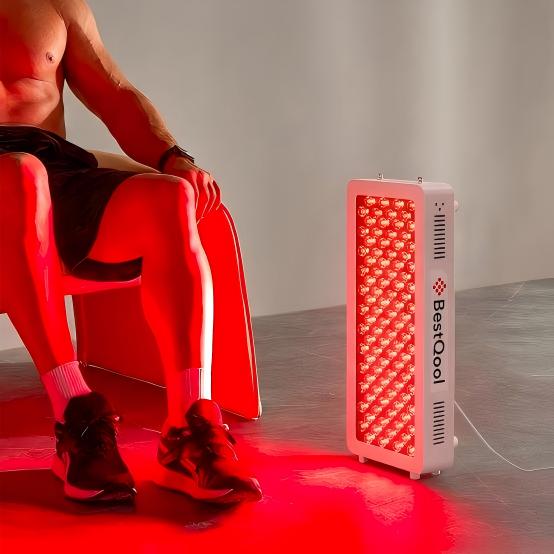
Red light panels used to mean spending four figures. The Pro100 sells for $271 direct, down from a $319 list, and carries 100 dual-chip LEDs firing four wavelengths at 630, 660, 850 and 940nm, where nearly every rival in this price range gives you two. It draws 160W, measures 109mW/cm² at three inches, reads zero EMF at six, and weighs 6.6 pounds, so it moves between rooms without turning into a project.
Why these wavelengths in particular? Red at 630 and 660nm stops at the skin, where it drives collagen and cell repair, while 850 and 940nm travel down into muscle and joint. Both feed your mitochondria so cells make more ATP, which is the fuel your body burns to repair itself. A review of 15 randomized trials found light therapy cut creatine kinase, a muscle damage marker, by roughly 20% after hard exercise.
The splice system is the reason to buy during a sale. Panels lock to another Pro100 or a Pro200, which means two units build a full-body setup for roughly $540 and still land under the price of a single Joovv Solo. Grab one cheap now and the next one drops right in.
2. Relax Sauna Silver Elite
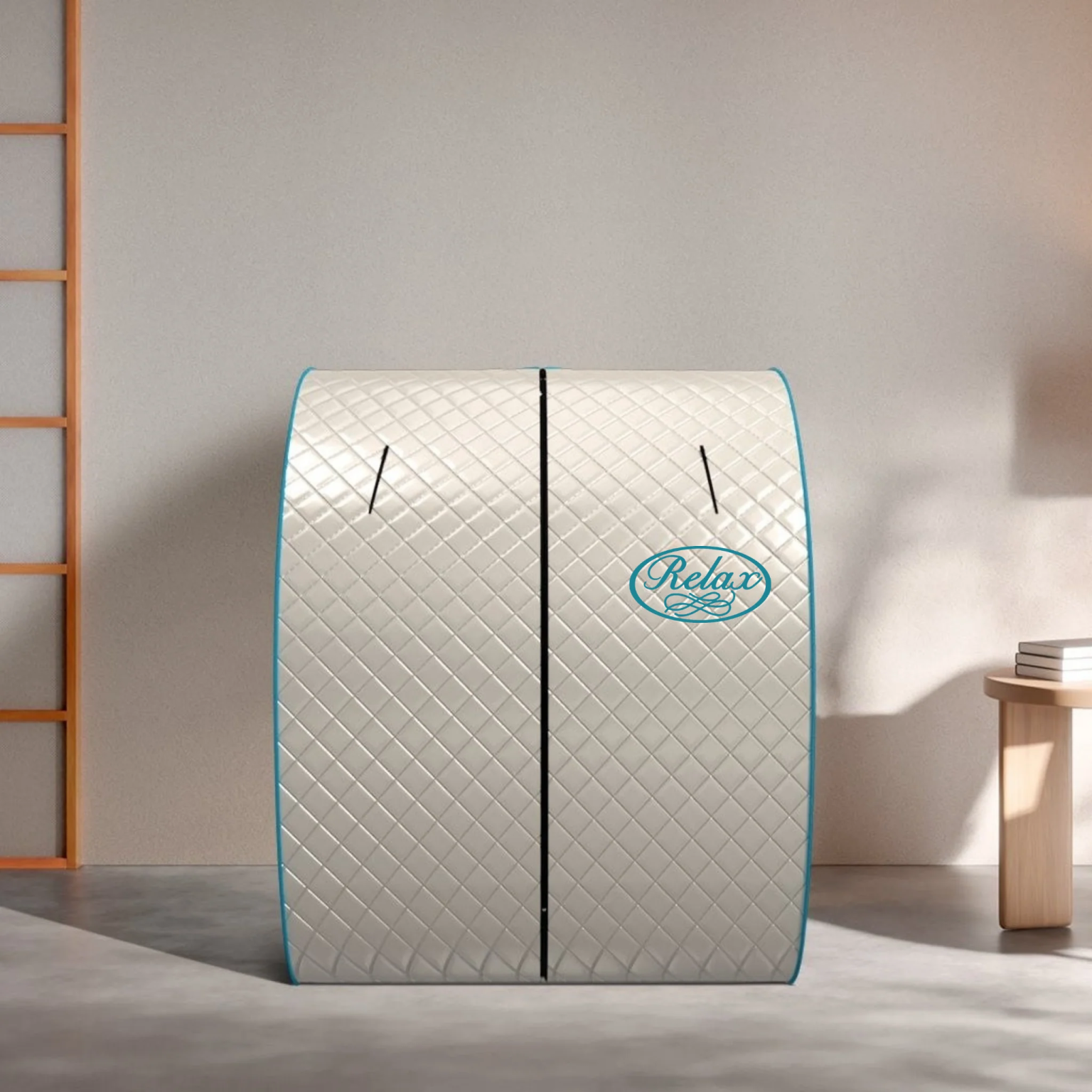
The Silver Elite is a portable far-infrared sauna that folds into a carry bag, runs 1400W, and puts out infrared in the 7 to 14 micron range from the same patented dual-conductor system Relax uses in its flagship Black Pro.
Far infrared is the most studied corner of the sauna world. Japanese researchers built a hospital protocol around it called Waon therapy, and a 2018 meta-analysis of seven studies and 491 patients found heart failure patients improved on it, while other trials found repeated sessions lowered blood pressure. What you feel in your day to day is vasodilation, better circulation and a serious sweat, at a temperature far easier to sit in than a 90°C box.
The two models share identical heating elements, so the Silver delivers the same output through a lighter reflective tent for less money. Once you’ve got it all set up, it’s around 32 by 33 by 46 inches with a folding chair included, and the whole rig weighs just 33 pounds. It’s also HSA and FSA eligible, so you might even be able to claim it on your taxes!
3. Theragun Prime (6th Gen)

This is probably the safest bet on this list. Therabody typically cuts its percussive line at every major sale event, and the Prime has already shown up for $259.99 through Best Buy outside a sale window, right around a 21% drop.
The sixth generation adds a rubber exterior and reinforced corners rated for 10-foot drops, so it’ll survive your gym bag being tossed about (just don’t go crazy). You get five speeds, up to 35 pounds of applied force, a two-hour battery, LED pressure readouts, and Bluetooth control through the Therabody app.
Treat percussion as maintenance rather than medicine. It shortens how long you stay sore after a hard session and improves how far a joint moves before it complains, because rapid pressure pulses push blood into tight tissue and interrupt the pain signals coming off it. Desk workers with a locked-up upper back notice it fastest.
4. Oura Ring 4
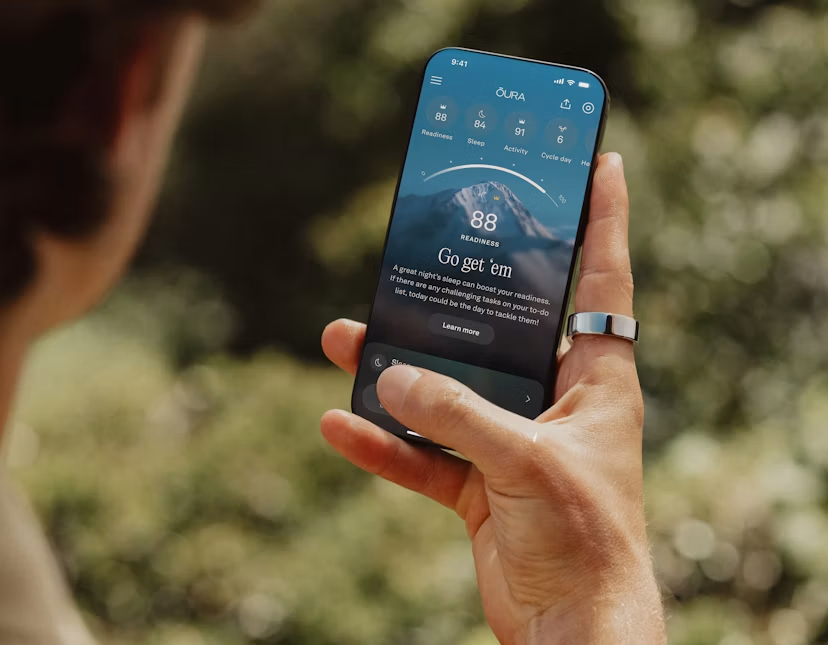
Oura barely discounts current hardware, which is why any cut here would be news. The Ring 4 starts at $349 in silver or black, unless you want gold or ceramic, in which case you’ll be forking over $499. Every finish uses identical hardware, so that $150 is only worth it if you really want specific plating. You’ll need to grab a membership too, which adds $5.99 a month or $69.99 a year.
Why wear one? Sleep. A 2022 study in Sensors tested the Oura against polysomnography, the gold-standard lab test, and found 89% agreement on sleep versus wake. HRV is the other draw, since it shifts with stress, illness and alcohol in ways resting heart rate never shows.
The smarter move may be the older ring, though. During October Prime Day 2025 the discount hit Gen 3 rather than the current model, and Gen 3 stock has dipped to $199 at times. Keep an eye on both, and if you’re hard up for cash, the Gen 3 is the way to go.
5. Hyperice Normatec 3 Legs

Nothing else on this list will save you this much in raw dollars if it hits Prime Day. A 25% cut on the Normatec 3 would bring it down to $675. That’s still pricey, but it’s a fair sight nicer than the near $900 typical asking price.
The Normatec 3 works by mimicking your legs. How? Your legs use one-way valves and muscle pumps to push blood and lymph back toward the heart, and after a long day that system falls behind. This gadget works by pulsing in sequence up your leg so fluid moves the direction it already wants to go. Swelling from standing all day and long flights responds to the same treatment, which is why these turn up in nursing break rooms.
The system runs seven compression levels across five overlapping zones, with ZoneBoost letting you hold extra pressure where you need it. The control unit weighs 3.2 pounds, holds a three-hour charge, and is TSA-approved for carry-on, so the boots travel. It’s HSA and FSA eligible with a one-year warranty. Hyperice showed up last October with an 18% cut on the Hyperice X, so the brand plays along with these events.
6. Omron Platinum (BP5465)
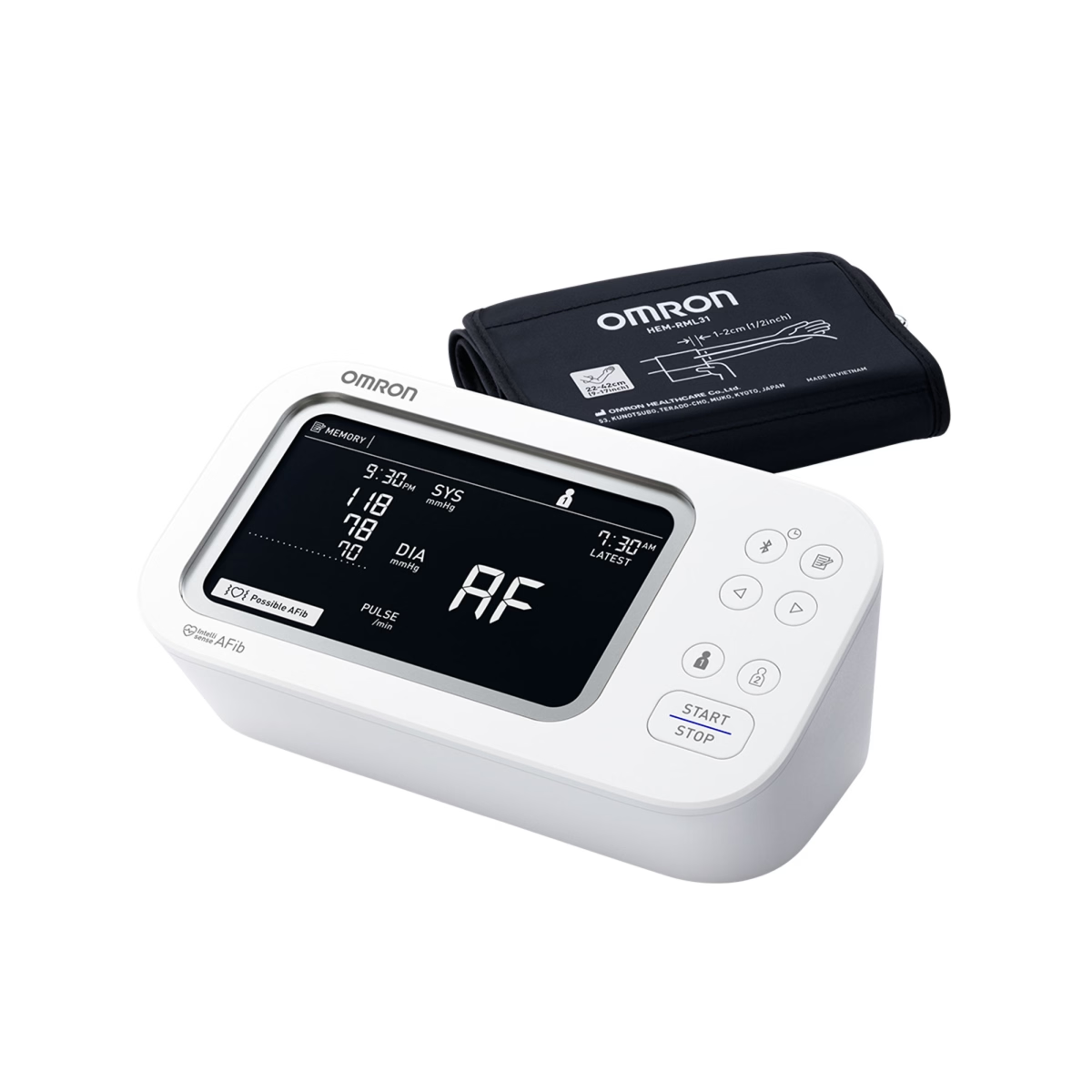
Omron bills itself as the number one doctor and pharmacist recommended brand for a reason, and the Platinum is the model that shows up in the medicine cabinet of anyone whose doctor told them to start keeping a log. It sits at about $97, but Amazon knocked it to $76.49 last December, a hair over 20% off, so a similar cut in October for Prime Day is a reasonable bet.
High blood pressure has no symptoms until something breaks, and roughly half of American adults have it. Your clinic visit might be catching just one stressed number and that means you’re still guessing if you’re on the losing end of that coin toss. But a cuff on your kitchen table builds a record of data that both you and your doctor can rely on. The AFib detection is also a fantastic little extra feature, since atrial fibrillation raises stroke risk sharply and often just shows up without much fanfare.
You get an upper-arm cuff sized for arms from 9 to 17 inches, dual-user memory holding 100 readings each, and AFib detection that flags irregular rhythms while you’re taking a normal reading. There’s a High Morning Average feature that watches for the early-day spikes tied to stroke risk, and everything syncs over Bluetooth to the Omron Connect app so you can hand your doctor a chart instead of a shrug. Fall is also when these sell hardest, because October is when adult kids start shopping for their parents.
7. Withings Body Scan

Withings has a habit of using Prime events to clear out the previous-generation scale, so the real question is which model gets pushed rather than whether something gets marked down. Watch both the Body Scan and the cheaper Body Comp, since the discount tends to land on whichever one the company wants off the shelves.
The Body Scan is probably the most over-engineered bathroom scale ever built, but that’s kind of the whole point. It reads segmental body composition, meaning it breaks fat and muscle out by individual limb and torso instead of spitting out one number. It runs a six-lead ECG through a retractable handle, estimates vascular age and visceral fat, and includes a nerve-health assessment aimed at catching early diabetic neuropathy in your feet. Stack it with a smart ring and a glucose sensor and you’ve built a home diagnostics panel for less than a grand, all syncing over Wi-Fi with no hub to plug in.
Weight alone is a bad number, because two people at 180 pounds can carry wildly different amounts of muscle. Limb-by-limb readings matter if you’re rehabbing one leg or on a GLP-1 and trying to hold onto lean mass. The neuropathy screen catches nerve damage that usually goes unnoticed until wounds stop healing.
8. Renpho Active Massage Gun

Renpho posts its own Prime Big Deal Days campaign on its blog every single year, which makes this about as close to a guaranteed discount as we’re willing to say. It’s also something you can stow away just about anywhere in your house, instead of needing a home gym or a spare bedroom.
The Theragun is higher on our list, but the Renpho can do what it does (more or less) for about a third of the money. You do lose stall force, so it bogs down when you lean hard into a knot, and the warranty is shorter, but if you’re not flush with cash, something is better than nothing. If you’re still figuring out whether percussion does anything for your back at all, spend $70 to find out. It hurts a lot less than $329, and if it works, you’ll know what to buy next year if you want to upgrade.
The physiology is identical whatever you pay, since percussion drives blood into tight tissue and quiets the pain signals coming out of it. Price buys you how hard you can lean before the motor quits, which matters for thick muscle and deep knots, and matters much less for a stiff calf.
9. Levoit Core 400S

This doesn’t even have to touch your body to make your life better. The Core 400S-P is listed for $219.99, but it dropped to $181.95 earlier this year. If Levoit was willing to dole out a 17% cut, October might push it even lower. It holds Amazon’s Choice status with more than 16,000 reviews averaging 4.7 stars, which is impressive for a $200 appliance.
Indoor air is usually dirtier than outdoor air, and fall makes it worse once windows shut and the furnace fires dust out of your ducts. PM2.5 particles are small enough to reach deep into your lungs, where they’re linked to asthma attacks and worse allergies. HEPA catches down to 0.3 microns, covering pollen, dander and smoke.
The AHAM-verified numbers are 231 CFM for smoke, 240 for dust, and 259 for pollen, which covers 358 square feet at nearly five air changes an hour, or a 1,718 square-foot space once an hour. A laser sensor reads particles down to 0.3 microns and shows live PM2.5 on the display, and auto mode responds to cooking and pet activity without you touching it. It’s just under 15 pounds too, so it’ll stay where you put it (unless you’ve got a very active dog or very curious large cat). Budget $50 to $100 a year for the filters, and buy it once Prime Day hits, especially because ragweed peaks in October.
10. Dexcom Stelo Glucose Biosensor

Stelo was the first FDA-cleared over-the-counter glucose sensor sold in the U.S., and it’s young enough that nobody knows how it behaves in a sale yet, so you can consider this one a bit of a wildcard.
About one in three American adults has prediabetes and most have never been told, because blood sugar climbs for years without symptoms and an annual blood draw catches one moment instead of a pattern. A sensor shows you what your own body does with rice, beer and a late dinner, and that feedback tends to change what people eat more than a lecture would.
A two-sensor pack will cost you $99 and covers about 30 days, or $89 a month on subscription, with each sensor lasting for 15 days. It’s built for people with type 2 diabetes who aren’t on insulin and for people with prediabetes, but that doesn’t mean you can’t pick one up if you’re curious. Maybe you want to know what a bagel does to you at 8 a.m. Now you can find out. It’s HSA and FSA eligible too, so you might be able to claim it on your taxes. The subscription structure makes it an awkward thing to discount though, so if it hits a sale this October, treat it more like a “welcome aboard” special price than something you’ll have secured for a long time.
