

Affiliate links on Android Authority may earn us a commission. Learn more.
Data privacy isn’t just for nerds — here’s why you should care too
The more I see how my personal data is used across services, the more I want to guard my privacy.
By
•
•
•
Megan Ellis / Android Authority
Add Android Authority on Google:
Preferred SourceGoogle Discover
A lot of times when I’ve mentioned moving to more privacy-focused apps and services, the reaction is more than a shrug — it’s a declaration that online privacy isn’t all that important. Most recently, at a tech event, I mentioned moving to Brave to avoid Google’s data collection and targeted advertising, and another attendee said that it’s just not important to them.
That’s when I realized that there’s this general misunderstanding that prioritizing data privacy is the pastime of nerds and those prone to donning tin foil hats. I know I was someone who used to take a more laissez-faire approach to my online privacy. Years later, after grappling with the consequences of this, I feel that data privacy and data collection should be something everyone cares about.
Do you care about your data privacy?
Data collection puts your personal info at risk
Brady Snyder / Android Authority
One of the biggest risks of extensive data collection is the fact that this information can end up on the dark web where criminals can use it. This often happens when companies like data brokers, retailers, or financial providers experience breaches that expose sensitive data.
It means that even if you’re careful about the websites you visit, the software you download, and where you share your financial information, personal data like your ID number/social security number, physical address, phone number, and more can still end up in the hands of criminals. Speaking from personal experience, breaches and leaks from retailers have exposed my information on more than one occasion. I didn’t want to share information like my ID number with the retailers in question, but it was required in order to use their services.
A recent breach of an app I hadn’t used in years also meant that I had to change the credentials for over 100 accounts. I had reused the same password for years before password managers were widely available. My past mistake had come back to bite me years later.
When companies collect and store more data than what’s necessary, leaks and breaches become privacy nightmares.
The barrage of spam emails and calls I get every day is also a result of my contact details being leaked on the web. And just today I received an OTP from someone using my email address to try recover details for a bank account.
Many of us have a lot more data that we realize floating out there. Data brokers who collate this information from different services and sell it to customers make the situation worse. It just takes a few services that gather too much information and don’t adequately secure it to turn a few data points into a privacy nightmare.
Legislation like the EU’s GDPR and California’s CCPA give people more control over how their data is shared, but even for those who live in regions with privacy laws, the horse left the stable long ago. The best we can do now is ensure that we share our data with fewer companies to protect our personal information.
Targeted ads can prey on your vulnerabilities
Zac Kew-Denniss / Android Authority
Most people don’t want their contact details or ID documents leaked. But I’ve found that there’s more apathy when it comes to targeted advertising. Depending on the platform you’re using, targeted ads can use your browsing history, demographic information, and other details to show you ads that might be relevant to you.
This is great when you see a deal on a pair of shoes you’ve been eyeing, but it can also be insidious when ads aim for your vulnerabilities. After all, targeted ads aren’t there to serve you; they’re there to serve the advertiser.
I switched to Brave a long time ago and switched off targeted ads on my Google Account. But when I use Meta platforms, the way my data is used for ads becomes evident. I’ve had my personal data used to try trick me into paying for services for ADHD and autism guidance after my diagnoses. These services promise to help you or provide a free analysis. Instead, they get you to fill out a form and then greet you with a paywall.
My interaction on Meta apps became fodder for ads that targeted my insecurities and health issues, promoting solutions that tried to push me to pay for miracle cures.
For a long time, when I searched for plus-size clothing, I received weight loss ads. I just want clothes that fit me, not ads that trigger more anxiety. When I looked up information about chronic pain and migraines, ads promoted services that promised to cure my pain with mindfulness.
With the rise of sports betting and gambling platforms, deceptive advertising using personal data is more concerning than ever. Your personal data can be used to infer whether you might be receptive to an ad. And your receptiveness can also be based on vulnerabilities rather than just whether an ad is relevant.
Your data makes scams that much more effective
Mitja Rutnik / Android Authority
Spear phishing is a more sophisticated form of phishing that uses personal details to make the scam that much more effective. For example, a scammer who knows your workplace can pretend to be someone from your company and request sensitive information or a financial transfer. If they know your family members, they can pose as a loved one and ask for a money transfer.
Even if you’re relatively savvy, personal information can be used to trick your family members. The more information they have, the more effective the scam can be. Some scammers set up entire alternate profiles using your details to try to scam the people you know.
For example, if you post many pictures of yourself online and they’re publicly accessible, these images can be used to create a duplicate profile. With the rise of generative AI, fraudulent phone calls are also becoming easier to execute.
Even your interaction data is used against you
Joe Maring / Android Authority
Social media can be a great way to discover new hobbies, find communities, and follow the news. However, the era of algorithmic feeds carries many drawbacks. Increasingly, I’ve seen friends quit social media because they’re tired of how awful it makes them feel. For those who still use these platforms, they often complain about getting trapped in content loops and spending much more time scrolling on a platform than they intended.
Platforms not only use your personal data to feed you content, but also your engagement data. This can give you more content you’re interested in, but its ultimate aim is to keep you on the platform for longer. At its best, you might spend a bit too long looking at cute animals on TikTok. But at its worst, you get fed rage bait that prompts engagement but ultimately leaves you feeling worse overall.
Your engagement data on social media is used to keep you on the platform longer, even if this means serving you rage bait.
On Facebook, my engagement with chronic migraine groups means that my feed is now filled with content about the condition. None of it is useful to me. Most of it focuses on emphasizing how difficult it is to live with frequent migraines. While it’s well-intended, it just reminds me that I live with a disability that’s difficult to treat (and treatment-resistant in my case) and that has very little understanding around it.
But every now and then, I see a misleading title that gets me to click because I think it might have some useful medical advice. Instead, it’s a debunked cure or completely irrelevant to the title. But because I’ve engaged with it, the content cycle continues.
It’s not all doom and gloom — here’s what you can do about it
Megan Ellis / Android Authority
Rather than just focusing on all the negative consequences of data collection, I can offer some advice on how you can increase your online privacy. The biggest step is moving towards more privacy-focused services. For example, you can switch to a privacy-centric browser and search engine. If you want to stick with Google Search and Chrome, you can adjust your search history and ad targeting settings.
When signing up for new services, limit the amount of information you provide. If possible, use an email alias to protect your email address. When it comes to services you no longer use, consider deleting your account completely.
With social media platforms, there’s not nearly enough control for users over how much data is collected and how it’s used. But you can take a step in the right direction. On Meta platforms, you can change your ad preferences to remove certain topics.
Meta buries these settings somewhat, but you can access them in the Instagram accounts center and Facebook accounts center. Here you can use your ad topics to switch off special topics, which will limit ads in certain categories. For example, I’ve limited ads for weight loss, gambling, politics, and alcohol.
There are a few things you can try to reduce the amount of data that’s collected about you and prevent your personal data from being used for targeted ads.
For other platforms, you can also switch over to a chronological feed or following feed to curate what you see a bit more. But also setting time limits in the apps or just actively choosing to use them less can help.
In certain markets, you can sign up for services that help to remove your information from the web. However, you can also manually request deletion from data broker sites if you find a profile that shares your details.
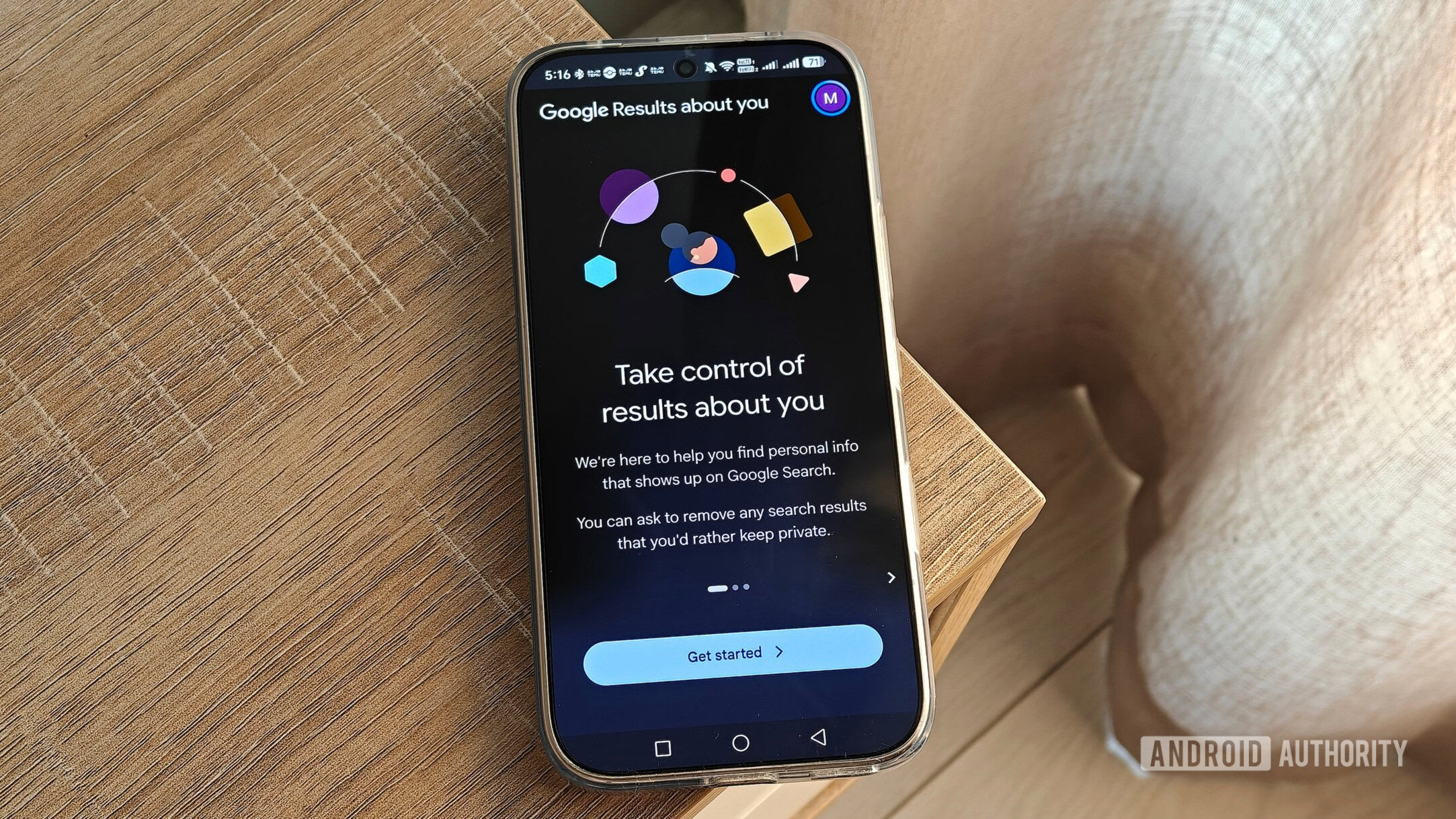
Finally, I’d recommend keeping track of what data about you has been leaked on the web. You can use dark web monitoring in password managers like Google Password Manager or alternative password managers. You can also use sites like HaveIBeenPwned.com to check if your email or password has been included in any breaches. The Google Results About You tool also allows you to monitor search results for your private information and allows you to request its removal.
Managing your online privacy can feel like playing whack-a-mole. Even when you keep your details private, companies that collect too much data or don’t follow local laws can still be the weak link. However, remaining proactive can at least mitigate the risk. I know I feel a lot more secure now that I’ve switched to privacy-focused apps and using email aliases for newsletters and app trials.
Thank you for being part of our community. Read our Comment Policy before posting.
