

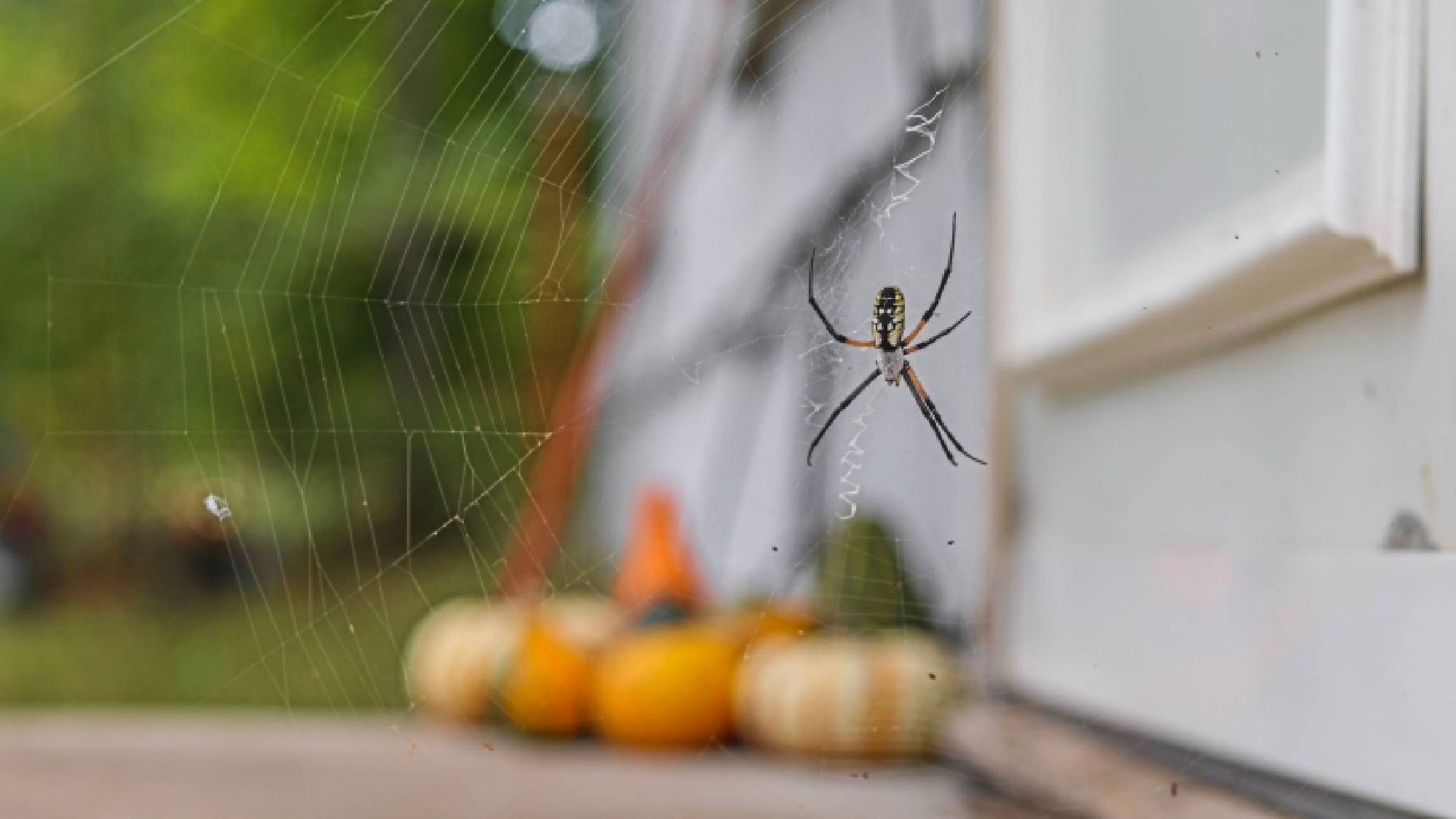
If you’ve stepped onto your front porch recently and felt like you walked straight into a horror movie prop, you aren’t alone. Across the country, homeowners are reporting an influx of unusually massive spiders setting up camp right outside their front doors.
Naturally, the instinct is to grab a broom, sweep down the intricate webs, and call it a day. But if you’ve tried this, you already know the frustrating reality: within 12 to 24 hours, that exact same giant web is right back in the exact same corner.
Sweeping away spider webs never fixes the problem long-term because it misses the root cause. Here’s why spiders are taking over porches right now, and the simple tweaks that will actually keep them away.
Why spiders look so massive right now
First, a quick reality check: you aren’t imagining it. Spiders really are at their largest during late summer and early fall.
Throughout the spring and summer, young spiders stay hidden while feeding and growing. By early autumn, species like orb weavers reach full adult maturity. The males begin actively roaming out in the open to search for mates, while females build large, heavy-duty webs to catch enough food before laying eggs.
While they might look terrifying, these mature spiders are harmless to humans and act as nature’s pest controllers. However, that doesn’t mean you want a massive web waiting for you at eye-level every time you open your front door.
Why sweeping webs down fails every time
Knocking down a web forces a spider to rebuild, but it doesn’t give them a reason to leave. Spiders don’t select your porch because they like the architecture, they select it because your porch is an all-you-can-eat insect buffet.
Here is what is actually drawing them in:
- Standard porch lights: Blue-spectrum and UV light from standard white bulbs act as a massive beacon for flying insects overnight —moths, mosquitoes, flies, and gnats. Spiders simply weave their nets at the exit of the restaurant.
- Overgrown spider highways: shrubbery or tree branches that brush against your porch railings or eaves create an effortless bridge for insects and spiders to cross directly onto your home.
- Porch clutter: Unused planters, stacked firewood, and neglected outdoor shoes offer dark, sheltered nooks where spiders can safely hide from predators during daylight hours.
How to keep spiders away from your porch and patio
To stop spiders from returning, you don’t need harsh chemicals or exterminators. You just need to cut off their food supply and disrupt their sensory comfort.
1. The bug light switch
(Image: © Wyze)
Swap out your standard white porch bulb for a warm yellow LED “bug light” bulb. Yellow-spectrum light is nearly invisible to flying insects, meaning far fewer moths and mosquitoes will congregate around your doorway at night.
Without a steady fooductive spot
2. The non-lethal barrier spray
(Image: © Getty Images)
Spiders don’t taste or smell with a nose, they navigate the world using microscopic chemical receptors lining their legs. Because they essentially walk on their ‘tongues’ and ‘noses’, intense, volatile aromas completely overwhelm their senses.
While the internet frequently recommends vinegar or lemon oil, science has actually proven these to be total myths. Instead, reach for pure peppermint oil, chestnuts, or clove oil.
Mix 16 ounces of warm water with 10 to 15 drops of peppermint oil and a dash of dish soap in a spray bottle. Frequently misting this solution around entryways, window sills, and dark corners creates a temporary sensory barrier that sends these eight-legged intruders running without causing them any harm.
3. Sever the spider bridges
(Image: © Shutterstock)
Grab your hand pruners and trim back any branches, ivy, or bushes that touch your porch or house. Plants act as direct highway systems for pests.
Prevent them from moving indoors as it gets colder
As fall temperatures drop, spiders will naturally look for warm gaps to overwinter. While you’re resetting your porch, take five minutes to seal potential entry points:
- Inspect weather stripping on front and back doors, replacing any cracked seals.
- Check window screens for small tears and patch them up.
- Use caulk to seal small foundation cracks near outdoor entryways.
- 5 spider-repelling hacks that actually work — and you probably have everything you need at home
- How to tell if a hole in your yard belongs to a snake — and what to do next
- I tested 3 different DIY fruit fly traps — this 3-ingredient build worked best
