

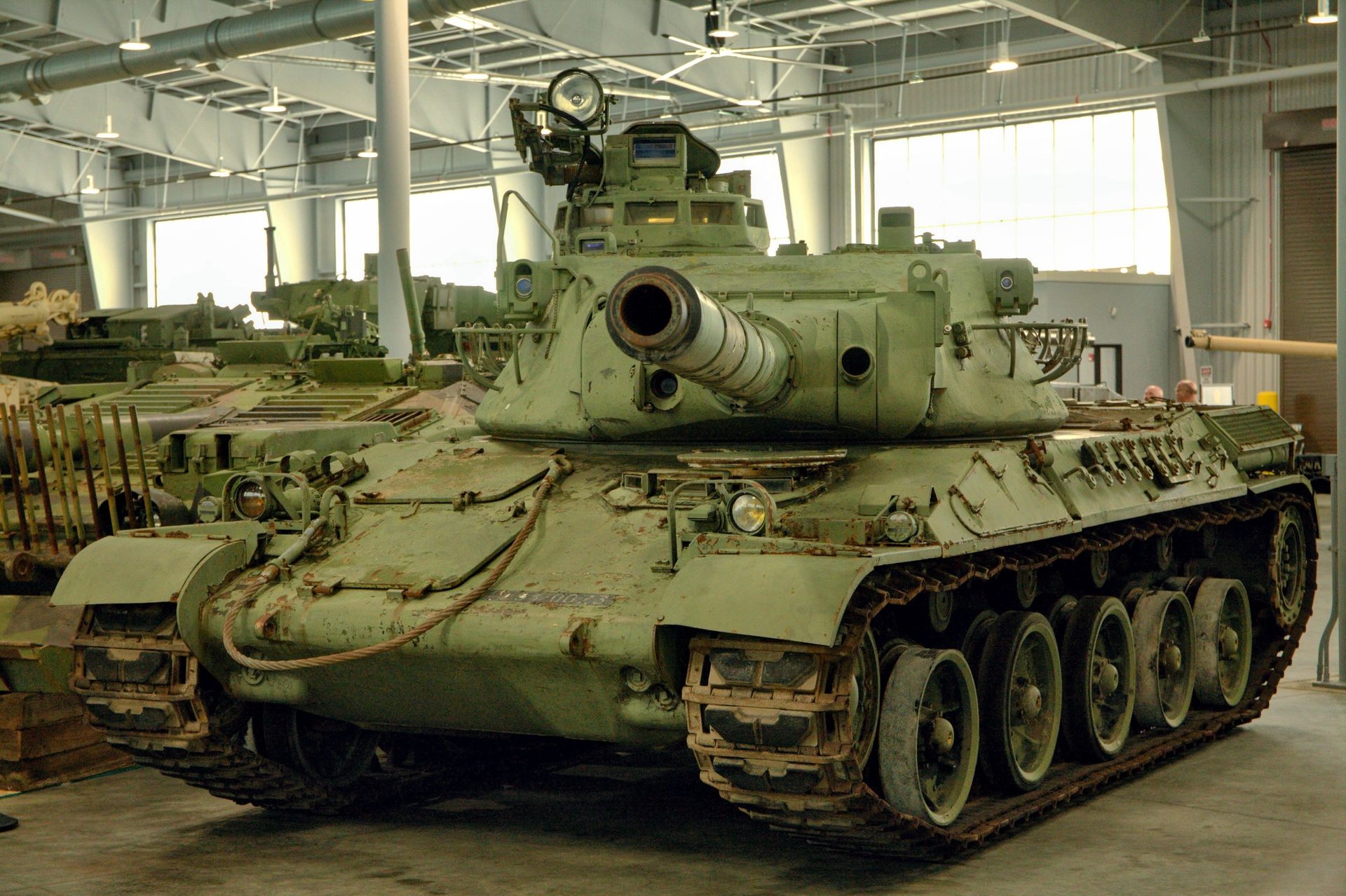
- KNDS and S2M’s REFURBOT show up at France’s National Infantry Days as an “XXL robotic mule” for the Foreign Legion’s 2nd REI, according to FOB
- REFURBOT uses the TOXO kit to turn retired armored vehicles into Unmanned Ground Vehicles, and was first shown in June 2026 as a 25mm-armed combat robot
- No payload, price, autonomy level, or contract has been published, and the vehicle remains a prototype for now
France’s Foreign Legion may soon be moving supplies with a tank that no longer needs a crew.
At the recent Journées nationales de l’infanterie (JNI), the French Army infantry school’s showcase held at Draguignan, defense outlet Forces Operations Blog (FOB)posted a video of what it called an “XXL robotic mule for the legionnaires of the 2nd REI.”
The 2nd REI is the 2nd Foreign Infantry Regiment, a French Foreign Legion unit based in Nîmes.
From gun platform to pack animal in the making
The machine comes from REFURBOT, a project by French SME S2M Equipment and KNDS France. FOB described it less as a single robot and more as “a robotization kit to ‘recycle’ decommissioned vehicle fleets and rapidly scale up if needed,” adding that it remains in the prototype stage, with other wheeled and tracked platforms under study.
When REFURBOT debuted at Eurosatory in June 2026, it was pitched as a fighter, not a porter. The demonstrator replaced a tank’s 105mm turret with KNDS’s ARX25 remote weapon station, which carries a dual-feed 25M811 25mm cannon with 280 ready rounds and a coaxial 7.62mm machine gun.
MILMAG reported the company’s claim that it can engage light armor, drones, hovering helicopters, and infantry beyond 2,500 meters.
TOXO is the driving package, a bolt-on robotization package whose coverage credits variously to S2M, KNDS, or both. It pairs radar, lidar, GNSS, and a ring of cameras with drive-by-wire control, and its listed modes include leader-follower driving, route following, return-to-route, and waypoint patrol. That toolset suits a supply carrier at least as well as a gun truck, and the company’s marketing slogan, “Turn any tank into your next UGV,” makes the ambition plain.
The raw material exists. France built 3,571 AMX-30 family vehicles between 1966 and 1994, per Defence Blog, and Zone Militaire reports that the army’s 12th Matériel Support Base has been dismantling about 50 AMX-30s a year since 2015. Zone Militaire also notes that it could apply the same approach to the Leopard 1A5.
The recycling story has a wrinkle; most coverage describes the demonstrator as a converted AMX-30. KNDS’s own press release from the JNI, however, says REFURBOT modernizes and robotizes “an AMX-32 tank,” and Army Recognition reported in June that the vehicle on display used a rebuilt AMX-32 prototype hull.
That distinction matters because the AMX-32 never had a fleet to decommission. It was an export derivative of the AMX-30 that failed to attract a buyer, and only two prototypes were ever built.
The demonstrator for a pitch surrounding recycling existing tank fleets therefore appears to sit on one of the rarest French tanks in existence. To be fair, it is a close sibling to the AMX-30, but the conversion has yet to be publicly shown on a vehicle pulled from an actual stockpile.
A mass, mobility and reliability question rolled into one?
The shift toward hauling is the clearest lesson that most modern militaries’ tank divisions are learning from Ukraine. Ukraine’s Ministry of Defense logged more than 100,000 UGV logistics and evacuation missions in 2026 up to August 20.
The robots doing that work are mostly small: the 3rd Separate Assault Brigade’s UGVs carry 200 to 600kg to frontline positions, and Temerland’s Gnom L2 tops out at 210kg. A turretless tank hull plays in an entirely different weight class, though neither KNDS nor S2M has published a payload figure.
Mass could also solve a problem small robots keep running into. General Vincent Breton, head of France’s joint doctrine center (CICDE), said in 2025 that Ukrainians report their UGVs “overturn fairly regularly” on ground churned up by artillery. A main battle tank’s hull would be much more resilient in such situations.
The appeal is obvious: armor, mobility, and internal volume that already exist, are already paid for, and, in some cases, are battle-tested. The open questions are less glamorous but equally concerning: a converted tank inherits a decades-old powertrain and the parts supply that comes with it, which could limit utility, reliability, and efficiency alike.
A tank-sized mule is also a large, hot, noisy target on a battlefield where FPV drones hunt anything that moves. Losing one costs no lives, which is the entire point, but each loss consumes a hull from a pool France has spent a decade shrinking.
Nothing published about REFURBOT answers most of these questions yet, and there is still no price, payload figure, or contract. This is despite tank recycling becoming a global idea; India’s army, for example, is seeking industry partners under its iDEX ADITI 4.0 challenge to convert T-72s into remotely operated vehicles, with two validated prototype kits required in the first phase and operational unmanned T-72s targeted by 2030.
KNDS plans to prove REFURBOT through French Army tactical evaluations and the CoHoMa human-machine teaming challenge Until those trials produce numbers, the Legion’s XXL mule remains a promising prototype whose recycling story still needs a recycled tank
