

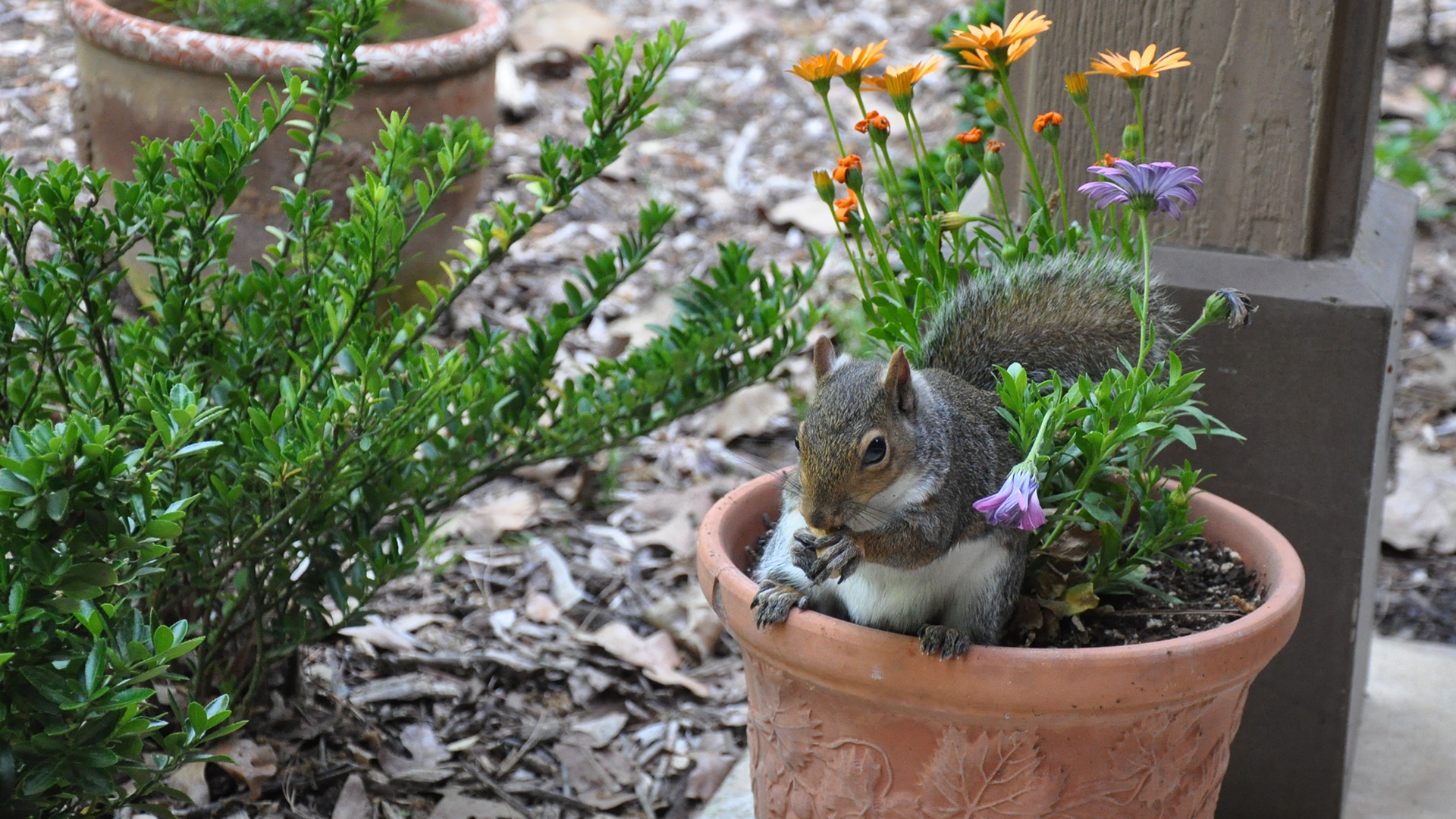
Few backyard sights are more frustrating than stepping outside to find freshly dug holes scattered across your flower beds, planters, or lawn. Squirrels are persistent foragers, and once they spot loose soil or an easy food
Before spending money on chemical sprays, ultrasonic gadgets, or specialty netting, check your garage, shed, or recycling bin. A few everyday items you likely already have on hand can disrupt their digging and keep them away from your yard safely and humanely.
Why squirrels target your yard — and why simple barriers beat sprays
Understanding what draws squirrels in makes it much easier to keep them out. As temperatures drop heading into winter, squirrels spend hours burying food reserves in soft, newly turned soil, which is why garden beds, mulch, and potted containers become prime targets.
At the same time, scent-based repellents often wash away after a single rainstorm, and clever squirrels quickly learn to ignore static decoy owls.
Physical barriers and unpredictable movement typically work far better because they interrupt a squirrel’s foraging routine without harming local wildlife. Combining visual movement overhead with simple protective covers at soil level shields both your trees and your beds at once.
3 household items that keep squirrels away from your yard
1. Old CDs (best for fruit trees, trellises, and raised beds)
If squirrels are raiding fruit trees, climbing trellises, or targeting a garden bed, dig out a few scratched or unwanted CDs. Tie them with twine or fishing line to tree branches, pergola beams, or fence postsso they hang freely.
As the breeze catches the discs, the shifting reflections and sudden flashes of light startle squirrels and discourage them from lingering.
2. Empty plastic bottles (best for vulnerable plants and garden beds)
Before tossing large plastic soda or water bottles into the recycling bin, cut them in halfto make quick, lightweight plant cloches.Press the cut edge firmly into the soilright over freshly planted bulbs, tender perennials, or newly seeded patches in borders and planters.
The clear plastic lets sunlight reach the soil while forming a smooth physical shield that stops squirrels from digging up the spot. Just remove the bottle caps or poke a few ventilation holes near the topso heat and moisture do not build up on sunny afternoons.
3. Scrap chicken wire (best for container pots and planters)
If you have leftover chicken wire rolled up in the shed or garage, it makes one of the most reliable shields for outdoor planters. Put on a pair of sturdy gardening gloves, cut a piece of wire slightly wider than the top of your pot, and lay it flat across the soil surface.
Then bend the excess edges neatly down around the rim of the container, using pliers to tuck away any sharp wire ends so neither you nor visiting wildlife gets scratched. Squirrels cannot dig through the mesh, while stems and shoots can still grow straight up through the openings in spring.
- How to clear slippery moss and green algae from patio pavers — without blasting out the sand
- Heavy rain drives rats indoors — miss these signs and you’ll have an infestation
- How to keep squirrels out of your shed — 5 expert tips for winter
