

Affiliate links on Android Authority may earn us a commission. Learn more.
This Googlebook omission is a deal-breaker for me
I’m not buying a Googlebook until this feature makes a comeback.
By
•
•
•
Richard Priday / Android Authority
Add Android Authority on Google:
Preferred SourceGoogle Discover
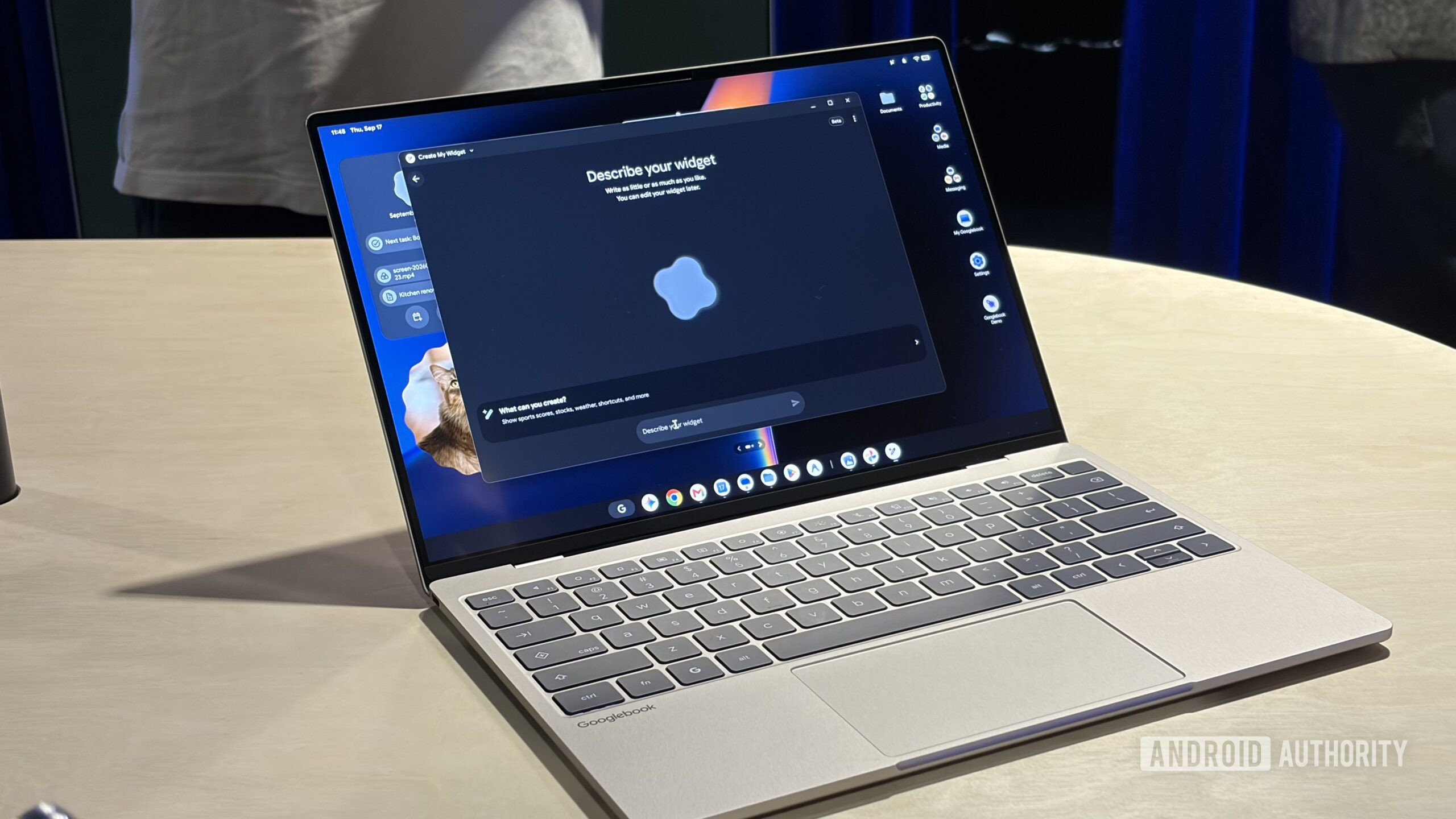
Googlebooks promise a lot of things, including, but not limited to, premium hardware and Android integration. It’s the Apple-like ecosystem Google is finally giving its loyal users. We got a taste of this with Chromebooks, but ChromeOS never reached the pinnacle of laptop-Android convergence that Google initially teased. Googlebooks hope to rectify this.
Googlebooks have had their fair share of ups and downs since their recent launch. While the hardware is definitely up to par, the software seems to be a little half-baked thus far. The worst news came when early Googlebook adopters noticed a key feature missing in first-generation models.
In a move that confused everyone, Google removed Find Hub support from Googlebook laptops. This means no app installation on Googlebooks and no way of locating these laptops on the Find Hub app. Google provided a short explanation why the feature was removed, but didn’t offer a timeline for the app’s return or even a temporary solution.
For something as pricey as a Googlebook, I find this move by Google and the subsequent response an absolute deal-breaker. If I can’t find a lost Googlebook with technology that already exists, then it’s not worth spending $1,000 on.
Have you ever used an app to track down a lost or stolen laptop?
Google’s explanation isn’t good enough
Richard Priday / Android Authority
Google explained that Googlebooks spend most of the time with the lid closed and on sleep mode. Find Hub’s tracking system can’t find a device in this state. The web interface does work on Googlebooks, but only to find other devices on the same Google account. Porting the Find Hub Android APK onto a laptop isn’t a viable workaround. Without the native infrastructure, Googlebooks simply aren’t trackable with existing Find Hub technology.
Find Hub was made with Android devices in mind. During the Googlebook’s development, Google didn’t come up with an extension of Find Hub for laptops or another implementation designed from the ground up. The fact that Find Hub support was removed from Googlebooks after their official launch meant Google didn’t consider it important enough to develop in advance. The feature was either unfinished or never meant to be included. We’re left to wonder because of Google’s lackluster explanation.
It’s jarring to have the feature on Android devices but not on Googlebooks.
Google’s removal of Find Hub support for its first-generation Googlebooks is a contradiction of the company’s advertised Googlebook-Android unification. It’s jarring to have the feature on Android devices but not on Googlebooks, especially for such an important function. There isn’t even a backup plan or roadmap for the lost feature. Making matters worse is how Google’s closest rival has had this feature figured out ages ago.
Apple already figured this out
Ryan Haines / Android Authority
That’s right: Apple’s own laptops can be tracked even with their lids closed. Apple’s Find My network locates compatible MacBooks that emit low-energy Bluetooth signals. Nearby Apple devices, such as iPhones and iPads, pick up these Bluetooth signals and share the approximate location to the user’s Find My app. In other words, a MacBook is traceable while asleep or packed away.
It’s difficult to give Google the benefit of the doubt when Apple already figured out a way to locate a sleeping MacBook. Apple’s implementation has been available for years, in fact. It started when the Find My app was unified with macOS Catalina in 2019. This made both iOS and macOS devices traceable using the same software. There are more Android devices than iOS devices in the world, giving Google the necessary infrastructure to get the ball rolling.
It’s difficult to give Google the benefit of the doubt when Apple already figured out a way to locate a sleeping MacBook.
Because of patents, Google would likely have to create its own version. Regardless, this should have been something that Google figured out during the development of the Googlebook. Google worked with five different laptop manufacturers for the initial batch of Googlebooks. A revamped Find Hub designed for laptops could have been in the cards, but not ready for implementation at launch.
Google has to prioritize this
The initial availability of the Find Hub app on Googlebooks, followed by the rug pull, is what bothers users and potential buyers the most. The feature was already there, then Google took it away without warning. The removal should have been announced in advance, and supplemented with an explanation for what would happen next. Google has been guilty of bait-and-switch tactics before, like when it promised unlimited backups on its Photos app, only to take away the benefit and count every succeeding upload against a user’s cloud storage.
Google has been guilty of bait-and-switch tactics before.
To be fair, Windows laptops can’t be traced while on sleep mode, either. For as long as Windows devices have been around, Microsoft hasn’t come up with its own solution. This doesn’t give Google the excuse to omit this feature from its own products, however. Googlebook OS has a multitude of compatible Android phones to connect to. Conversely, Windows laptops no longer have a network of Windows Phones to communicate with.
Losing Find Hub is a deal-breaker
Brady Snyder / Android Authority
Google’s sudden removal of Find Hub on Googlebooks and initial silence on the issue are unacceptable. If this were a superficial feature that needs refining, I’d accept that, but this concerns device security. With no promises or timeline as of writing, first-generation Googlebook users must feel insecure about bringing their premium laptops to public spaces. If another iteration of Find Hub is being reserved for second-generation Googlebooks with newer hardware, early adopters should riot.
Personally, I can’t afford to lose a feature like Find Hub with how I use my laptop on a daily basis. I commute, leave my laptop on a free table while ordering at a cafe, and see a lot of strangers come and go at the workspace I frequent. I don’t have the confidence to use a Googlebook outside of my home, which defeats the purpose of its mobility. If I’m spending around $1,000 on a first-generation product, I better find it with existing tech if I happen to lose it. Google, please do better.
Features
Find HubGooglebook OSGooglebooks
