

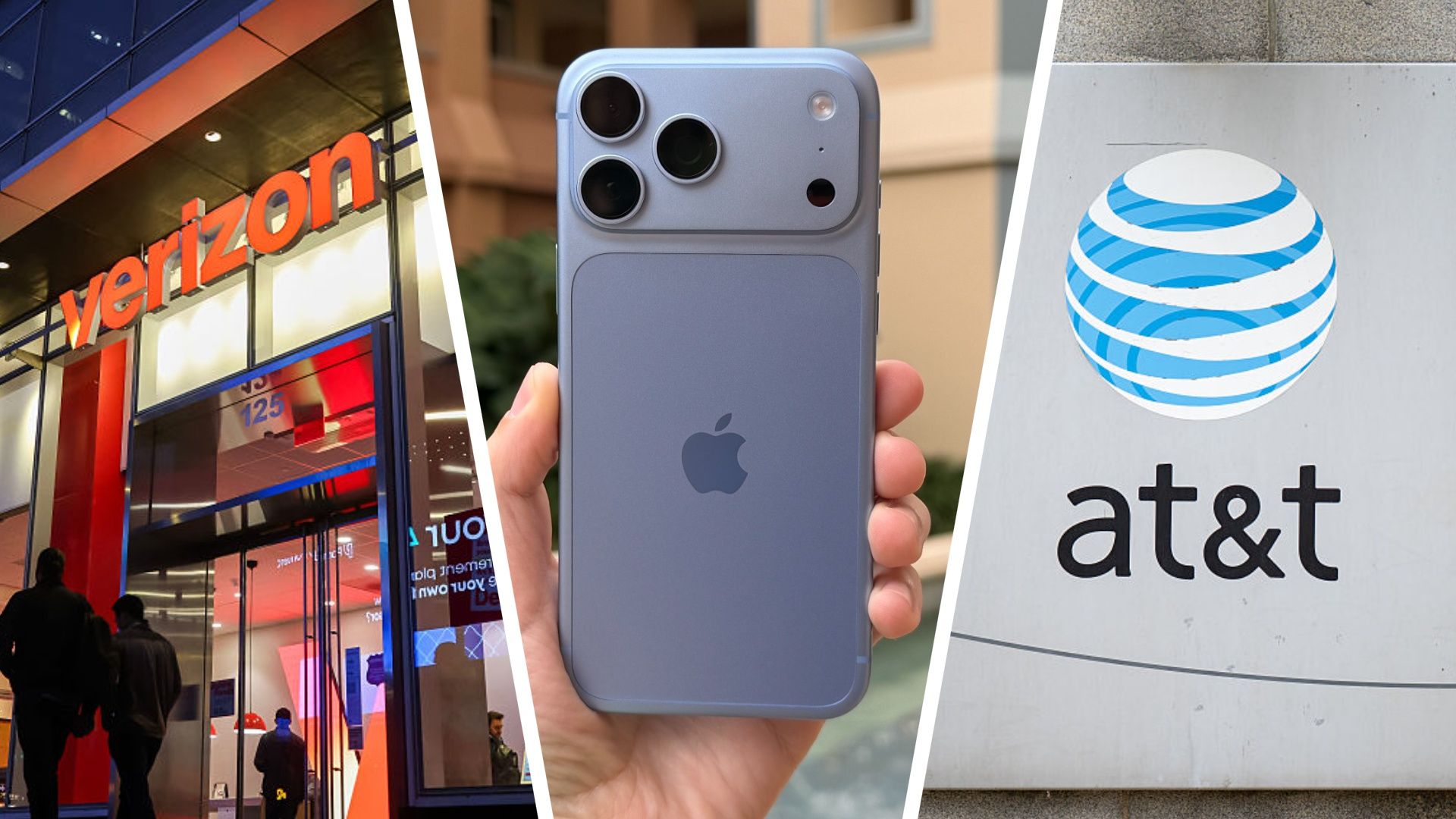
Where were you when the first iPhone went on sale back in 2007? I remember clearly that I was working for Phones4U — a third-party phone reseller in the UK — and the iPhone launch completely decimated the business, as suddenly Phones4U wasn’t a reseller of the most popular phone on the market.
The same existential threat applied to all carriers except AT&T and O2, which had exclusive launch rights to the iPhone in the US and UK, respectively.
Fast-forward 19 years, and Apple has repeatedly proven that the iPhone’s popularity gives it considerable power over its carrier partners — customers are no longer loyal to the carrier providing the mobile service, but to the brand behind their favorite phone.
Apple’s newest commercial venture, the Apple Upgrade program — which was announced earlier this yearand is, at the time of writing, still only available in the US— is the latest dagger to the heart of major MNOs (Mobile Network Operators).
But despite being a fantastic deal for customers and Apple itself (and make no mistake: I believe it’s a net positive move), the Apple Upgrade program could yet prove a double-edged sword for the mobile industry as a whole. Let me explain.
Carriers used to have ALL the power…
To understand what the Apple Upgrade program is, you have to first understand how the industry worked before the original iPhone. To say that Apple has irrevocably changed the carrier business model on numerous occasions may seem like hyperbole, but it’s hard to overstate the company’s lasting effect.
Before the original iPhone, carriers were integral to a phone’s success. Carriers controlled which phones were sold in stores, which phones received the bigger marketing pushes, and which were “certified” to work with that carrier.
This meant that all phone makers had to focus more on acquiescing to carrier requests — including shipping customized devices with several preloaded apps and even carrier-specific branding — than meeting their customers’ needs.
In many ways, carriers were the customer rather than the end-user itself, and they proved even more integral, as each carrier also controlled when software updates were released to its phones. I remember clearly how customers would blame the phone maker for software-related shortcomings rather than the carrier, even if the software update was delayed by the carrier’s own internal testing.
The power of carriers was inevitably going to be replaced by a different model, but the iPhone had a marked effect on the power wielded by carriers in more ways than one.
… until Apple launched the original iPhone
If you’ve seen the BlackBerry movie, you’ll remember the line used to describe the original iPhone before it went on sale: it had the “highest interest of any consumer electronic item in history”. To go further, its original $499 / £269 price also made it the most expensive phone in history at the time.
But contrary to industry standards at the time, the exceptional consumer interest in the original iPhone meant carriers were clamoring to stock it, rather than Apple having to entice them to sell it. This complete reversal of established norms also meant Apple was able to stamp out many of the key controls carriers had, and the effect was stark.
The iPhone had a marked effect on the power wielded by carriers in more ways than one.
Let’s consider each of the previous requests that carriers would make of a phone maker. Branding on the phone itself or in the software? Gone for the iPhone. Preloaded carrier apps and other bloatware? Gone for the iPhone. A software update schedule controlled by carriers? Apple releases updates to all phones at the same time globally. Customized models? Carriers should be grateful they get to stock the iPhone at all.
However, Apple’s unique position went even further. Phone makers used to have to discount phones and offer incentives, but for many years, Apple did not. Granted, we are now in an era in which Apple competes through trade-in promotions and works closely with its carrier partners, but it was the last major phone maker to embrace promotional pricing of any kind.
It’s not just Apple that has benefited from these changes; as Apple established new ground rules, companies like Samsung, Google, and LG have all benefited from a different playbook than in the pre-smartphone era.
Now, with the Apple Upgrade program, Apple again holds outsized control over the customer journey. For many, this is a great program, but for other stakeholders, it’s decidedly not. Here’s why.
The Apple Upgrade program is a great deal for consumers
The Apple Upgrade Program is a leasing program provided by Apple, with financing by Klarna. It lets you lease a new iPhone, Mac, iPad, or Apple Watch and pay for it monthly over a fixed lease period (between 12 months and 36 months). At the end of the lease, you can opt to return the item to Apple at no charge or buy it out for the remaining value; the latter is a particularly attractive offer for customers.
Most lease programs have you spending more money over the course of the lease compared with buying the item outright. This arbitrage is how the financing lender makes their money, but with the Apple Upgrade program, you’ll never pay more in total than the outright purchase value.
This is crucial: Apple is effectively offering 0% financing across its range of products, and while it likely pays Klarna directly for providing these services, it does not pass any additional costs on to the customer. In essence, you can still buy any Apple item you plan to, but you now have a more flexible way to pay for it, with no credit card or specific credit limit needed.
… and also great for Apple
The current state of RAMageddon — aka the soaring cost of all technology due to the shortage of RAM modules — meant it was inevitable that Apple would have to increase its product prices, which it did by a considerable margin in both June and September this year.
Despite Apple customers traditionally being less price-sensitive than Android customers, rising prices during a global cost-of-living crisis would inevitably have impacted its financial statements and, therefore, its share price.
The Apple Upgrade program changes this reality in a big way: in the US at least, it’s now far easier for customers to buy Apple products (and more of them) than they used to be able to, and Apple itself gains far more valuable numbers to present to its shareholders: the number of customers on subscriptions; the dollar value of those sold; and the number of customers.
More than that, the Upgrade Program offers Apple predictable revenue numbers for quarters and years into the future, and allows it to launch more products across the year without worrying as much about established launch cycles and windows.
It also makes all of its new products far more accessible to the masses, which is particularly prescient given the now-confirmed $1,999 / £1,999 / AU$3,499 launch price of the iPhone Duo, which begins shipping next week.
For all its positives, there are two areas where the Apple Upgrade program could have a negative effect — and both stem from its potential impact on carriers.
Like the now-discontinued iPhone Upgrade program before it, an iPhone purchasedny network. It still requires activation with one of the Big Three carriers — Verizon, T-Mobile US, or AT&T — at the point of sale, but once you complete said activation, you can switch to a different carrier of your choosing
This undoubtedly reduces the need to be locked into a long-term, multi-year contract with your carrier and, crucially, removes a key will impact carriers’ revenue, inevitably leading to several knock-on effects for the consumer
The Apple Upgrade program is a deal that’s too good not to take advantage of.
First, customers will inevitably end up paying more for their service plans, whether through higher plan costs, higher add-on costs, or even increased out-of-bundle charges.
Second, the above will lead to an even more booming MVNO (Mobile Virtual Network Operator) market, but as we’ve seen with Mint Mobile, these MVNOs will also inevitably be acquired by the aforementioned big carriers they rely on.
The biggest impact will be felt in network technology and retail footprint. Verizon, T-Mobile US, and AT&T are publicly traded and have a fiduciary responsibility to their shareholders. They might pay even more for future spectrum holdings, but the adoption and rollout of future technologies could be much slower if the Apple Upgrade program takes off in the way Apple clearly hopes. This isn’t just hyperbole; we’ve already seen this happen with the 5G rollout and the LTE rollout before it.
The impact will be even more acute for those who like to frequent carrier retail stores. T-Mobile has already made some services fully digital, and, like other industries, phone retail seems to be undergoing a managed decline. Further pressure on carriers’ revenue sources will simply accelerate this shift, leaving vulnerable customers most likely to feel the effects.
So, yes, the Apple Upgrade program is a fantastic deal for most people involved, but I am concerned about the impact it will have on carrier operations, and specifically how these operations might impact consumers in the long term.
Having said all that, my next Apple purchase will almost certainly be through the Apple Upgrade program — it’s a deal that’s too good not to take advantage of, especially if you’re buying one of Apple’s higher-spec models.
