

Retail Technology Innovation of the Week is a series brought to you by RTIH, highlighting stand out deployments, launches, and initiatives by retailers and tech suppliers.
Every week, we showcase forward thinking tech plays that have impressed our Editor and the Retail Technology Innovations Report judging panel, building up to the publication of the 2026 report later this year.
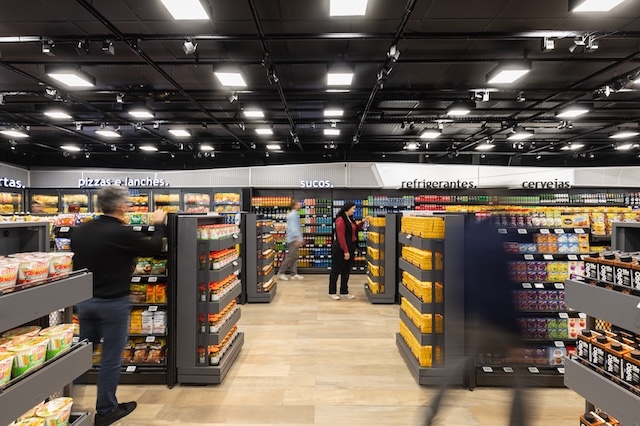
And this week we’re focusing on Sensei which has deployed its technology in a new Muffato Go store in Curitiba, Brazil. This has been developed in partnership with supermarket specialist Grupo Muffato.
While Sensei first became known for its autonomous store technology, it says that the intelligence behind those stores has always been designed to address a broader challenge: giving physical retail the ability and the data to understand and automate its own operations in real-time.
The new Muffato Go, according to those involved, will put that capability into practice, showing how the same underlying technology can improve shelf availability, detect losses, automate checkout, manage fresh products and support online order fulfillment.
Headquartered in Portugal and operating across Europe and Brazil, Sensei has deployed its technology in more than 100 autonomous points of sale, including the world‘s largest autonomous store, opened in Leiria, Portugal, in 2025.
“The new Muffato Go shows what AI can already do in a physical store. Shoppers get a faster, simpler way to buy, but that is only the visible part. Our models recognise products and shopper interactions as they happen, and store teams get the right task at the right time,” says Vasco Portugal, CEO and Co-founder at Sensei.
“The real value is turning what happens in the store into intelligence that supports the entire business, from the shop floor to the head office. That is what we mean by Conscious Spaces: physical spaces that see, understand and act.”
And honourable mentions this week to…
Old Spike, a specialty coffee roaster and social enterprise, has opened its seventh London café in Southwark.
The new Great Suffolk Street location displays what it believes to be the UK hospitality industry’s first live impact dashboard powered by payments platform, Square.
Old Spike’s central mission is to create employment for people experiencing homelessness. Its Barista Training and Employment Programme provides practical training, paid work placements and support into lasting work. Since opening in 2015, over 350 people have completed its training course.
The dashboard uses Square data to display to customers how their purchases across Old Spike’s seven cafés contribute to its training and paid work placement programme. Southwark is the first café to feature the dashboard, which Old Spike plans to roll-out across all its sites.
When a purchase is made, Square automatically sends the information to the Impact Dashboard system, which records the transaction and calculates the relevant impact measures and KPIs. These figures are turned into visualsfacing screens. The dashboard showcases the number of trainees completing the programme, graduates securing lasting employment and the amount paid during work placements
The canimations for the dashboard screens were created by motion and data visualisation studio Algo which developed a modular animation system powered by Rive, the same technology behind Spotify’s Wrapped campaign.
AliExpress has announced a partnership that brings its global product selection into YouTube’s creator ecosystem, giving eligible creators access to various products to feature in their content, along with new commission earning opportunities.
Following the launch of the collaboration in South Korea in March, the partnership will expand to four markets: the United States, Brazil, the United Kingdom and Germany. Further expansion will take place in phases, in line with the roll-out of YouTube’s affiliate programme in new markets.
With YouTube’s recent extension of its Shopping Affiliate Programme to eligible creators in Germany and the United Kingdom, the partnership will connect participating creators not only in Europe but also eventually worldwide with AliExpress’s product offerings. A particular focus is Brand+ – a dedicated selection of branded products from international and local brands.
Creators can discover and select AliExpress products directly within YouTube Studio. The integration connects AliExpress products with YouTube’s three major content formats – long-form videos, shorts, and livestreams – allowing creators to tag shoppable product recommendations across key moments of audience discovery and engagement.
They can explore AliExpress’s products across categories such as consumer electronics, sports and outdoor, home and living, and lifestyle. Using data on bestselling and trending products, they can handpick items that resonate with their audiences. Viewers can link directly from YouTube to AliExpress to complete their purchases.
Primark has partnered with Kallikor to introduce a simulation led approach to supply chain decisions. The aim being for the retailer to test and validate operational and capital changes before implementation.
The tie up begins with creating digital twins of Primark’s distribution centres, allowing teams to test alternative operating configurations before implementation.
Adam Hoccom, Director of Supply Chain at Primark, says: “As we continue to grow across markets, ensuring our supply chain is designed to support that ambition is critical.”
“A key part of that is making sure our distribution centres operate efficiently while remaining aligned to store needs. Working with Kallikor allows us to test and compare different operating configurations – from layout and flow changes within sites to broader network considerations – before we commit capital spend.”
“This gives us greater confidence in the choices we make and how they will perform in practice, strengthening our ability to innovate and make well informed decisions as we evolve our network.”
