

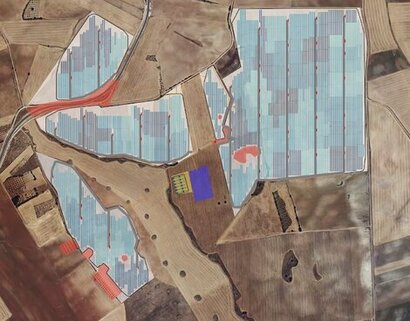
Key players in the sector spend hours on repetitive, manual tasks: running design iterations one at a time, building comparison dashboards by hand, reformatting deliverables before every client meeting, burning senior engineering time on trial-and-error analysis, and coordinating sensitivity studies across disconnected tools. Power Analyst eliminates that friction by automating the engineering workflow so teams can focus on decisions instead of repetitive tasks.
“The utility-scale renewable sector is moving fast, and teams need tools that move with it” said Bernadette Johnson, GM – Power & Renewables, Enverus. “Power Analyst gives developers and EPCs the ability to explore design options at scale, test scenarios that matter to their business, and deliver projects faster and with more confidence. We’re not just automating tasks, we’re enabling a fundamentally different way of working that puts decision-making back in engineers’ hands.”
Users can evaluate hundreds of design alternatives in a single run, ranked and compared side by side, all grounded in a complete engineering simulation. Instead of running iterations manually, teams can explore the full design space in hours instead of days, identifying the optimal configuration without the guesswork.
Power Analyst shows how irradiance, CAPEX, module choice, tracker type, and DC/AC ratio impact performance and cost. Users can find the layout that hits a find the PV layout or BESS size that hits a target without running every iteration by hand, turning sensitivity analysis from a week-long manual process into an automated workflow.
The solution works with files in the formats teams use internally, with no conversion needed. Automatic troubleshooting ensures seamless upload and analysis on the first try, removing the friction that slows projects from intake to engineering.
Users can compare design inputs side by side, generate dashboards and executive reports, and create custom files built from their own documentation, all from a single request. Every output is traceable and ready to share with stakeholders or clients.
Teams can build custom studies on top of their simulation results, asking questions and testing ideas that were previously too time-consuming to evaluate.. Power Analyst enables teams to think bigger about what their project data can reveal.
“Power Analyst fundamentally changes what’s possible in solar engineering” added Bernardino Martin Apolinario, Product Owner, RatedPower. “We built it to eliminate the repetitive work that consumes engineering teams, so they can focus on decisions instead of execution. Every output is grounded in the same simulation engine teams trust, making it not just faster, but smarter and more reproducible than trial-and-error approaches. This is what it means to pair human judgment with AI automation.”
