

- Share
- Tweet
MUMBAI: Cybersecurity firm Kaspersky has warned consumers about fraudulent websites impersonating Apple and promoting fake iPhone Duo deals, as scammers seek to exploit demand for the company’s first foldable smartphone.
The iPhone Duo officially went on sale on 23 October, creating an opportunity for fraudsters to target buyers eager to get their hands on the premium device. Kaspersky said its researchers had detected multiple scam attempts aimed at consumers in different parts of the world.
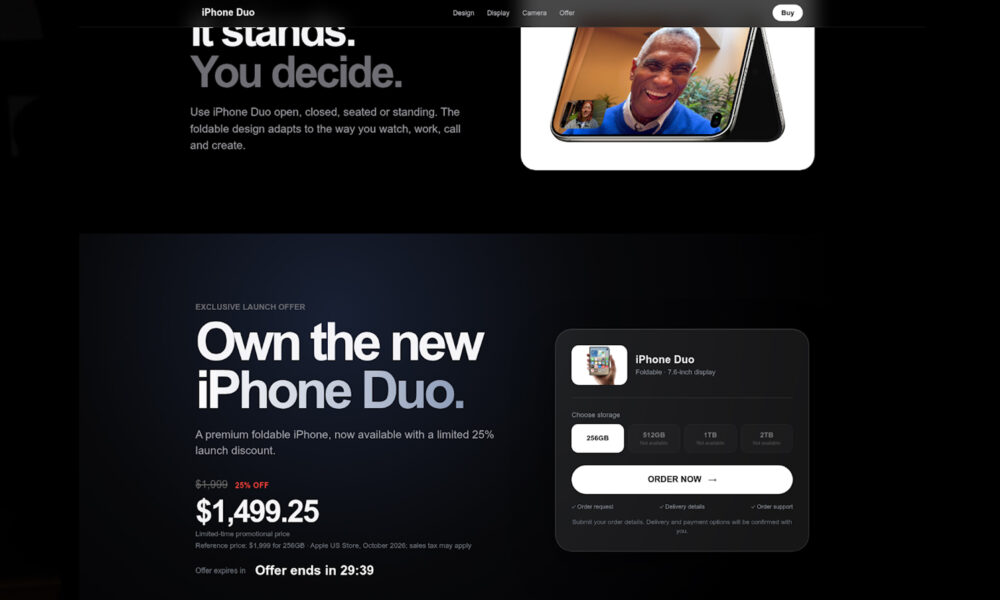
One English-language website advertised a purported 25 per cent discount and mimicked Apple’s visual identity. A countdown timer claiming that the offer would expire in 30 minutes added pressure on visitors to act quickly.
The website collected customers’ contact details and shipping addresses at checkout but did not immediately ask for card information. Instead, it claimed that a manager would contact buyers later to confirm delivery and payment details. Kaspersky warned that such an approach could be the first step in a fraud scheme that ultimately leads to financial loss.
Researchers also identified multilingual websites offering preorders for the device. One such page allowed visitors to select their preferred language and purchase currency, while claiming that users would be redirected to Apple’s official website. According to Kaspersky, the promised redirection did not take place.
Another fraudulent offer targeted Portuguese-speaking consumers, asking visitors to share their WhatsApp-linked phone number and email address so that product availability could supposedly be checked. Such requests can expose personal information and open the door to further social engineering attempts.
“Scammers move fast when a flagship device hits the market, because hype creates urgency and urgency lowers caution,” said Kaspersky senior web content analyst Olga Altukhova.
She warned that fraudulent campaigns are designed to appear credible before moving potential victims into private conversations, where they may be less likely to verify claims. Buyers willing to spend heavily on premium devices can be particularly attractive targets, she added.
Kaspersky advised consumers to purchase devices only through official or reputable retailers and to check website addresses carefully before sharing personal information. It also recommended using security software that can detect fraudulent stores and block phishing links.
The company said its consumer security products include AI-powered scam protection, machine learning-based anti-phishing tools, real-time behaviour monitoring and data leak and identity theft checks. Kaspersky Premium received an “Approved” certification in the Fake Shops Detection test conducted by testing laboratory AV-Comparatives in 2025.
Consumers should also consider using virtual cards or dedicated payment services for online purchases, storing credentials in a password manager, enabling multi-factor authentication on accounts and financial apps, and regularly checking statements for unauthorised transactions.
With fake discounts, preorder pages and availability checks all being used to attract potential buyers, Kaspersky urged consumers to verify sellers before sharing personal or payment-related information.

