

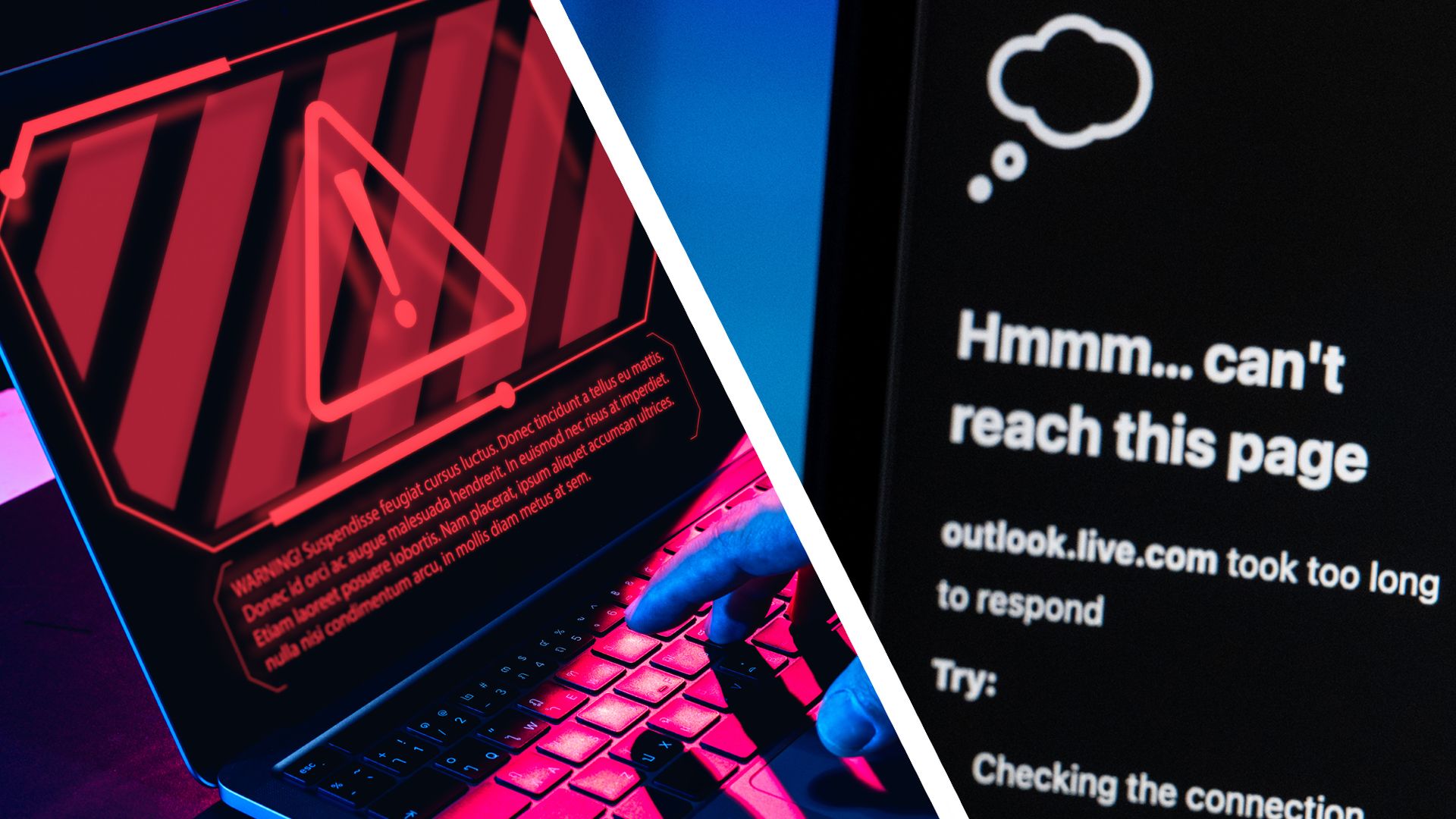
It feels like all of the tech we rely on has been falling apart in recent days: Microsoft platforms, Apple cloud services, air traffic control systems… the list goes on. Every other day there’s been a new outage to diagnose and deal with. It’s been so bad that the White House has just removed its cyber-security chief, Sean Cairncross.
AI researcher Rohit Krishnan crunched the numbers and found that this is likely the worst sequence of tech outages we’ve had in the past 13 years. The run isn’t quite unprecedented, but it’s certainly not typical, and it’s undoubtedly concerning.
So what exactly is going on? Are we seeing the effects of a greater number of cyberattacks? Is the use of AI responsible for bringing down systems or not patching them up well enough? Here’s what’s actually happening, and what the experts say about it.
Since November 12, tech platforms and services have been falling over themselves to fail: we’ve had global disruption to the Microsoft 365 services (including Outlook), a nationwide halt to departing flights put in place by the US Federal Aviation Administration (FAA), a major tech failure for the systems at United Airlines, and significant problems with payments at JPMorgan Chase (which were distinct from a recent cyberattack).
I’d plan for more disruption, not less. Whether outages are becoming more frequent is hard to say, but the impact of each one is growing.
Add to that disruptions to internal networks at the National Security Agency (NSA) in the US, downtime for Apple’s iCloud platform and other services, and problems for the Marriott hotel network — all just in the last few days — and you don’t have to be a professional IT analyst to spot a trend.
Engineers scrambled to get everything fixed, and back working again, and according to some detailed data mining by Rohit Krishnan from The Wharton School at the University of Pennsylvania, this is as bad as its been in tech outage terms since August 2013. As you might remember, Barack Obama was in the White House and Google‘s latest flagship phone was the Nexus 4.
“Compared with the past 12 months, the past week has been unusually busy,” Luke Kehoe from Ookla (which owns Downdetector) told Mashable. “Americans sent nearly 6 million reports in the past seven days to November 16, more than in any other week over that period, and the number of services with problems flagged on Downdetector was higher than in all but a few weeks.”
What’s been causing it?
Dig into the official explanations for these tech breakdowns, and they start to look less related. Not all of the companies involved have identified a cause, but we have heard mentions of server bugs (Microsoft), overloaded legacy equipment (FAA), an on-premises software bug (JPMorgan Chase), scheduled maintenance and security patches (NSA), and a botched internal software update (Apple).
The likelier AI story is a person using a tool to move faster, or an automated change pushed without enough review that breaks something on its own.
As per US Secretary of State Marco Rubio , there’s “zero evidence” that any of these outages are connected — except that they all involve technology that millions of people rely on each day. One other piece of connective tissue is that our digital existence is built on a surprisingly small number of underlying platforms
“A handful of cloud, identity and payment platforms sit underneath many of the services we use every day,” Findlay Whitelaw, Field CISO at cybersecurity specialists Exabeam, told TechRadar. “So when one of them stumbles, a lot of people notice at once, and the story gets told as a wave. A cluster like this is worth taking seriously, but the timing alone doesn’t establish a common cause or a coordinated attack.”
“Modern systems are made up of thousands of interconnected services, a bit like a city’s road network,” adds Whitelaw. “A small change at one junction, such as a configuration update, a certificate renewal or a network rule, can cause a jam that spreads far beyond where it started.”
Why does it keep happening?
While AI-driven cyberattacks might not be the official cause of these particular outages, AI is certainly a factor: it enables such rapid code deployment that security bugs are being spotted and patched at an unprecedented rate. Developers are having to find and fix issues at breakneck speed, and so errors and missteps can creep in.
“The whole industry is still grappling with the long tail of the so-called ‘Mythos moment’ from April which showed how AI can be used to uncover vulnerabilities at an unprecedented scale,” Gunter Ollmann, CTO of security specialists Cobalt, told TechRadar. “Just a few months ago security teams would have taken more time to test updates and introduce them gradually, now they simply don’t have that luxury with threat actors using the same tools as they do to spot vulnerabilities.”
“The likelier AI story is a person using a tool to move faster, or an automated change pushed without enough review that breaks something on its own,” Steve Povolny, the VP of AI Strategy and Security Research at Exabeam, told us, echoing the idea that AI agents aren’t directly to blame. “Either way, a person is at the controls.”
“[The affected services] share a lot of plumbing underneath,” adds Povolny. “The same cloud providers, DNS, certificates and networking vendors. One bad update or failed piece of equipment can take down names that look unrelated, and the FAA problem has already been traced to networking gear.”
Is this the new normal?
It’s still too early to say whether this is something we should get used to as a regular occurrence — a week of events isn’t enough of a sample size. But there is evidence that the accelerating pace of app and system development, together with systems that are combining greater levels of automation with legacy hardware and software that’s getting older and older, mean that we’re in a more precarious position than ever before.
“I’d plan for more disruption, not less,” David Wang, COO at AI gateway provider Tetrate, told TechRadar. “AI is now operational infrastructure, so when tools like Copilot go down, work stops across the business, not just in IT. When more agents and workflows start to depend on the same few providers, one failure will have a wider reach. Whether outages are becoming more frequent is hard to say, but the impact of each one is growing.”
For consumers, having flights delayed, bank transfers fail, and emails refuse to load up can have significant impacts on day-to-day life. It’s likely that tech resilience will become even more important as a selling point going forward — alongside the traditional considerations like pricing and customer service.
“Should we be worried or start to panic? Not really, in my opinion, but we should pay attention,” Mieke Verburgh, Senior Director at Malwarebytes, told us. “I’m sure every incident is also an opportunity to learn. Most of these issues have solutions: testing updates before rolling them out, having reliable backups, and improving security in general.”
