

Add preferred source1
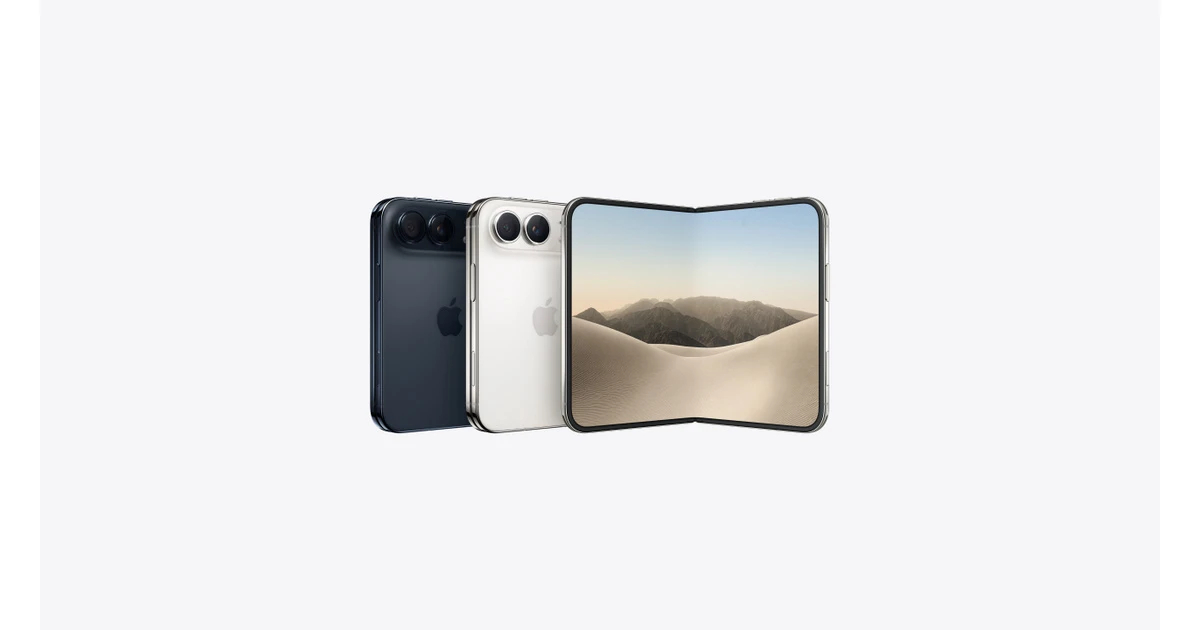
Apple’s first foldable smartphone, the iPhone Duo, has been judged on par with the latest Android models such as the Samsung Galaxy Z Fold 8 in terms of hardware refinement, but analyses say it lags in software, including app optimization and multitasking. The $2,000 (about 2.7 million won) device touts a matte inner display and excellent finish as strengths, but it is heavier than rival models and its features remain basic, such as supporting split-screen only in landscape mode. The prevailing market view is that Apple is now chasing the Android camp, which has refined its foldables over several years. Meanwhile, PC-smartphone integration features are increasingly being consolidated around operating system developers and PC makers.
Key Elements
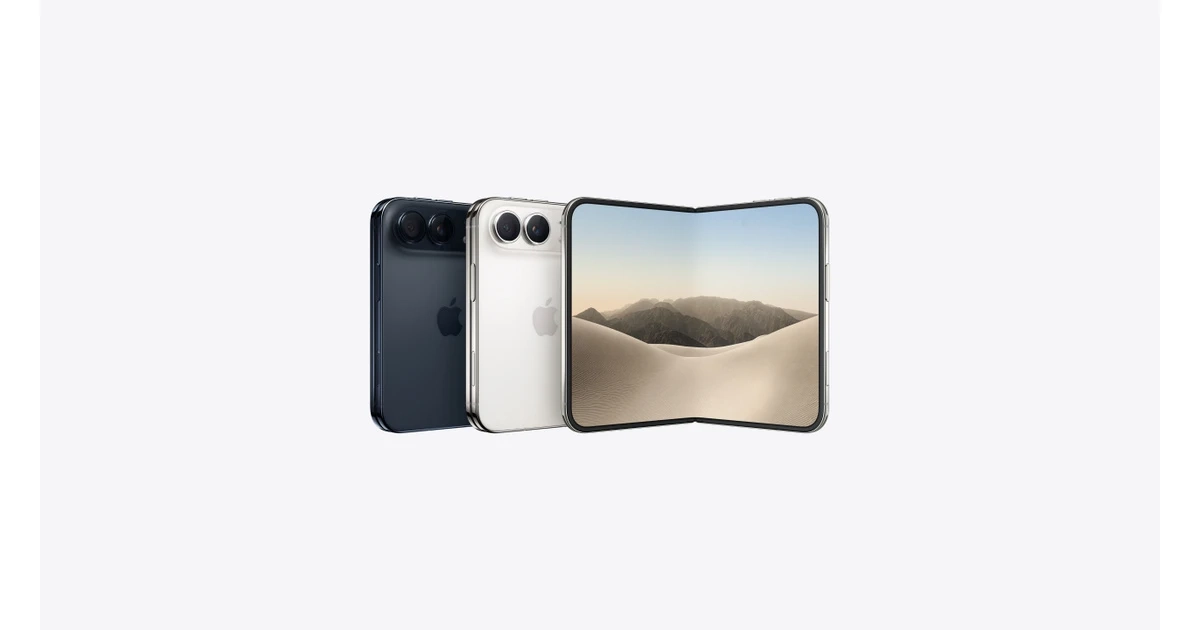
As Apple enters the foldable market with its first foldable smartphone, the “iPhone Duo,” assessments say its hardware refinement is on par with the latest Android models, but it shows a clear lag in software optimization. Priced at $2,000 (about 2.7 million won), the device attempts to differentiate itself with Apple’s signature finish and a proprietary matte inner display, but critics say it trails Android foldables in app ecosystem and multitasking features.
The most notable strength is the display. The iPhone Duo is the only competing model to apply a matte (nano-texture) treatment to its inner screen. This reduces glare while also hiding screen creases to a considerable degree. The crease itself is less pronounced than on Google and Honor devices and somewhat more visible than on the Samsung Galaxy Z Fold 8, but thanks to the matte coating it is hard to spot with the naked eye. It falls short of the virtually invisible crease achieved by Oppo, but the gap is not large.
The body finish also draws praise. The curved frame and Ceramic Shield back demonstrate a level of refinement that justifies the high price, and the hinge opens and closes smoothly with a magnet-like feel. Weight, however, is a clear weakness. It is heavier than rival models with larger screens, making one-handed operation difficult, and it is also thicker than some products. Its IP68 water- and dust-resistance rating is an advantage matched only by Google and Honor.
Durability concerns also surfaced shortly after launch. In a statement sent to USA Today on October 26, Apple said it is “aware of an issue affecting the inner display on a small number of iPhone Duos” and that the problem appears to emerge shortly after use. Apple advised users experiencing the issue to contact AppleCare for a replacement. While not as widespread as the defects of Samsung’s first-generation foldable in 2019, some note it is a case rarely seen in Android foldables now refined through eight generations.
The camera setup consists of two 48-megapixel rear lenses (main and ultrawide), similar to the Galaxy Z Fold 8. However, compared with most Android foldables that carry triple rear cameras and larger sensors, its range of photographic use is narrower. The battery has a larger capacity than Samsung’s foldable, enough for all-day mixed use, but falls short of the Honor Magic V6, which claims two-day use.
A comparison of the published specs of major foldable models is as follows.
| Item | iPhone Duo | Galaxy Z Fold 8 | Xiaomi 18 Fold | Honor Magic V6 |
|---|---|---|---|---|
| Inner display | 7.6-inch (430ppi) | 7.6-inch (404ppi) | 7.58-inch (382ppi) | 7.95-inch (403ppi) |
| Outer display | 5.4-inch | 5.5-inch | 5.38-inch | 6.52-inch |
| Weight | 254g | 201g | 219g | 219/224g |
| Thickness (unfolded/folded) | 5.2/11.3mm | 4.5/9.7mm | 5.0/10.7mm | 4.0/8.8mm |
| Water/dust resistance | IP68 (6m/30min) | IP48 (1.5m/30min) | IP58/IP59 | IP68/IP69 |
| Chipset | A20 Pro (2nm) | Snapdragon 8 Elite 5th Gen (3nm) | XRing O3 (3nm) | Snapdragon 8 Elite 5th Gen (3nm) |
| Rear camera | 48MP+48MP | 50MP+50MP | 200MP+50MP+50MP | 50MP+64MP+50MP |
| Battery | 4,883mAh | 4,800mAh | 6,000mAh | 6,660mAh |
Note: The Honor Magic V6 weighs either 219g or 224g depending on the version.
The problem is software. Third-party app ecosystems are slower to respond than Apple’s own software. Apps such as Bluesky and Duolingo use the full screen on other foldables but appear on the iPhone Duo as wide bands with large black margins on the left and right. Many apps also fail to use the right-side rail, leaving only an empty black bar. Some, like Slack, have adopted a desktop-style two-column layout, but given that Google Maps, Translate, and Instagram were recently updated, there is room for improvement over time.
The situation is gradually improving. On November 6, Apple said on the App Store that more than 100,000 apps optimized for the iPhone Duo had been added, with thousands more added daily. Notable examples include Microsoft’s Word, Excel, PowerPoint, and OneNote, as well as Netflix, YouTube, WhatsApp, and Instagram. Google Maps also became able to fully use the inner screen with a November 4 update. Apple said it held more than 50 developer workshops in 19 cities over the past month, attended by more than 2,000 people. Still, with millions of apps in the App Store overall, many remain unoptimized.
Apple’s design of clustering key control buttons on the right edge also divides opinion on capability. Critics say it takes up a lot of space, making the cover screen feel narrower than it is, and leaves only the inconvenience of having to reach across without enjoying the benefits of a larger screen. This contrasts with Google, which, in updating its Maps app, effectively ignored the right rail and extended the map to the edge of the screen.
The multitasking gap is clearer. The iPhone Duo can display two apps side by side only in landscape mode, and each must occupy exactly half the screen. Compared with Oppo, which freely switches between split-screen and floating windows, and Xiaomi, which can arrange up to six apps at once, its features remain basic. Unlike Android, it does not allow a back-swipe from either side of the screen, and the fact that each app has a different back-navigation method also hurts one-handed usability.
The market expects this product to shake up the competitive landscape of the foldable market. The prevailing analysis is that Apple’s entry into the foldable market has not resolved all existing flaws and that it is instead chasing the Android camp, which has refined its products over several years. Still, in that it has reached parity with its most direct rival, the Galaxy Z Fold 8, on the hardware front, how iOS adapts to screen sizes and optimizes apps going forward will be the key.
Expectations are also high in the Japanese market. Apple launched the iPhone Duo in Japan on October 23, selling it at Apple Store prices ranging from ¥364,800 (approximately $2,300) for 256GB to ¥574,800 (approximately $3,600) for 2TB, tax included. Four carriers—NTT Docomo, KDDI (au), SoftBank, and Rakuten Mobile—also began sales the same day. According to Japanese market research firm MM Research Institute, Japan’s foldable smartphone shipments came to only 334,000 units (1.1% of all smartphones) in fiscal 2025 (April 2025 to March 2026), but with Apple’s entry they are projected to rise to 760,000 units (2.3 times the previous year) in fiscal 2026 and reach 1.02 million units in fiscal 2027. In fiscal 2025, Samsung Electronics held the top share of the Japanese market at 67.7%.
Meanwhile, the competition to link PCs and smartphones is also shifting. Unlike in the past, when many software companies offered device-to-device connection solutions, recently operating system developers and PC makers have been integrating the features. Microsoft supports calls, text messages, and app running through “Phone Link,” built into Windows 11 by default, and Samsung Galaxy models offer high interoperability without separate programs. Lenovo’s Smart Connect and Asus’s GlideX provide file transfer and screen mirroring/extension, while Apple touts features such as Sidecar centered on the Mac ecosystem. Google is even providing an environment for running Android apps natively on Googlebooks and is pursuing a plan to integrate its web and mobile ecosystems into the PC form factor.
