

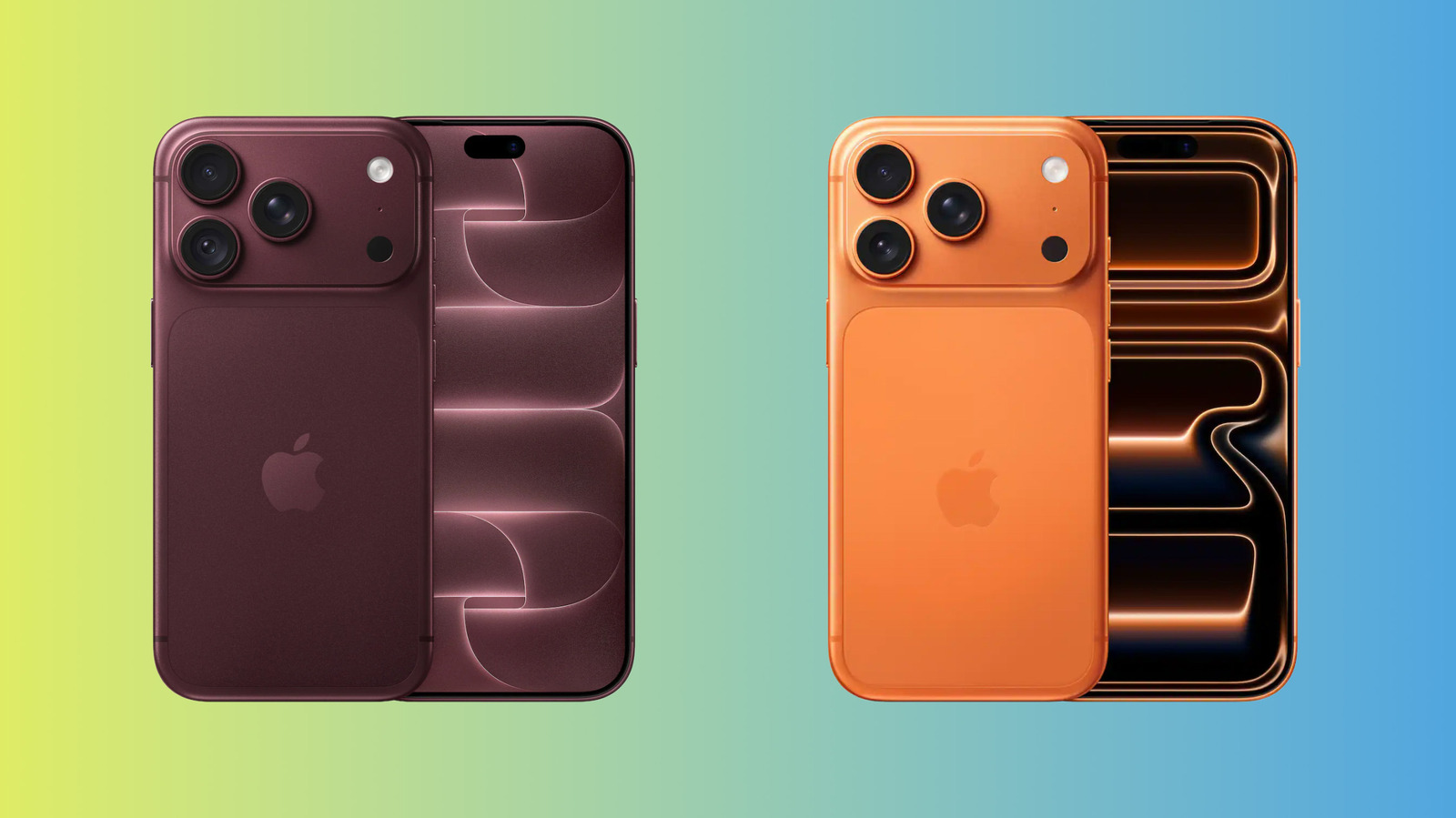
The iPhone 18 Pro isn’t a world-changing upgrade, but it has a few cool improvements to offer.
Despite their higher prices, the iPhone 18 Pro and 18 Pro Max aren’t revolutionary upgrades. On one hand, they add enough new features and improvements to be named the “standard setter” by our iPhone 18 Pro review. But this year’s batch is more akin to an incremental “S” iPhone than a major redesign. That gets clearer when you compare them with last year’s iPhone 17 Pro and iPhone 17 Pro Max.
Fortunately, most of the changes in this year’s Pro-series phones are identical on the standard and Max models. They have the same camera hardware, so you don’t need to buy the bigger phone just to get the better camera. But the larger iPhone 18 Pro Max also gets a bigger battery life boost, along with a (less fortunate) weight increase. So while most categories are a wash between the two sizes, the larger model does have different pros and cons.
Design
For the 2026 models, Apple stuck with the aluminum unibody design it introduced (or rather, reintroduced) with the iPhone 17 Pro series. The dimensions are also unchanged: the Pro stays at 5.91 x 2.83 x 0.34 inches, while the Pro Max stands pat at 6.43 x 3.07 x 0.34 inches.
But weight is another story. The iPhone 18 Pro is 2.4 percent heavier than the iPhone 17 Pro (7.44 vs. 7.27 ounces). The iPhone 18 Pro Max’s increase is more dramatic: it’s about 6.9 percent heavier than its predecessor (8.78 vs. 8.22 ounces). For the larger model especially, that’s a difference you may feel in hand. The question is whether the newer model’s battery gains make it worth the trade-off.
Both phone lineups still have Ceramic Shield 2 on the front, Ceramic Shield on the back and IP68 water resistance. Perhaps to make up for the lack of eye-popping upgrades elsewhere, Apple added new color options. The iPhone 18 Pro series trades in last year’s Cosmic Orange, Deep Blue and Silver for Black, Silver, Glacier and Burgundy. (That Burgundy finish will be this year’s “Look, I got the new iPhone” color.)
Display
The core display specs are unchanged. The standard Pro retains its 6.3-inch OLED display, while the Pro Max uses a 6.9-inch OLED panel. Both 460 PPI displays support variable refresh rates up to 120Hz, always-on functionality and outdoor brightness up to 3,000 nits. It’s thus the same as you’ve come to expect: the Pro is easier to carry and use with one hand, while the Pro Max gives you more screen real estate.
The one notable change is the smaller Dynamic Island on the iPhone 18 Pro series. Apple pulled this off with a region of brighter pixels that lets just enough infrared light through for Face ID to work beneath the display. This allows for a smaller black cutout. The Dynamic Island also now supports up to three ongoing Live Activities at once, compared to two on the iPhone 17 Pro.
Cameras
The most significant change in the iPhone 18 Pro series is the revamped 48-megapixel main camera. But it isn’t that megapixel count that’s the upgrade; those are unchanged across the board.
The iPhone 17 Pro and Pro Max use a fixed f/1.78 aperture. But the new main camera in the iPhone 18 Pro and Pro Max can switch between f/1.48, f/1.8, f/2.8 and f/4.0. This means the phone can adjust how much light enters the camera system. In practice, a narrower aperture keeps more of the scene in focus, while a wider one can collect more light and create greater focal contrast between the subject and the background.
The devices can make those choices automatically, which is likely what most people will opt for. But anyone who wants more control over depth of field can manually adjust the aperture. Apple also added new manual controls for shutter speed and white balance, along with an on-screen histogram. For at least some photographers, the “Pro” branding may feel more authentic this year.
Otherwise, both iPhone 18 Pro models have the same three-camera setup and photographic capabilities. Aside from the main camera, they include a 48-megapixel Ultra Wide camera and a 48-megapixel 4x Telephoto camera. Their listed resolution, focal length and aperture specs are unchanged from last year’s models.
Video gets an upgrade, too. Rear-camera Cinematic mode now records in up to 4K at 60 frames per second, compared with 4K/30 fps on the iPhone 17 Pro series. (The new model’s front camera remains limited to 4K/30 in Cinematic mode.) The phones can also apply cinematic-style background effects after recording — though in our testing, the results were hit-or-miss. Expect the best results with relatively still, clearly separated subjects.
Another new feature, Apple Reference Image, can save sensor-signed RAW data alongside the normally processed photograph, giving you a version to compare against edits. An obvious purpose is verifying that a photo was untouched by AI (or regular old editing). But the downside is having to shoot in a special mode; the feature won’t activate automatically with normal shots. It thus makes the most sense for professional photographers, journalists and others whose work depends on image integrity.
Meanwhile, Photographic Styles 3 adds texture and grain controls. Fortunately, Apple keeps the effects restrained, so they don’t look overly processed or artificial. Texture edit adds Glow, Soft Skin or Film effects (the latter includes an additional Grain slider). The iPhone 17 Pro series doesn’t support any of these options, although it’s hard to imagine many people upgrading for their sake.
Both iPhone 18 Pro models use the A20 Pro chip, replacing the A19 Pro from last year’s models. The new chip is built on a 2-nanometer process (compared to the 3-nanometer process of the A19 Pro) and offers 50 percent more memory bandwidth than its predecessor That should help with data-intensive tasks like games, camera processing and on-device AI
The A20 Pro sticks with a six-core CPU, but it now includes integrated Neural Accelerators. Meanwhile, the GPU moves from six cores to seven, with Apple claiming up to 40 percent faster graphics performance over the A19 Pro. The new chip’s Dual 16-core Neural Engine has 32 total cores, and Apple claims it doubles AI processing power. The A20 Pro’s strengths should show more in longer, heavier workloads.
Apple also updated the internal cooling system for the new silicon, attaching the A20 Pro directly to a next-gen vapor chamber. Much of Apple’s marketing focuses on the sustained performance of the A20 Pro chip; this new layout, which also places the silicon die side-by-side with the memory, likely plays a central part in that. Our experience with the phone found only one instance when the iPhone 18 Pro became hot: during intensive camera testing. (It cooled quickly afterward.)
Battery and charging
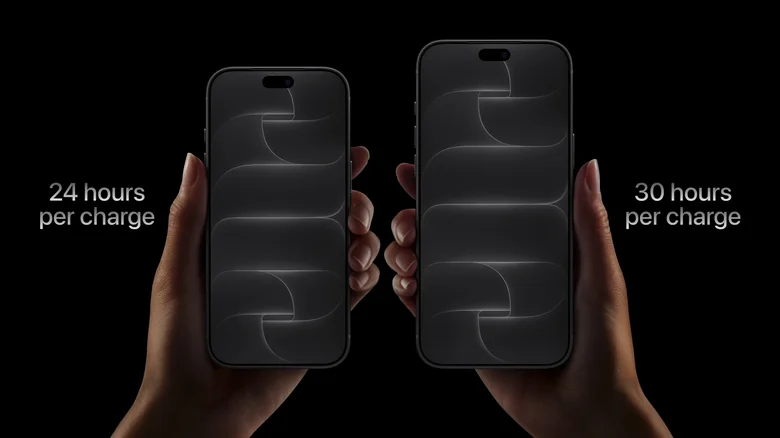
For the eSIM-only models sold in the US and several other countries, the standard iPhone 18 Pro is rated for up to 36 hours of video playback, compared with 33 hours for the iPhone 17 Pro. Streamed video jumps from 30 hours in last year’s model to 33 in the new one. The iPhone 18 Pro Max has a more dramatic improvement: up to 45 hours of video playback vs. 39 hours on the iPhone 17 Pro Max. Streamed video goes from 35 to 40 hours.
For the new models, Apple’s specs introduced a new “typical use” battery life rating. It says the iPhone 18 Pro can last up to 24 hours, while the iPhone 18 Pro Max can reach 30 hours. The company didn’t provide those estimates for the iPhone 17 Pro series.
With almost everything else being equal, this is where the iPhone 18 Pro Max makes its strongest case. Compared to the iPhone 18 Pro, Apple’s video-playback rating is 25 percent higher, its streamed-video rating is about 21 percent higher, and its typical-use rating is 25 percent higher for the larger phone. If you also enjoy the bigger screen and can live with the size trade-offs, it’s the way to go.
To charge those improved batteries, Apple says both iPhone 18 Pro models can reach a 50 percent charge in about 15 minutes with the right wall adapter (60 watts or higher with Adjustable Voltage Supply). That’s an improvement over the iPhone 17 Pro models, which can reach 50 percent in about 20 minutes with a compatible 40-watt or higher adapter. MagSafe and Qi2 charging are the same on both generations: 25 watts.
All told, iPhone 17 Pro owners should probably stick with their current device. Those with an older iPhone might find it worth upgrading if the increased price is within their budget.
