

When Bentley University launched its artificial intelligence major in fall 2024, just a handful of students signed on.
“People were a little skeptical, not quite sure,” said Bentley President Brent Chrite.
More certainty has set in. This year, nearly 100 undergraduates are pursuing an AI major.
The business-focused university in Waltham is among several four-year institutions in the region that started offering an undergraduate major in AI in recent years. Others include MIT, Worcester Polytechnic Institute, Northeastern University and Wentworth Institute of Technology. Next year, Suffolk University and Endicott College will join them.
Nationwide, more than 100 universities now offer an AI major within a computer science department, according to a database maintained by Northeastern University’s Center for Inclusive Computing. That’s nearly double from a year ago.
The programs have become a competitive edge for higher ed institutions.
“We don’t worry about students from Bentley being out-competed by AI,” Chrite said. “We worry about students from other universities who might be better trained in AI. That’s sort of our bar.”
Bentley’s “Artificial Intelligence for Innovation” undergraduate degree offers courses in computer programming, machine learning and data science. AI majors also take classes in math, philosophy and computer information systems, according to assistant professor Ahmad Aljanaideh.
“AI in its essence is very multidisciplinary, so it’s not tied to one field specifically,” he said.
The growth of the major is fueled by awareness among administrators that students are feeling jitters in an AI-influenced economy.
“ We see the angst, and we see the anxiety,” Chrite said. “I think it compels us to be that much more focused to effectively and uniquely serve those students.”
Bentley’s program is what prompted Kevin Mason to transfer from Middlesex Community College last winter.
“I knew I wanted something more than just a straight business degree,” he said. “I knew that was going to be a great combo. Not a lot of schools have that going right now. And, you know, that gives me an advantage in the job market once I graduate.”
The junior had a summer internship where he automated social media workflow and sees himself starting his own business one day. He’s also the vice president of the Artificial Intelligence Society, a student club on campus.
Those analyzing education programs across the United States say it’s important for colleges to recognize what attracts students.
“They need to get students in seats at their institution,” said Zack Mabel, interim director of the Georgetown University Center on Education and the Workforce. “It’s incumbent upon institutions to do a good job of understanding what employers are looking for, and also to market for what students are attracted to.”
At MIT, the “AI and Decision Making” major, which launched in fall 2022, is now the second-most popular major on campus with 354 enrolled students, according to the registrar’s office.
“Our goal is not to teach them to be users of [generative] AI, our goal is to teach them the foundations needed to build the future of AI,” MIT professor Antonio Torralba and faculty head of the AI degree program said in a statement.
Northeastern University this fall renamed its bachelor’s degree in data science to AI, to “more accurately reflect” material that had long been taught, like machine learning.
“ We are training people to be engineers of AI systems, so not just able to use them, not just understand how they work, but understand how to go inside and change them,” said Felix Muzny, a computer science professor who teaches an AI sub-field called natural language processing.
Colleges are also emphasizing education on AI ethics. According to a study published in May from Northeastern researchers, more than a third of 66 institutions surveyed that offer an AI major require some sort of ethics course.
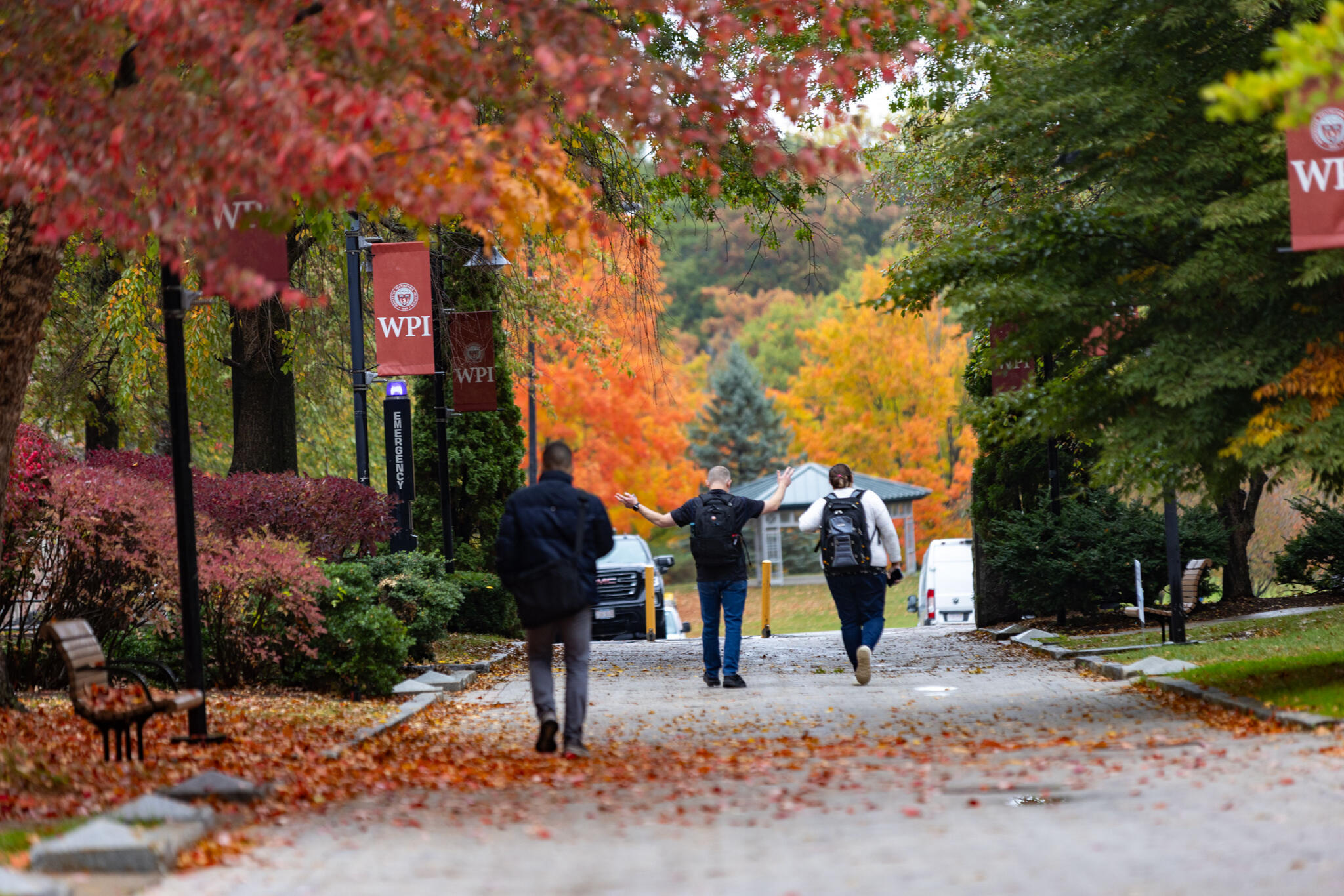
That includes WPI’s new bachelor’s degree in AI, which started enrolling students this fall. The major offers 11 focus areas, including life sciences and robotics, but all students are required to take a course on responsible AI, said program head Elke Rundensteiner. She called the course “critical.”
“The students need to understand when to use [AI] and how to make it reliable, that it cannot be interrupted or [be] giving the wrong outputs. It cannot hallucinate and also it needs to protect the privacy of people,” she said.
When it comes to jobs, Rundensteiner said she hears from advisory board members representing companies like Microsoft that are desperate for AI-trained employees.
“They can’t find enough of them that are skilled in these latest technologies, because everything is so rapidly shifting,” she said. “So if you have the right skillsets, there are a lot of opportunities there.”
Across the country, incorporating AI should extend beyond just degree programs, said Mabel, the education researcher at Georgetown University.
“Curricula of all different flavors need to embed AI as part of what they are teaching and equipping students to be able to do,” he said.
“It’s really about how to be preparing students with the lasting skills and the ability to learn so that they can adapt to changes in the future, be those technological or other structural changes in the labor market.”
This segment aired on October 22, 2026.
