

Honor is no stranger to smartphone innovations, with its clear embrace of silicon-carbon battery technology, high durability ratings, and even trying out some wild concepts with the Honor Robot Phone.
I recently tried the flagship Honor Magic 8 Pro and the mid-range Honor 600 Pro, and their spec sheets alone were immediately impressive: large silicon-carbon batteries with fast charging, ambitious camera hardware and IP68/IP69K durability ratings.
Importantly, both handsets deliver on the promise those specs make on paper. Their 7,100mAh and 7,000mAh batteries lasted more than two days under normal use, longer than any phone I’ve previously tested. The cameras were also impressive, particularly the Magic8 Pro’s 200MP 3.7x telephoto. Each phone’s chassis felt premium despite using plastic for the back, and both held up well during an informal tap-water test (although I admit that it’s hardly a controlled durability experiment).
Performance is strong, too, with Qualcomm Snapdragon 8 Elite chipsets (Gen 5 for the Magic 8 Pro and last year’s Gen 4 for the 600 Pro) powering both phones. Both handled multitasking and demanding games comfortably.
More importantly, both handsets are competitively priced, with the base 512GB Magic 8 Pro retailing for £1,099.99/AU$1,999 and the 600 Pro starting at £899.99/AU$1,499 for the same storage option (neither phone is officially available in the US).
On paper, both phones should have won me over. In practice, their strengths are overshadowed by how closely Honor borrows from Apple — particularly in MagicOS and the Honor 600 Pro’s camera design.
Homage or replica?
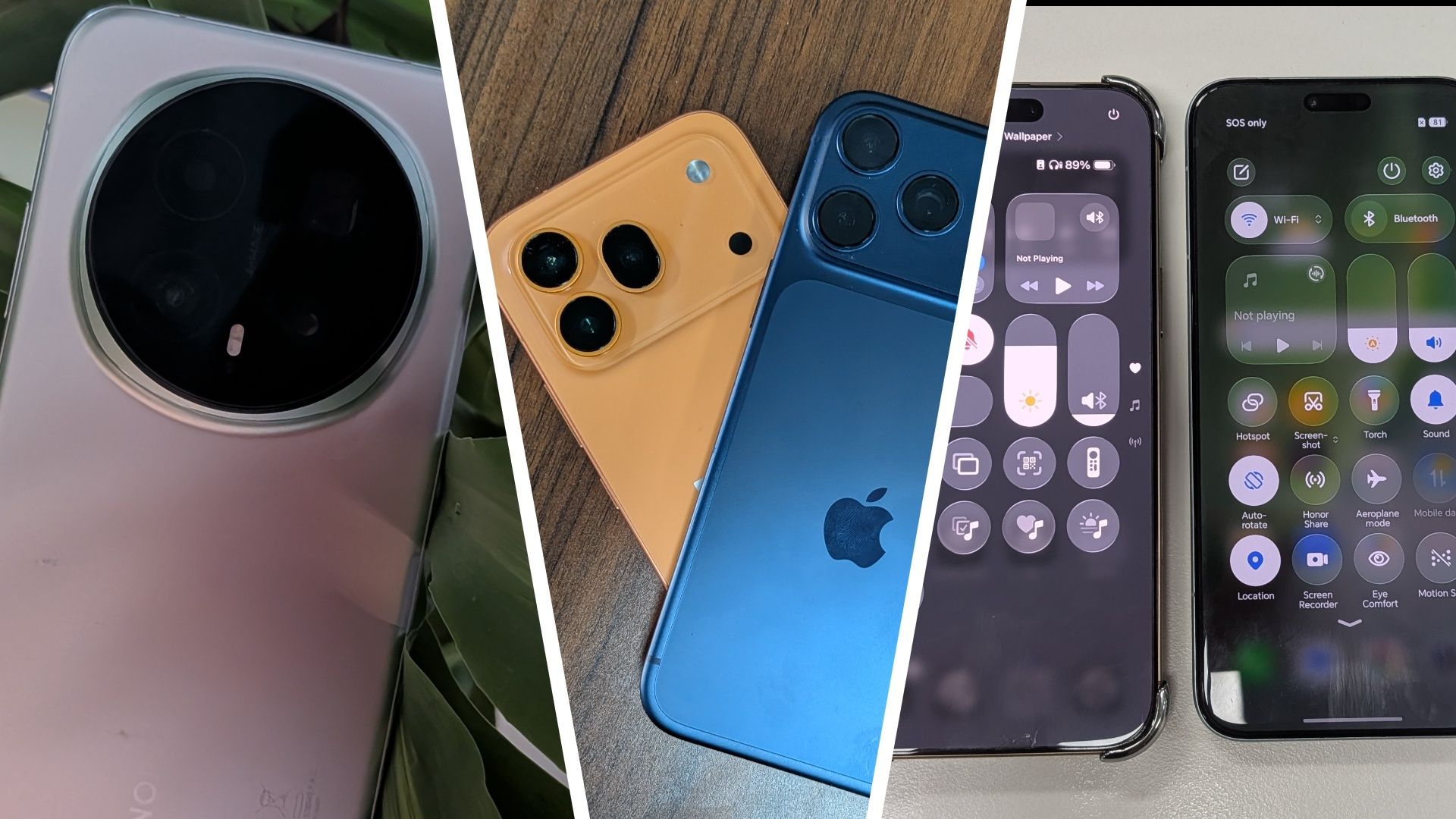
At first glance, it’s clear that MagicOS tries to replicate the iOS experience on Android. The quick-settings panel has a similar layout and design style to the iOS Control Center. System transitions, app opening animations and even scrolling felt like I was using an iPhone.
MagicOS also has the Android app drawer disabled by default, with all apps displayed across multiple home screen pages, similar to how iOS organized apps before introducing the App Library in iOS 14. Admittedly the default theme is not a carbon copy of iOS, but details such as the clock and wallpapers will feel unmistakably familiar to iPhone users.
Even the initial setup uses a cursive “Hello” animation reminiscent of Apple’s, with “MagicOS” placed above it.
Both Honor handsets have an “AI button” on the bottom-right corner that looks and behaves much like the iPhone’s Camera Control button. It launches AI features, but a double press opens the camera; in the camera app, it works as a shutter release and adjusts zoom when swiped. The button is useful, but its most distinctive behavior is still borrowed from Apple.
Honor deserves credit here: Magic Capsule predates Apple’s Dynamic Island, launching in 2019 — three years ahead of the feature’s debut on the iPhone 14 Pro. My argument is not that every similar feature originated with Apple; it is that Honor’s overall design language repeatedly points in the same direction.
The Honor 600 Pro’s camera bump also recalls the iPhone 17 Pro, with a wide rectangular module and a similar three-camera arrangement. Even the orange finish on the 600 Pro felt like a close variation on Apple’s Cosmic Orange. The differences are there, but they do little to create a distinct visual identity.
Having used Android phones for years and recently having switched to an iPhone, I found these similarities less like an homage and more a lack of confidence. Honor has made enough changes to distinguish the features technically, but not enough to give them a clear identity of their own.
Our reviewers have acknowledged these similarities too, noting in the our Honor Magic 8 Pro review that its AI button worked similarly to the iPhone Camera Control button, while our Honor 600 Pro review says it “clearly (and some might say shamelessly) influenced by the iPhone 17 Pro”, and MagicOS was “just a little too in thrall to Apple’s work”.
What should Honor do differently?
Complaints aside, both the Honor Magic 8 Pro and 600 Pro are otherwise brilliant handsets that could’ve stood out as great alternative Android phones for very competitive prices. The specs alone give them a credible advantage in areas such as battery life and durability, particularly at these prices. But instead, Honor’s phones come across as imitators, which is a shame considering its handsets have plenty to offer.
It’s not like Honor is a stranger to innovation, either. In fact, the brand has had some creative designs like the Honor V Purse foldable and the aforementioned Robot Phone, which have moved from concept to full commercial release (though have only been sold in China so far). That makes the imitation more frustrating: Honor has already shown that it can design products with a personality of their own.
With software, brands like Nothing have shown that it’s possible to provide a fresh spin on Android, and maybe Honor could take a similar route too.
Honor already has what it needs to make compelling alternatives: exceptional battery life, ambitious cameras, strong durability and competitive prices. What it needs now is the confidence to make those phones look and feel like Honor products. Until then, its best hardware will remain overshadowed by the question of whose path it is following.
